No stone unturned
Groundbreaking French Egyptologist’s remarkable work hampered by misogyny
Advertisement
Read this article for free:
or
Already have an account? Log in here »
To continue reading, please subscribe:

Digital Subscription
One year of digital access for only $205*
- Enjoy unlimited reading on winnipegfreepress.com
- Read the E-Edition, our digital replica newspaper
- Access News Break, our award-winning app
- Play interactive puzzles
*First annual payment billed as $205.00 + GST for one year. This annual subscription will automatically renew at $233.00 + GST every 52 weeks (10% off the regular annual price of $259.35). Offer available to new and qualified returning subscribers only. Cancel any time.
To continue reading, please subscribe:
Add Free Press access to your Brandon Sun subscription for only an additional
$1 for the first 4 weeks*
- Enjoy unlimited reading on winnipegfreepress.com
- Read the E-Edition, our digital replica newspaper
- Access News Break, our award-winning app
- Play interactive puzzles
*Your next Brandon Sun subscription payment will increase by $1.00 and you will be charged $17.95 plus GST for four weeks. After four weeks, your payment will increase to $24.95 plus GST every four weeks.
Read unlimited articles for free today:
or
Already have an account? Log in here »
Hey there, time traveller!
This article was published 06/05/2023 (1229 days ago), so information in it may no longer be current.
It was as if a divine life-jacket protected Christiane Desroches-Noblecourt as she navigated her hyperactive voyage on Earth, surrounded much of the time by predators of power and spite.
That’s as plausible a reason as any to explain this extraordinary woman, who had more drive in her than the Energizer bunny, acted as if her every day was overtime and rescued some of the world’s greatest historic treasures, despite the misogynist men around her who whined it couldn’t or shouldn’t be done — and most certainly never by a woman.
Archeologist Desroches-Noblecourt didn’t live life, she assaulted it. Her IQ was off the charts, her self-confidence would make a pitbull heel, she was akin to a Mother Superior in intimidation and her voice was a utensil of battle, a verbal buzz saw in intellectual combat.
Veteran author Lynne Olson’s well-written biography of this five-foot-tall, French-born superwoman/archeologist/Egyptologist smacks of hero-worship here and there, but her exhaustive research and skilled narration negate these lapses. This is a very worthwhile read.
Empress of the Nile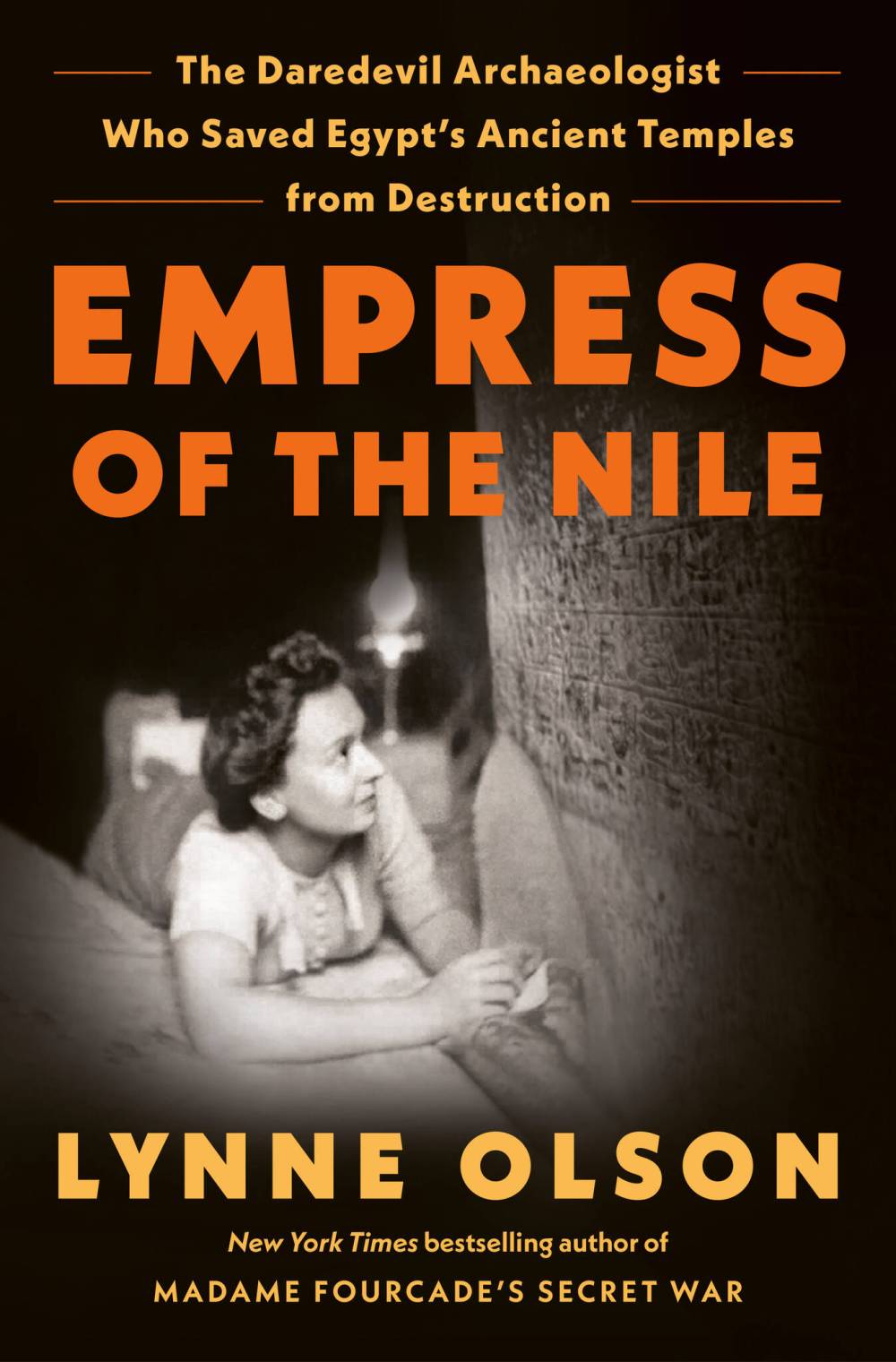
Empress of the Nile is Olson’s fifth book. She lives in Washington, D.C.
It’s hard to believe, but Olson documents the most amazing event when the then-27-year-old Desroches-Noblecourt, working at the world-famous Louvre complex and for the Resistance in Occupied France in the Second World War, is arrested by the SS and marched into a room to be interrogated by the Gestapo. But she ends up questioning the Gestapo for arresting her, scolding them for their bad manners for not standing when a woman enters the room. She questions that surely that’s not how their mothers brought them up. (They sent her back to her cell and set her free the next day, unharmed, thanks to the secret intercession of a high-ranking German officer who admired her work on the staff of the Louvre.)
As a member of a virulent male-dominated profession, her early fellow workers, all male, wouldn’t even eat with her. Desroches-Noblecourt excelled in her work, which made her male colleagues hate her even more. They claimed women weren’t hardy enough for archeological digs, yet she survived the oven of Egypt’s apocalyptic heat and fatal infections. On top of that she matched wits with French president Charles de Gaulle, stood up to Egyptian president Gamal Abdel Nasser and scolded headstrong shipping billionaire Aristotle Onassis.
Lastly, it was her energy that talked the world into saving ancient monuments due to be drowned in the reservoir of the new Aswan Dam under construction on the Nile. “(T)hat effort would end up producing the greatest single example of international co-operation the world has ever known,” writes Olson.
For the first time, Desroches-Noblecourt in 1937 was assigned to lead an archeological dig in Egypt. The members of her team — all male — demanded an emergency meeting with the official who selected her and insisted she take her meals alone and be housed elsewhere than with them. This misogynistic pettiness trailed her all her life. (The team was a great success. They discovered that rarity of Egyptology: an unlooted tomb.)
Tamzin B. Smith Lynne Olson
Back in France, and with the Germans threatening invasion, Desroches-Noblecourt helped smuggle the artistic and historical treasures from the Louvre in Paris to hiding places elsewhere in the country, a nightmarish exercise to keep France’s cultural glory out of the hands of the Nazis. When Germany invaded, she also participated in the extremely dangerous work of printing Resistance flyers and passing intelligence to the Allies, and was involved in publishing the first underground newspaper in France’s Occupied Zone in 1940. Many of her fellow fighters were caught and were imprisoned, shot or sent to concentration camps.
In one of her books, The Fabulous Heritage of Egypt, Desroches-Noblecourt makes the profound contention that “the ideas that still form the basis of our thinking” in today’s world were first devised in pharaonic Egypt, including original sin, a dangerous underworld, resurrection after death and a final judgment before an almighty god. The country also was, among other things, home to the first alphabet, calendar, pregnancy tests and treatments for migraine headaches and cataracts.
Desroches-Noblecourt also was noted for treating her Egyptian workers on archeological digs with respect, an uncommon dignity the workers rarely experienced. She would, at the end of their day’s digging, explain to them the history and significance of what they had uncovered. (It was employee relations at its best.)
Unquestionably, Desroches-Noblecourt’s most creative contribution to the world was her brainwave in a conversation with her close friend, Egypt’s minister of cultural affairs, that UNESCO (the United Nations Educational, Scientific and Cultural Organization) should conduct a campaign to raise money to save as many as possible of the archeological sites that would be swallowed by the huge reservoir to be created behind the planned Aswan High Dam. So, getting Nasser’s OK, in 1959 she went to UNESCO and fiercely lobbied them to undertake a campaign to get the countries of the world to help pay for what possibly would be the most epic archeological undertaking of all time, and certainly the greatest and most difficult archeological rescue mission. Some 50 countries contributed.
UNESCO hired Desroches-Noblecourt to conduct a census of all sites at risk of drowning in the coming floodwaters. She found so many that she had to prioritize them and got the number to be saved down to 22 monuments and architectural complexes, most importantly the Abu Simbel temples and later the temple complex on the island of Philae.
Archives Nationales de France In addition to her remarkable success in archeological digs in Egypt, Christiane Desroches-Noblecourt (centre) also was noted for treating Egyptian workers on the digs with respect, an uncommon dignity.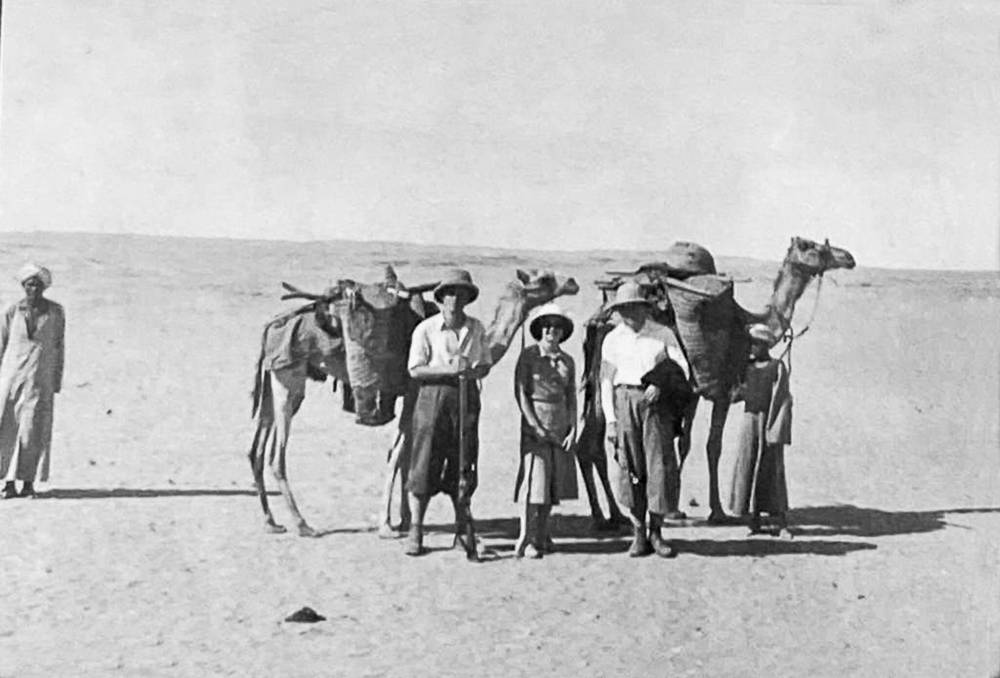
In the case of the Great Temple of Ramses II at Abu Simbel, Italian quarrymen — the world’s finest stone cutters — cut up the site into blocks, each weighing 20-30 tons, lifted them to a new location 65 metres higher and 300 metres back from the Nile riverbank and put the blocks back together again. They did the same to the Small Temple next to it dedicated to his chief wife, Queen Nefertari. (The workers cut the two temples into 16,000 blocks.)
The overall effort, which took from 1963 to 1968 — the Aswan dam was completed two years later — was magnificently successful, an engineering marvel, especially since the blocks were sandstone and easily could have crumbled. More than anyone else, a tiny French woman made it all happen.
In 2008 Desroches-Noblecourt was awarded the highest level of France’s most prestigious order of merit, the Grand Cross of the Legion of Honour. In the order’s 220-year history, only five other women have been thus bestowed. She died in 2011 at age 97.
Barry Craig is a retired journalist.