WEATHER ALERT

Parking problems pleasingly parsed

Advertisement

Advertise with us

Winnipeg drivers like to think that finding a space to park our cars is our civic, if not human, right.

Read this article for free:


or

Already have an account? Log in here »

To continue reading, please subscribe:

Subscribe and receive a limited-edition Free Press branded hat or tote.

Digital Subscription

One year of digital access for only $205*

  • Enjoy unlimited reading on winnipegfreepress.com
  • Read the E-Edition, our digital replica newspaper
  • Access News Break, our award-winning app
  • Play interactive puzzles

*First annual payment billed as $205.00 + GST for one year. This annual subscription will automatically renew at $233.00 + GST every 52 weeks (10% off the regular annual price of $259.35). Offer available to new and qualified returning subscribers only. Cancel any time.

To continue reading, please subscribe:

Add Free Press access to your Brandon Sun subscription for only an additional

$1 for the first 4 weeks*

  • Enjoy unlimited reading on winnipegfreepress.com
  • Read the E-Edition, our digital replica newspaper
  • Access News Break, our award-winning app
  • Play interactive puzzles
Start now

*Your next Brandon Sun subscription payment will increase by $1.00 and you will be charged $17.95 plus GST for four weeks. After four weeks, your payment will increase to $24.95 plus GST every four weeks.

Hey there, time traveller!
This article was published 30/06/2023 (1162 days ago), so information in it may no longer be current.

Winnipeg drivers like to think that finding a space to park our cars is our civic, if not human, right.

American journalist Henry Grabar’s new book, Paved Paradise: How Parking Explains the World, will disabuse us of the notion we are in any way special.

According to Grabar, the unrealistic expectation of convenient, immediately available and free parking is held by every North American with a driver’s licence. “It would be unimaginable to hold any other good or service to the same standard,” writes Grabar, who covers urban policy issues for Slate.
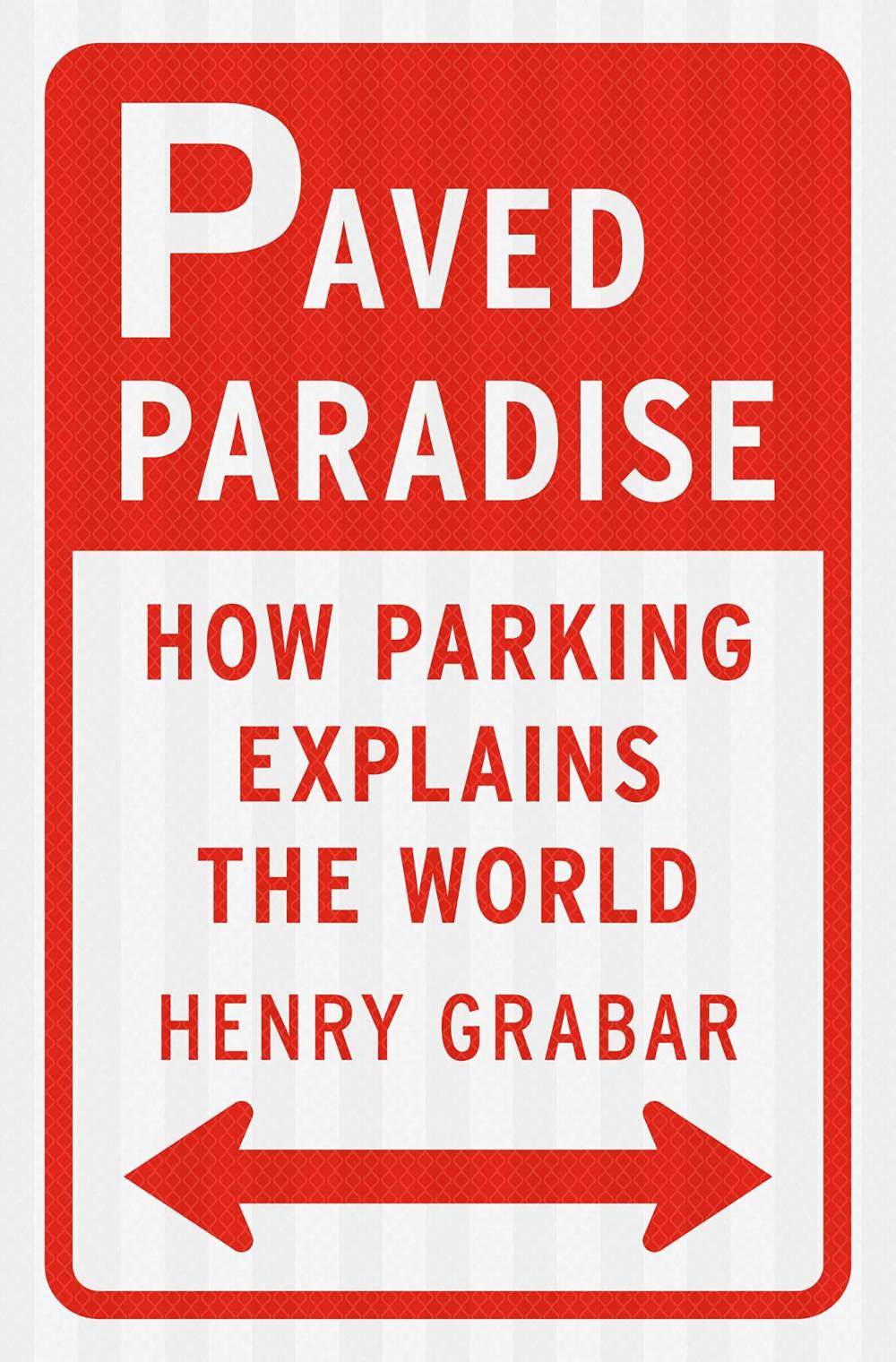
Paved Paradise

Paved Paradise

“Once, I missed an entire summer afternoon at the beach because I refused to pay for parking, and while I hunted, my passengers (wisely) left on the island ferry without me.”

In his snappily written and well-researched tome, Grabar surveys wrong-headed urban decisions made over many decades. These have turned downtowns into traffic-clogged disasters and suburbs into grey expanses of strip malls surrounded by seas of empty asphalt and concrete.

The book’s main virtues are Grabar’s grasp of the subject matter and his impressive writing ability. Policy-wonk books are seldom so fluent and entertaining.

A big downside, at least for Canadian readers, is Grabar’s American focus. In his hundreds of anecdotes, profiles and examples, he seldom strays from the contiguous 48 states.

He gives us a single mention, in a paragraph about per-capita car ownership. Canada, he reports, has about 655 cars per 1,000 population, compared to 600 per 1,000 in Western Europe and 800 in the U.S. C’est tout for Canuck content. Well, except for his title, grabbed from the lyric of Joni Mitchell’s song Big Yellow Taxi: “They paved paradise and put up a parking lot.”

Grabar acknowledges his research leans heavily on the work of progressive urban thinkers who have, uh, paved the way for him. Chief among them is California-based economist Donald Shoup, best-known for his 2005 book, The High Cost of Free Parking.

The big evil for Shoup is “parking minimums,” municipal bylaws that command property developers to include unrealistically high numbers of parking spots in their plans for both commercial and residential buildings.

These rules put construction costs out of reach and result in non-drivers in, for instance, apartment blocks, absorbing in their rent the cost of other tenants’ parking spots.

Another common mistake is improper pricing of downtown street parking. If it’s too low, downtown workers will snap up the spots by 9 a.m., leaving only high-priced lots for everyone else.

Most parking-policy errors made in the U.S. have been imported to Canada, but it would be useful to know if and how our regulatory framework differs.

Shoup, by the way, presented his ideas in Winnipeg in 2019 in a workshop sponsored by the Downtown BIZ and the Green Action Centre.

The book contains much else of interest. Included is a portrait of the inventor of the shopping mall, the Holocaust refugee Victor Gruen, an amusing chapter detailing how parking lots attract fraudsters, and another filled with eye-opening stats about the over-availability of parking spots in U.S. cities. “By square footage,” Grabar writes, “there is more housing for each car in the United States than there is for each person.”

Kudos in particular to the publisher for illustrating the text with nifty line drawings, by Alfred Twu, instead of predictable photos.

Morley Walker is a retired Free Press writer and editor.

Report Error Submit a Tip

More Stories

Westwood standoff ends with two arrested

Morgan Modjeski and Erik Pindera 3 minute read Preview

Westwood standoff ends with two arrested

Morgan Modjeski and Erik Pindera 3 minute read Updated: Yesterday at 6:29 PM CDT

An hours-long standoff in Westwood came to an end Thursday with Winnipeg police arresting two men and seizing a gun.

Winnipeg Police Service officers were called to Byrd Avenue shortly before 9:30 a.m. after a man was seen walking with what appeared to be a firearm, said police spokesman Const. Claude Chancy.

Officers identified a home connected to the investigation, he said.

Two men were arrested but Chancy could not yet say what they will be charged with. It’s not clear whether either of the men arrested was the male spotted with a gun.

Read
Updated: Yesterday at 6:29 PM CDT

Explaining Canada’s superior employment rate

Wayne Simpson 5 minute read Preview

Explaining Canada’s superior employment rate

Wayne Simpson 5 minute read 2:00 AM CDT

Donald Trump regularly makes outrageous claims. Fentanyl was pouring across the northern border from Canada and had to be stopped. Canada is nasty to deal with and has the highest tariffs in the world. Canada needs the U.S. but the U.S. doesn’t need Canada. Canadians want to become the 51st state. And so on.

In the latest trade dispute, after Mark Carney walked away from negotiations, Trump made a new claim that Canada’s unemployment rate was 10 per cent and climbing rapidly. Insofar as the unemployment rate is closely monitored, reported monthly, and given similar attention to the rates of inflation and economic growth, the comment was likely intended to signal Canada’s weakness. It fits Trump’s narrative that Canada needs the U.S. for its livelihood and protection and would be better off more directly under U.S. influence as a 51st state, or perhaps a protectorate like the Philippines or Panama in the past.

Fact checkers quickly reported that Canada’s unemployment rate is really 6.4 per cent for July, not 10 per cent, has fallen from 6.9 per cent in April, and is at its lowest rate since May 2024. Some astute observers pointed out that Canada’s method for the calculation of the unemployment rate leads to a higher rate than the U.S. by about one per cent. Under the American methodology, then, our unemployment rate would be 5.4 per cent, not that far off the U.S. July rate of 4.1 per cent.

Detection of unemployment is less straightforward that might appear, as it is sandwiched between the labour force statuses of employment and inactivity at a particular point in time. The internationally established standard for determination of unemployment is the notion of searching for work — you are unemployed if you do not have paid employment and you are looking for work without success. Surveys have been developed to categorize respondents as employed, unemployed or inactive, including the labour force survey (LFS) in Canada and the current population survey (CPS) in the U.S.

Read
2:00 AM CDT

Adorable accoutrements for the school year

AV Kitching 5 minute read Preview

Adorable accoutrements for the school year

AV Kitching 5 minute read 2:00 AM CDT

By now, with only a handful of days left before summer holidays draw to a close, the back-to-school essential kit lists will be landing in inboxes throughout the province.

Specifying children turn up to school with a precise number of pencils — sharpened, of course — a deck of playing cards, a multipack of neon highlighters and an exact number of duotangs (or, as they are known elsewhere in the world, three-pronged report folders) in distinctly different colours, the rigid tyranny of the official school-supply list leaves little room for personal expression.

But this mandatory uniformity doesn’t mean every single item must conform. Just because it’s an essential doesn’t mean it can’t be cute.

Forget moody blues and midnight black — unless they’re your fave colours, of course — and opt for something a bit brighter, a bit sunnier, a bit more doodle-friendly as cheery add-ons for that first day back at schools … without breaking any rules.

Read
2:00 AM CDT

Letters, Sept. 4

7 minute read 2:00 AM CDT

Adult ed can be the future — now

Re: Reimagining education in Manitoba (Think Tank, Sept. 2)

In an increasingly mad world, where decency and humanity are at risk, driven by the endless din from the leader of the free world, Canada is reimagining itself. Our federal government is expediting dozens of nation-building projects valued at a reported $192 billion.

The goal of nation building is to strengthen Canada’s economic resilience and independence. We all want peace, a good home, a secure income and hope for a stable future for our children and grandchildren. Nation-building projects are a hopeful means to this end.

The ‘Buy Canadian’ trade war challenge

Editorial 4 minute read Preview

The ‘Buy Canadian’ trade war challenge

Editorial 4 minute read 2:00 AM CDT

“Buy Canadian,” they tell us, as trade tensions escalate between Canada and the United States. “Elbows up,” the pithy slogan advises again and again, in response to the latest daily affront from increasingly unbalanced U.S. President Donald Trump.

And there’s no question Canadians from coast to coast to coast have bought into the patriotic mindset that politicians, from Prime Minister Mark Carney right on down to elected officials at the municipal level, have implored us to adopt.

“We were attacked,” is how Carney described the Aug. 21 unraveling of trade talks, after U.S. negotiators reportedly inserted last-minute demands the Canadian side viewed as both unreasonable and unacceptable. “You’re at war when you get attacked. We got attacked.”

The breakdown led to the immediate imposition by Trump of steep new tariffs on $29 billion worth of Canadian goods headed to south-of-the-border markets. A targeted, dollar-for-dollar Canadian tariff response will take effect after the Labour Day weekend. In the meantime, Canadians are more motivated than ever to stand firm against Trump’s tyrannical tactics.

Read
2:00 AM CDT

Parking problems pleasingly parsed

Reviewed by Morley Walker 4 minute read Preview

Parking problems pleasingly parsed

Reviewed by Morley Walker 4 minute read Friday, Jun. 30, 2023

Winnipeg drivers like to think that finding a space to park our cars is our civic, if not human, right.

American journalist Henry Grabar’s new book, Paved Paradise: How Parking Explains the World, will disabuse us of the notion we are in any way special.

According to Grabar, the unrealistic expectation of convenient, immediately available and free parking is held by every North American with a driver’s licence. “It would be unimaginable to hold any other good or service to the same standard,” writes Grabar, who covers urban policy issues for Slate.

“Once, I missed an entire summer afternoon at the beach because I refused to pay for parking, and while I hunted, my passengers (wisely) left on the island ferry without me.”

Read
Friday, Jun. 30, 2023