Telling his truths
Elliot Page talks transition, life in the Hollywood fishbowl and more in new memoir
Advertisement
Read this article for free:
or
Already have an account? Log in here »
To continue reading, please subscribe:

Digital Subscription
One year of digital access for only $205*
- Enjoy unlimited reading on winnipegfreepress.com
- Read the E-Edition, our digital replica newspaper
- Access News Break, our award-winning app
- Play interactive puzzles
*First annual payment billed as $205.00 + GST for one year. This annual subscription will automatically renew at $233.00 + GST every 52 weeks (10% off the regular annual price of $259.35). Offer available to new and qualified returning subscribers only. Cancel any time.
To continue reading, please subscribe:
Add Free Press access to your Brandon Sun subscription for only an additional
$1 for the first 4 weeks*
- Enjoy unlimited reading on winnipegfreepress.com
- Read the E-Edition, our digital replica newspaper
- Access News Break, our award-winning app
- Play interactive puzzles
*Your next Brandon Sun subscription payment will increase by $1.00 and you will be charged $17.95 plus GST for four weeks. After four weeks, your payment will increase to $24.95 plus GST every four weeks.
Read unlimited articles for free today:
or
Already have an account? Log in here »
Hey there, time traveller!
This article was published 08/07/2023 (1173 days ago), so information in it may no longer be current.
Early on in Pageboy, Elliot Page’s first memoir of life and transition, he admits to things being different politically from nearly a decade ago. Having become a bona fide movie star after being nominated for an Oscar for 2007’s Juno, Page began the baby steps of coming out publicly — first as gay in 2014, and then as a trans man in 2020. In Pageboy (pun intended) he more impassionedly defends his choice to physically transition after initially sharing the news online and in interviews over the last few years, In doing so, Elliot Page ends up being punished for the same “crime” twice.
His latest creative effort to be seen and believed (as transgender) has unleashed a whole new online pile-on, with the ubiquitous Jordan Peterson going as far as calling the doctor who did Elliot’s top surgery a criminal.
It is unlikely Pageboy, a slight tome which focuses more on the personal than the political, will change any hearts and minds. But this topical book delivers key insights into coming out as a young, vulnerable person caught up in the machinery of Hollywood.

Chris Young / The Canadian Press
Elliot Page’s memoir makes it clear the rigid, controlled gender expectations in Hollywood remain today.
In some ways, Page’s transition initially takes a backseat to how rigid and controlled gender expectations remain for all actors in La La Land. For all its faux liberalism, Hollywood is a supremely binary and heterosexual place. Ironically, in some ways now that Page is read as male and dates women, he is less “problematic” to the system than gay actors who often forfeit leading roles if they dare to come out. So many actors to this day remain as deeply closeted as James Dean, Montgomery Clift, Rock Hudson and even Liberace were back in the day.
Page explores his early life in Halifax and his early film and TV career in Canada (remember Pit Pony?). Early indie projects such as Hard Candy and Bruce McDonald’s The Tracey Fragments led to the central event of Page’s young life and career: Juno. The film, in which Page plays a pregnant teen, is lauded and thrusts the 20-year-old on to the world stage. Very quickly his handlers begin to “manage” his looks and try to keep Page’s quiet queerness on the down-low. You really get the sense the poor youth was made to feel “wrong” so often, and the tabloids would not let his sexual orientation remain private. It is all repellent.
An encounter with a stalker pre-transition fully confirms that despite the perks of fame, the attention of others is a gushing firehose that can never be turned off. Hollywood has a lot of work to do, as does society, when it comes to the stalking and harassment of people simply trying to live their lives. So many tried to place Page in their own box — from handlers to family members to fans and media — and the emotional toll was devastating, manifesting in all sorts of physical and emotional pain.

Page delivers an unadorned story, as novice memories often are divided into chapters that are basically incidents (chapters such as Leeches, Famous Asshole at Party and Choosing Family give you some idea). Given the author’s age (Page was born in 1987), it is not surprising some paragraphs read like diary entries, others like Facebook status updates and others like rants. The tone is casual, conversational and emotive.
As a trans woman, I was amazed how much gender dysphoria presents similarly in people despite gender and generational differences. One episode outlining how Page would retreat to “private play” as a coping strategy, where he could affirm his gender through play and fantasy as he waited for the time and place to manifest in real life, will resonate with anyone questioning who they are and what they ultimately can be if they have the courage to act.
For any fan of Page or anyone looking for some insight into how young people today perform and process gender, it’s worth skipping a few lattes. The genie is not going back in the bottle. And Page’s message is timeless: if we are not true to ourselves, we will sink in despair.
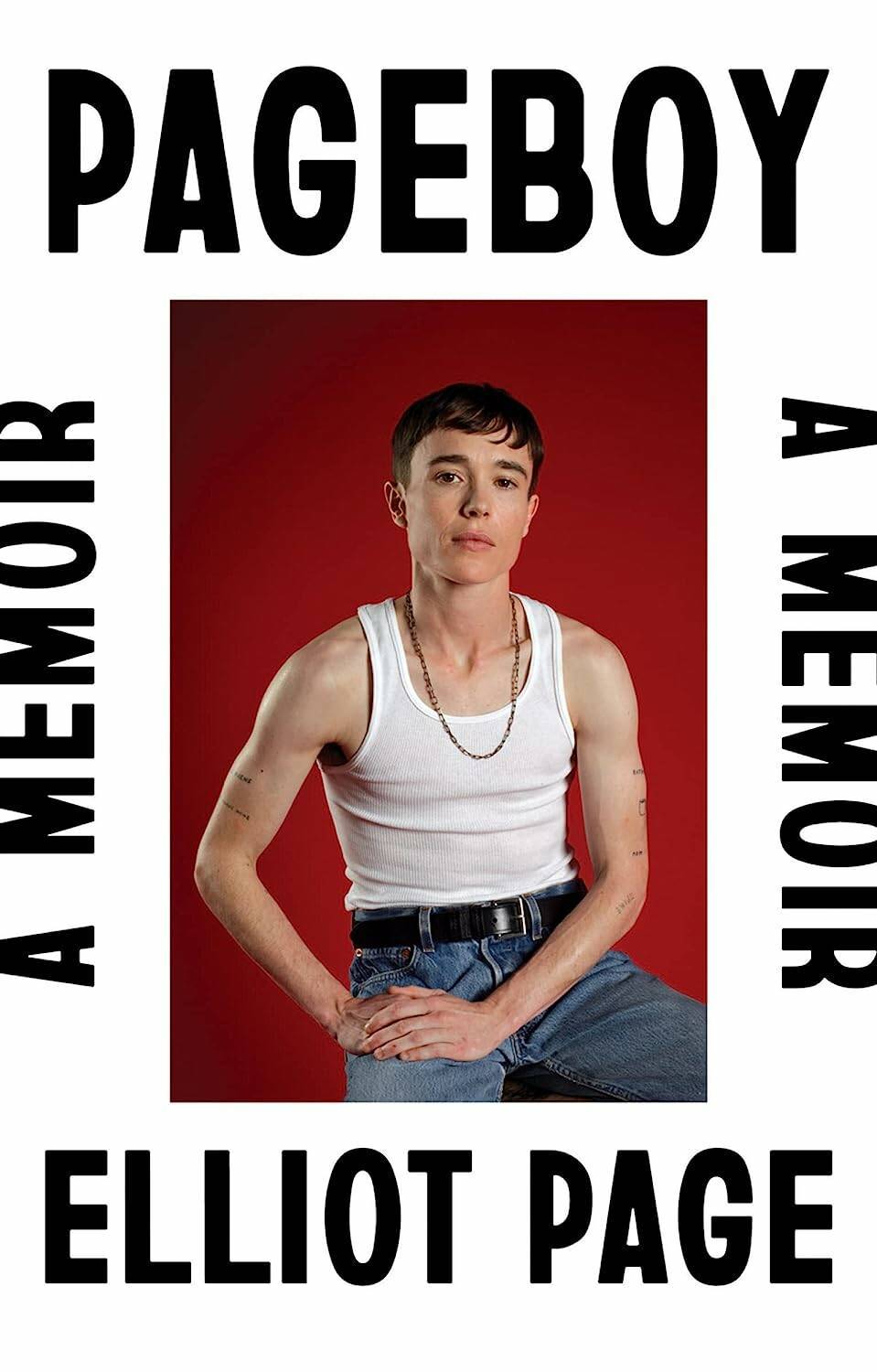
Pageboy
We all need to learn this lesson again and again, and Mr. Page seems happier for having learned it early — just don’t call him “adorable.”
Lara Rae’s gender-reveal play Dragonfly was published in 2019 by Scirocco Press. She is a longtime reviewer with Free Press.