Moral issues highlight unreasonable chasm
Advertisement
Read this article for free:
or
Already have an account? Log in here »
To continue reading, please subscribe:

Digital Subscription
One year of digital access for only $205*
- Enjoy unlimited reading on winnipegfreepress.com
- Read the E-Edition, our digital replica newspaper
- Access News Break, our award-winning app
- Play interactive puzzles
*First annual payment billed as $205.00 + GST for one year. This annual subscription will automatically renew at $233.00 + GST every 52 weeks (10% off the regular annual price of $259.35). Offer available to new and qualified returning subscribers only. Cancel any time.
To continue reading, please subscribe:
Add Free Press access to your Brandon Sun subscription for only an additional
$1 for the first 4 weeks*
- Enjoy unlimited reading on winnipegfreepress.com
- Read the E-Edition, our digital replica newspaper
- Access News Break, our award-winning app
- Play interactive puzzles
*Your next Brandon Sun subscription payment will increase by $1.00 and you will be charged $17.95 plus GST for four weeks. After four weeks, your payment will increase to $24.95 plus GST every four weeks.
Read unlimited articles for free today:
or
Already have an account? Log in here »
Hey there, time traveller!
This article was published 09/09/2023 (1072 days ago), so information in it may no longer be current.
At last, an academic book that says being unreasonable is a good thing.
Well, it’s not as simple as that. However Kirsty Sedgman, a cultural studies scholar at Britain’s University of Bristol, traces the faulty meaning of “reasonable” that has been accepted for centuries as beliefs and behaviours that are within reason in politics, judicial matters and society as a whole.
It is faulty, she posits, because it was designed by ruling majorities, the elite in society, to suit their needs and prevent “others” from rising from their place in society. It was not meant to be reasonable to everyone.
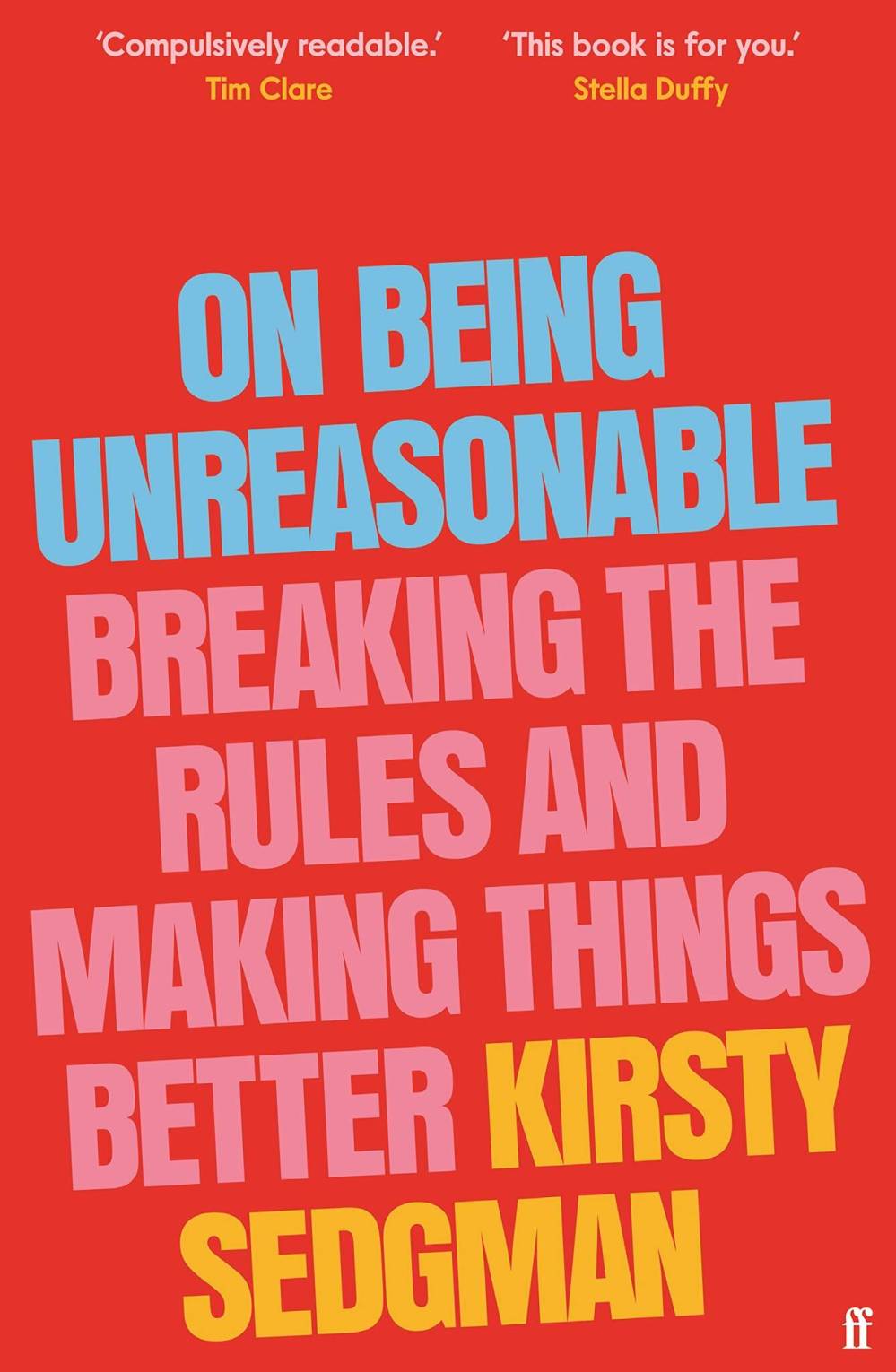
On Being Unreasonable
It is the source of the judicial tenet that behaviour should be acceptable to a “reasonable man” — providing he was white, had a job, a family, a secure place in the dominant society.
Those power dynamics and the social biases gave rise to a wide acceptance of what people should and shouldn’t do, but they also created discrimination that harms real social progress.
Sedgman describes her work as “a book in two halves.” In the first, Being Reasonable, she looks at the roots and effects of societal and behavioral norms across the world. In the second, Being Unreasonable, she makes a case for bucking them.
Civil debates on issues such as abortion rights, immigration, gun control, climate change or vaccines have disappeared, she writes. Reasonable discourse on issues broad in scope or of a more personal nature is as good as dead. Why? What’s “reasonable” to one person is outrageous to another.
Right-wing politicians around the world — she cites Jair Bolsonaro in Brazil, Donald Trump in the United States and Boris Johnson in the U.K. — have spent the past few years working harder than ever to encourage divisions over hot-button topics such as immigration and abortion rights.
She looks at major issues facing groups outside the so-called mainstream — how to protect your neighbourhood, when and how to protest against injustice and oppression, how to ensure your children get an education. But the “reasonable” battle includes questions such as: Is it OK to let children play in the yard while others are working from home? To do your makeup on a train or recline your seat on an airplane? What’s the right way to breastfeed in public?
The battlefield is wide and the issues diverse, and Sedgman is “endlessly fascinated” by how people can watch the same event unfolding yet understand it in such totally contradictory ways.
Calls to just be reasonable are getting louder, but instead of people learning to stand on the same moral ground there is a widening sense of antagonism, the author says.
Sedgman’s humour and the depth of her details make On Being Unreasonable an engaging lesson on the battle raging over competing visions of just what it means to be reasonable.
But just to be reasonable, lets give her the last word: “In the face of injustice, sometimes being naughty is the only moral choice.”
Chris Smith is a Winnipeg writer.