Near-future cast copes with climate catastrophe
Advertisement
Read this article for free:
or
Already have an account? Log in here »
To continue reading, please subscribe:

Digital Subscription
One year of digital access for only $205*
- Enjoy unlimited reading on winnipegfreepress.com
- Read the E-Edition, our digital replica newspaper
- Access News Break, our award-winning app
- Play interactive puzzles
*First annual payment billed as $205.00 + GST for one year. This annual subscription will automatically renew at $233.00 + GST every 52 weeks (10% off the regular annual price of $259.35). Offer available to new and qualified returning subscribers only. Cancel any time.
To continue reading, please subscribe:
Add Free Press access to your Brandon Sun subscription for only an additional
$1 for the first 4 weeks*
- Enjoy unlimited reading on winnipegfreepress.com
- Read the E-Edition, our digital replica newspaper
- Access News Break, our award-winning app
- Play interactive puzzles
*Your next Brandon Sun subscription payment will increase by $1.00 and you will be charged $17.95 plus GST for four weeks. After four weeks, your payment will increase to $24.95 plus GST every four weeks.
Read unlimited articles for free today:
or
Already have an account? Log in here »
Hey there, time traveller!
This article was published 14/10/2023 (1066 days ago), so information in it may no longer be current.
For first-time British-Australian novelist J.R. Burgmann, Children of Tomorrow is more than the beginning of a literary career. It is also his doctoral thesis and a work of public art on a terrifying and critically important subject — the end of the world.
Starting in the 2010s and running all the way to the late 21st century, the story explores decades of climate change-fuelled ecological and societal collapse through the intertwined lives of a handful of researchers, activists and artists.
As the novel progresses, new generations are born and new characters appear. Burgmann contrasts generational worldviews to good effect. Decades from now, aged Millennials are left lamenting how much has been lost, but for later generations the ecological poverty of a ravaged world is all they have known and they are almost sanguine about it.
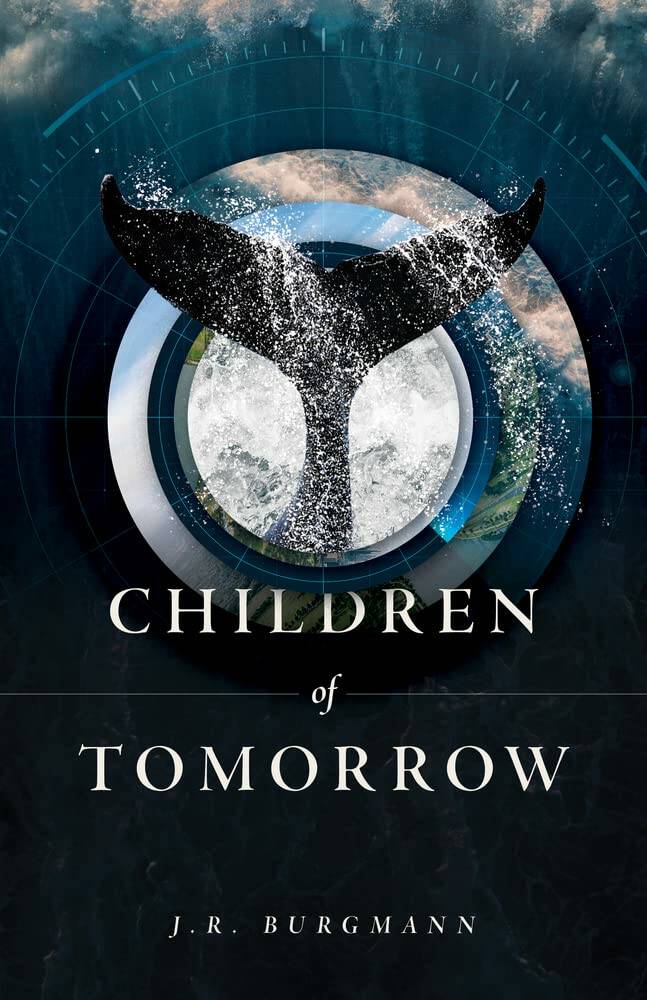
Children of Tomorrow
Apocalyptic novels are not new. From John Wyndham’s The Day of the Triffids (1951) and Richard Matheson’s I Am Legend (1954) to Margaret Atwood’s Oryx and Crake (2003) and Cormac McCarthy’s The Road (2006), the precipitating disaster may range from disease outbreaks to nuclear war to freak astronomical events. Often the disaster is human-caused.
But well-researched novels detailing our civilization’s unravelling over the next few decades due to climate disaster feel different than even realistic nuclear or pandemic tales, especially when written in the last few years. A nuclear war is still a “what if,” but as wildfires rage and storms batter communities, climate collapse feels more and more like a “what will.”
Burgmann’s story becomes increasingly gripping as it goes along and it probably goes without saying that this is not a novel that will assuage anyone’s climate anxiety.
The narrative does a fairly good job of plausibly tracing the path from today’s world to one in which governments don’t exist and scattered enclaves of vegetation support subsistence foraging communities across an otherwise blasted landscape. Burgmann makes regular use of time skips as his main narrative trick, seeding just enough foreshadowing details beforehand to allow the reader to fill in the intervening years.

The novel has a fairly large cast of characters, nearly 10, given its short length. Not all receive equal time, some having two or three lines in an early chapter and then disappearing until well into the second half of the book.
Between the shifting character viewpoints, the frequently changing locations of each character and the aforementioned time skips, Burgman achieves a broad view of the coming century, but the cost is a choppier sense of continuity. Readers may sometimes be left wanting more detail. A subplot of ecoterrorism gets particularly short shrift, emerging briefly at several points throughout the novel but with the resolution only alluded to.
By contrast, Nina Munteanu’s A Diary in the Age of Water (2020) spends the majority of its pages in the viewpoint of a single woman born in 2010s Toronto and living in the same house through most of the century. Stephen Baxter’s Flood (2008) also focuses on a single character across many decades, though she jumps around the world. In both cases this results in a more detailed and immersive on-the-ground picture of how social collapse happens (slowly at first, then faster as disasters occur too rapidly to stop).
But with its broader view, Children of Tomorrow does a good job anchoring everything that happens to its characters and their broader human society to the other events the novel chronicles: the bleaching of coral reefs, the burning of ancient forests, the collapse of ice sheets and the submergence of coastal ecosystems.
Joel Boyce is a Winnipeg writer and educator.