Breaking the rules

Historians chronicle how prominent politicians duped Indigenous communities out of land, compensation

Advertisement

Advertise with us

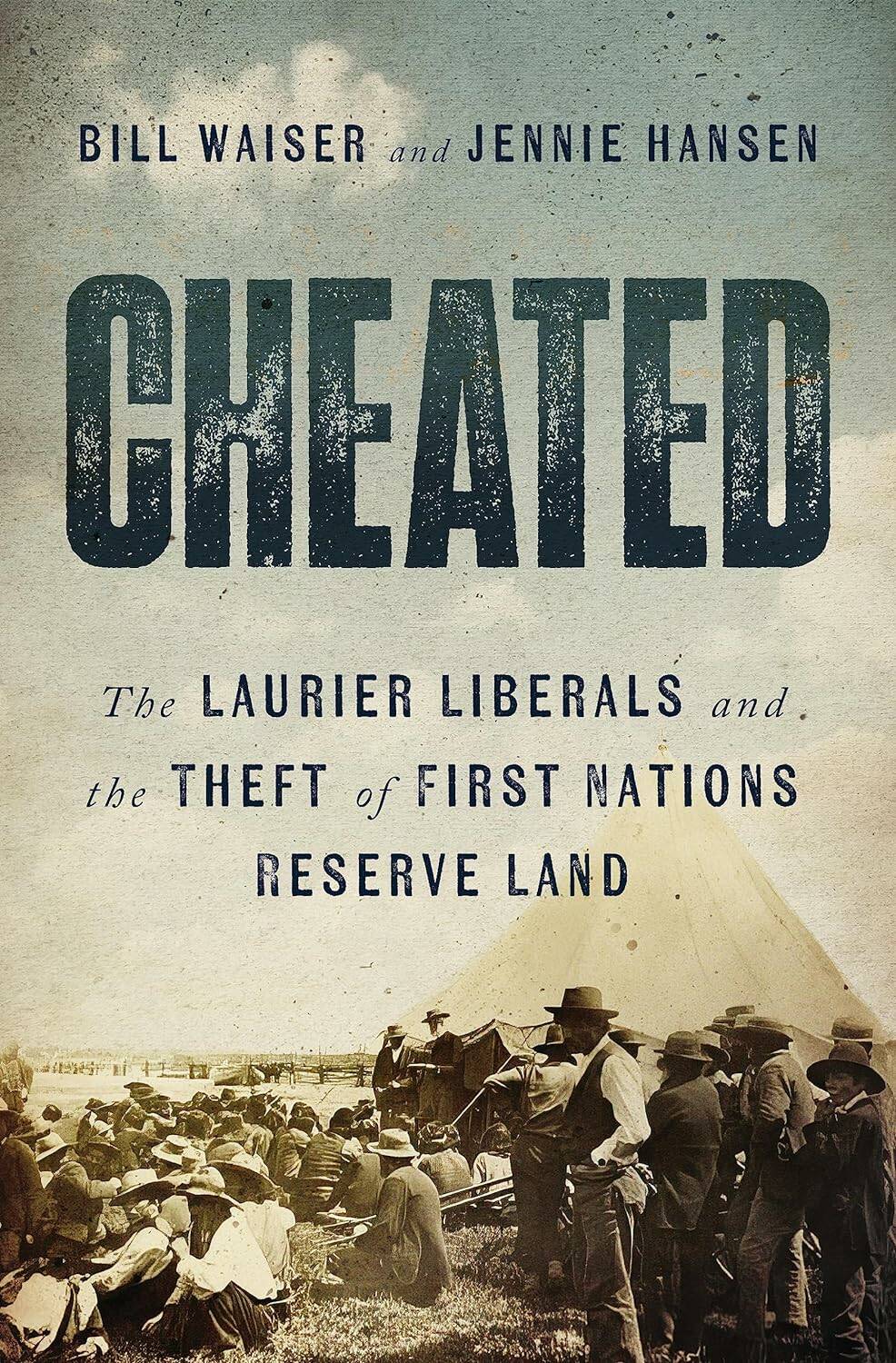
Many Canadians are aware that as a new nation Canada, anticipating a rush of western settlers, signed Treaties 1-7 with Prairie First Nations in the 1870s. But how many of us knew that over 20 per cent of the reserve land allotted in the 1870s was surrendered, most of it under pressure from the Department of Indian Affairs, just a few years later? The subtitle of Bill Waiser and Jennie Hansen’s book Cheated says it all: The Laurier Liberals and the Theft of First Nations Land.

Read this article for free:


or

Already have an account? Log in here »

To continue reading, please subscribe:

Subscribe and receive a limited-edition Free Press branded hat or tote.

Digital Subscription

One year of digital access for only $205*

  • Enjoy unlimited reading on winnipegfreepress.com
  • Read the E-Edition, our digital replica newspaper
  • Access News Break, our award-winning app
  • Play interactive puzzles

*First annual payment billed as $205.00 + GST for one year. This annual subscription will automatically renew at $233.00 + GST every 52 weeks (10% off the regular annual price of $259.35). Offer available to new and qualified returning subscribers only. Cancel any time.

To continue reading, please subscribe:

Add Free Press access to your Brandon Sun subscription for only an additional

$1 for the first 4 weeks*

  • Enjoy unlimited reading on winnipegfreepress.com
  • Read the E-Edition, our digital replica newspaper
  • Access News Break, our award-winning app
  • Play interactive puzzles
Start now

*Your next Brandon Sun subscription payment will increase by $1.00 and you will be charged $17.95 plus GST for four weeks. After four weeks, your payment will increase to $24.95 plus GST every four weeks.

Hey there, time traveller!
This article was published 21/10/2023 (1057 days ago), so information in it may no longer be current.

Many Canadians are aware that as a new nation Canada, anticipating a rush of western settlers, signed Treaties 1-7 with Prairie First Nations in the 1870s. But how many of us knew that over 20 per cent of the reserve land allotted in the 1870s was surrendered, most of it under pressure from the Department of Indian Affairs, just a few years later? The subtitle of Bill Waiser and Jennie Hansen’s book Cheated says it all: The Laurier Liberals and the Theft of First Nations Land.

In 1998 the Indian Claims Commission reported that 34 Prairie reserves surrendered land between 1896 and 1911. Cheated traces the course of each of those surrenders to see how and why they occurred and who benefitted. The book makes it clear that numerous rules were broken under pressure from prominent politicians, civil servants and their Liberal supporters. Often land was sold to speculators with inside information and First Nations ended up getting a fraction of what the land ultimately sold for.

Waiser is a professor of history at the University of Saskatchewan. He has written a number of books including A World We Have Lost: Saskatchewan Before 1905, which won the Governor-General’s Literary Award for non-fiction in 2016. Hansen is also a Saskatchewan historian who studied under Waiser as a graduate student.
Cheated

Cheated

The authors have scoured the files of Indian Affairs, Hansard and newspapers, as well as the report of the Indians Land Claims Commission (First Nations land surrenders on the Prairies 1896-1911), to document how each land surrender occurred, often after many attempts. In Manitoba, for example, the St. Peter’s reserve near Selkirk was finally surrendered in 1907 after at least half a dozen meetings in which the band had rejected a surrender. The vote at that final meeting was 107-98. It is likely that the offer of an immediate cash payment of $90 to each band member tipped the balance.

In the case of the Swan Lake reserve southwest of Winnipeg, a partial surrender was negotiated in 1908 by using the services of a missionary named John McDougall who spoke several Indigenous languages. In this case the inducements appear to have been $100 in cash plus a false promise that the band could once again hold sundances. The band later appealed directly to the Governor General about being misled: “He made a lot of nice promises on behalf of the government… and we believed everything he said was true.”

Frustrating for readers — and likely for the authors as well — is the spotty reporting to Indian Affairs of exactly what occurred at each surrender meeting. Often the Indian agent, or whatever government official conducted the meeting, only reported the final vote. Regulations required that a majority of male band members support a surrender, but time and time again this requirement was ignored — only a majority of those who attended the meeting often sufficed (possibly while others were out hunting or hunkering down in the cold).

There is far more detailed information here on how the cheaters benefitted when the surrendered land was tendered or auctioned off. The list of culprits includes two deputy ministers of Indian affairs, James Smart and Frank Pedley, as well as Frank Oliver, minister of Indian Affairs and the Interior between 1905 and 1911. Clifford Sifton, Minister of Indian Affairs and the Interior from 1896 to 1905, seems not to have been involved, but he did let the scams happen while he concentrated on immigration schemes.

The only positive note to this story is that First Nations groups have been working for compensation since the 1970s and some are finally receiving it. In 2008 Peguis First Nation received $126 million for surrendering St. Peter’s in 1907.

William James Topley / Library and Archives Canada item 3436595
                                Cheated details how deputy minister of the Interior and Indian Affairs James Smart (above), among others, benefitted when surrendered First Nations land was tendered or auctioned off.

William James Topley / Library and Archives Canada item 3436595

Cheated details how deputy minister of the Interior and Indian Affairs James Smart (above), among others, benefitted when surrendered First Nations land was tendered or auctioned off.

Faith Johnston is a writer and former teacher who is constantly being reminded that she still has a lot to learn.

William James Topley / Library and Archives Canada item 3412164
                                Frank Pedley, superintendent of immigration, later replaced Smart as deputy minister of Indian Affairs and is also benefitted from the auctioning off of First Nations land.

William James Topley / Library and Archives Canada item 3412164

Frank Pedley, superintendent of immigration, later replaced Smart as deputy minister of Indian Affairs and is also benefitted from the auctioning off of First Nations land.

Newton McConnell / Public Archives of Ontario, C 301-0-0-0-853
                                This political cartoon from the time portrays Frank Oliver, minister of the Interior and Indian Affairs between 1905-11, as a gun-slinging desperado for his handling of the surrender of the St. Peter’s (Peguis) reserve.

Newton McConnell / Public Archives of Ontario, C 301-0-0-0-853

This political cartoon from the time portrays Frank Oliver, minister of the Interior and Indian Affairs between 1905-11, as a gun-slinging desperado for his handling of the surrender of the St. Peter’s (Peguis) reserve.

Jennie Hansen and Bill Waiser
                                Key locations in Manitoba that are explored in Cheated include Swan Lake, Roseau River, St. Peter’s and The Pas.


Jennie Hansen and Bill Waiser

Key locations in Manitoba that are explored in Cheated include Swan Lake, Roseau River, St. Peter’s and The Pas.

Report Error Submit a Tip

More Stories

Education minister’s reasons for revoking teacher’s licence ‘not good enough,’ judge decides

Maggie Macintosh 5 minute read Preview

Education minister’s reasons for revoking teacher’s licence ‘not good enough,’ judge decides

Maggie Macintosh 5 minute read Updated: Yesterday at 9:14 AM CDT

A Manitoba judge has rejected the education minister’s decision to end a teacher’s career because he repeatedly messaged with a 13-year-old girl on social media.

Read
Updated: Yesterday at 9:14 AM CDT

Multiple factors add up to difficult harvest

Laura Rance-Unger 4 minute read Preview

Multiple factors add up to difficult harvest

Laura Rance-Unger 4 minute read 2:00 AM CDT

Earlier this month, farmers sent agriculture publications some heartbreaking photos showing how heavy rains across the Prairies had pummelled a promising harvest.

An idled combine up to its axles in a flooded Saskatchewan field, straw bales surrounded by water and field equipment stranded on the far side of a washed-out section told the obvious story.

The Sept. 6-7 event was just the latest in a series of heavy rainfall events that have plagued this year’s growing season. Similar deluges hit different regions July 15-17, Aug. 14, and Aug. 31 — some of which were accompanied by tornadoes.

“What’s made this season challenging is the intensity of these rainfalls,” said Manitoba Agriculture ag meteorology specialist Alison Sass as she reviewed the summer’s weather patterns on an extension webinar.

Read
2:00 AM CDT

Don’t let bitterness isolate and dispirit you

Maureen Scurfield 4 minute read Yesterday at 2:01 AM CDT

DEAR MISS LONELYHEARTS: I just got out of a relationship a few months ago, and I’m still so hurt that life seems unreal.

The woman I thought I was going to marry cheated on me with an old boyfriend — a real jerk, but very good-looking. I’m still feeling totally crushed.

I worry I won’t be able to trust any woman now. I know that sounds unfair, but I’ve been cheated on twice before, in just five years! I realize it might just be the type of person I’m attracted to — a bit on the wild side — but my most-recent girlfriend wasn’t like that and seemed to have her life together and knew what she wanted. But she was also secretly playing around on me — Mr. Clueless.

I can feel resentment building inside me toward all women. I really don’t want to become one of those bitter guys who ends up single for the rest of his life because they don’t trust anyone. But how do I get over this? Is it even possible or am I going to be a loser who is forever cheated on?

City rapped for taking five days to remove animal carcass

Morgan Modjeski 2 minute read Thursday, Sep. 10, 2026

A Winnipeg resident said she’s upset it took the city five days to retrieve a dead fawn from her yard after she reported it to 311.

Amy Gelhorn said she and her family noticed the animal carcass in her garden on Saturday. She called 311 and was told it would be picked up after the long weekend.

“It was removed this afternoon,” the north River Heights resident said Thursday. “So it took six days to remove it and we had to basically phone every day.”

She said neighbours on both sides of her house told her they saw the animal acting strangely on Friday and reported their concerns to 311. It’s believed the animal died overnight. As the days dragged on, the body continued to rot.

Paranoid and high, man kills dad, takes photos of body, calls 911

Dean Pritchard 3 minute read Preview

Paranoid and high, man kills dad, takes photos of body, calls 911

Dean Pritchard 3 minute read Thursday, Sep. 10, 2026

Paranoid and sleep-deprived after a night of smoking crack, Donato Pellettieri stabbed his 64-year-old father 27 times, called 911 and waited outside their Maryland Avenue residence until police arrived minutes later and arrested him for murder, court was told Thursday.

“Paranoia led him to believe this was a kill-or-be-killed situation,” Crown attorney Joel Refvik told Court of King’s Bench Justice Ken Champagne. “This is an individual who, but for his drug use and paranoia, likely would not have killed his father.”

The 39-year-old pleaded guilty to second-degree murder for the July 2021 killing of Salvatore Pellettieri and was sentenced to life in prison with no chance of parole for at least 10 years.

The resolution of his case was delayed by long periods in which he was mentally unfit to stand trial, and changed lawyers and awaited reports to determine whether he should be found not criminally responsible for his actions.

Read
Thursday, Sep. 10, 2026

The port of Churchill — but done right

Editorial 4 minute read Preview

The port of Churchill — but done right

Editorial 4 minute read 2:00 AM CDT

The seagoing grain carrier wasn’t christened with a champagne bottle. There was no confetti or streamers. Nevertheless, the Aug. 31 event marking the first shipment of grain to be loaded at the Port of Churchill since 2020 was celebrated like the launch of a brand new vessel.

The presence of the federal minister of northern and arctic affairs, provincial cabinet ministers and leaders and elders from several northern First Nations signalled that the fast-tracked process of refurbishing and buffing up Manitoba’s deep-water seaport gem is gaining momentum.

For OneNorth, the partnership of 29 First Nations and 12 northern communities which owns the Port of Churchill and the Hudson Bay Railway (both operated by the Arctic Gateway Group) the event heralded a new beginning. It’s been eight years since OneNorth purchased the port and railroad, and six years since grain was moved by rail through Manitoba and then by ship to European markets. Two more grain shipments, plus shipments of potash and critical minerals, will continue through the fall.

When Prime Minister Mark Carney solicited the premiers to suggest “nation-building” projects following his election in 2025, Premier Wab Kinew pitched a Manitoba trade corridor that would move wheat, critical minerals, potash and energy (oil or liquid natural gas) through the Port of Churchill.

Read
2:00 AM CDT