Couple’s sustainable living chronicled
Advertisement
Read this article for free:
or
Already have an account? Log in here »
To continue reading, please subscribe:

Digital Subscription
One year of digital access for only $205*
- Enjoy unlimited reading on winnipegfreepress.com
- Read the E-Edition, our digital replica newspaper
- Access News Break, our award-winning app
- Play interactive puzzles
*First annual payment billed as $205.00 + GST for one year. This annual subscription will automatically renew at $233.00 + GST every 52 weeks (10% off the regular annual price of $259.35). Offer available to new and qualified returning subscribers only. Cancel any time.
To continue reading, please subscribe:
Add Free Press access to your Brandon Sun subscription for only an additional
$1 for the first 4 weeks*
- Enjoy unlimited reading on winnipegfreepress.com
- Read the E-Edition, our digital replica newspaper
- Access News Break, our award-winning app
- Play interactive puzzles
*Your next Brandon Sun subscription payment will increase by $1.00 and you will be charged $17.95 plus GST for four weeks. After four weeks, your payment will increase to $24.95 plus GST every four weeks.
Read unlimited articles for free today:
or
Already have an account? Log in here »
Hey there, time traveller!
This article was published 28/10/2023 (1070 days ago), so information in it may no longer be current.
Many people dream about leaving their old lives behind to begin something entirely new, especially when the project has a larger purpose. In Our Little Farm: Adventures in Sustainable Living, Peter and Miriam Wohlleben describe their experiment in living sustainably, their successes and failures, as they discovered new ways of reducing their impact on the environment.
Peter Wohlleben worked for many years as a forester before beginning to write for a living. He is the author of several books, including The Hidden Life of Trees and several other bestselling books on the natural world. He manages a sustainable forest and runs the Wohlleben Forest Academy from his home in the Eifel Mountains of Germany. Miriam Wohlleben manages the back office; she grew up in the city but is now dedicated to country living.
Our Little Farm relates the lessons Peter and Miriam Wohlleben have learned during the decades they have spent attempting to live sustainably. This experiment was never intended as a complete change of lifestyle, the authors state, but rather an attempt to add only the sustainable practices that were manageable for the family.
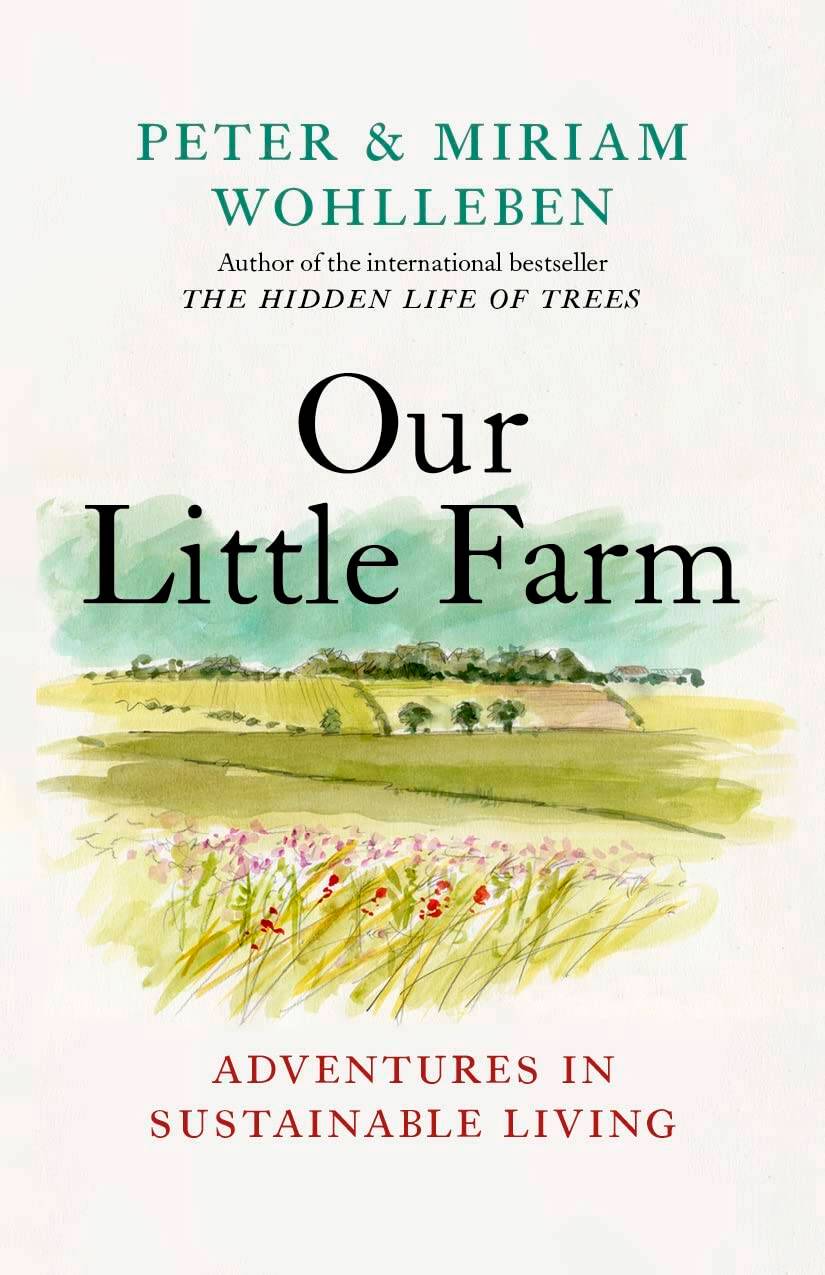
Our Little Farm
The book is less of a day-by-day account of this adventure than a description of the overall project and the conclusions the Wohllebens reached. Among the topics discussed are the calculations necessary for raising goats, including the amount of land the animals need, the usefulness of goats’ milk and hair and how these animals fit with the family’s overall goal. Also detailed are deciding what to consider staple foods, learning how to keep bees, choosing the right vegetables and fruits for the climate and maintaining enjoyment of the project.
Our Little Farm includes few personal anecdotes, focusing instead on offering an overview of the techniques the authors discovered over the years. Casual readers looking for an inspiring story of sustainable living might be disappointed by the limited discussion of daily challenges, such as learning a new routine to care for the animals, or the struggles of relieving a monotonous diet if one crop flourished while another failed. The book contains little of this type of day-to-day storytelling, although some of these topics are briefly discussed.
For people thinking of starting their own experiments into sustainable living, however, the book provides some valuable insights. Although the experiment took place in Germany, where the climate and soil are different from Canada’s, the principles behind sustainable living are similar wherever people live. Concepts of mindfulness and an appreciation of nature are universal; readers can use the ideas from the book to relate to their own situations.
Despite several technical sections, Our Little Farm is quite an easy read, smoothly translated from the original German by Jane Billinghurst. Recipes scattered throughout the text help to make the book practical, although North American readers will need to convert the European-style measurements.

Our Little Farm shows that sustainable living at some level is a real possibility for people willing to work at it. For many readers, the book could offer inspiration or guidance to help make changes in their lives.
Susan Huebert is a Winnipeg writer and dog walker.