Into the West
Canadian Pacific Railway’s expansion explored in Bown’s new historical tome
Advertisement
Read this article for free:
or
Already have an account? Log in here »
To continue reading, please subscribe:

Digital Subscription
One year of digital access for only $205*
- Enjoy unlimited reading on winnipegfreepress.com
- Read the E-Edition, our digital replica newspaper
- Access News Break, our award-winning app
- Play interactive puzzles
*First annual payment billed as $205.00 + GST for one year. This annual subscription will automatically renew at $233.00 + GST every 52 weeks (10% off the regular annual price of $259.35). Offer available to new and qualified returning subscribers only. Cancel any time.
To continue reading, please subscribe:
Add Free Press access to your Brandon Sun subscription for only an additional
$1 for the first 4 weeks*
- Enjoy unlimited reading on winnipegfreepress.com
- Read the E-Edition, our digital replica newspaper
- Access News Break, our award-winning app
- Play interactive puzzles
*Your next Brandon Sun subscription payment will increase by $1.00 and you will be charged $17.95 plus GST for four weeks. After four weeks, your payment will increase to $24.95 plus GST every four weeks.
Read unlimited articles for free today:
or
Already have an account? Log in here »
Hey there, time traveller!
This article was published 10/11/2023 (1071 days ago), so information in it may no longer be current.
Fresh from his award-winning history of the Hudson Bay Company, 2021’s The Company, historical non-fiction author Stephen Bown has in his latest book tackled a much more complicated period in Canadian history: the Eastern Canadian takeover of the West and the building of the Canadian Pacific Railway (CPR).
In Dominion, Bown admits he was initially reluctant to take on a story with so many threads and sensitive issues. At times his efforts to give nuanced portrayals of a long list of familiar culprits such as Sir John A. Macdonald do go on a little long and his debates on the degree of racism and imperialism involved in the project occasionally become ponderous. But Bown does succeed in giving readers an expanded social context for the period as well as other new revelations.
Did you know, for example, that Louis Riel was only 25 when a cousin fetched him to deal with some Canadian surveyors trespassing on his land? Riel was chosen because he could speak English; from there began the maelstrom of his life, leading to his execution 16 years later.

Postmedia News
In this November 1885 photo, Donald Alexander Smith (centre) drives the last spike of the Canadian Pacific Railway in Craigellachie, B.C.
Many won’t have heard of of Jerry Potts, a Métis guide who worked for the North-West Mounted Police for over 20 years, helping them survive their initial incompetence, or James MacLeod, the NWMP commissioner who resigned when the federal government failed to honour its treaty obligations.
It has been 50 years since Pierre Berton wrote The National and The Last Spike, his two-volume history of the CPR. Bown has scoured all the relevant research since then, as well as earlier accounts written by those actually involved. (Bown’s own back catalogue includes a book on dynamite, 2005’s A Most Damnable Invention, which was invented by Alfred Nobel in 1867 and has played an important role in the early expansion of transportation.)
Included in Dominion’s extensive bibliography is the only account of the building of the CPR written by a Chinese labourer, The Diary of Dukesang Wong, published posthumously in 2020. Wong was among 17,000 Chinese labourers working on the construction of the CPR in B.C. They were supposedly fed by their Chinese contractors and paid only $1.00 a day, compared to $1.50 a day paid to the other workers who were fed by the CPR. The Anti-Chinese Association, based in Victoria, objected to their presence, but the CPR, strapped for cash, couldn’t resist hiring them.
Readers from Western Canada will find this book particularly interesting. Picture the Prairies before settlement, as described by George Grant, who accompanied CPR chief surveyor Sandford Fleming west in 1871: the land was “a sea of green sprinkled with yellow, red, lilac and white,” and their Cree guides were “handsomer than any of us.” And picture Winnipeg, whose population was 8,000 in 1880 but had grown to 20,000 by 1885, with thousands living in tents.

Yes, the building of the CPR was a great accomplishment. With over 4,000 kilometres of track, much of it through challenging, sparsely populated terrain, it was, says Bown, “the longest, most technically sophisticated yet financially precarious railway yet constructed anywhere.”

Supplied photo
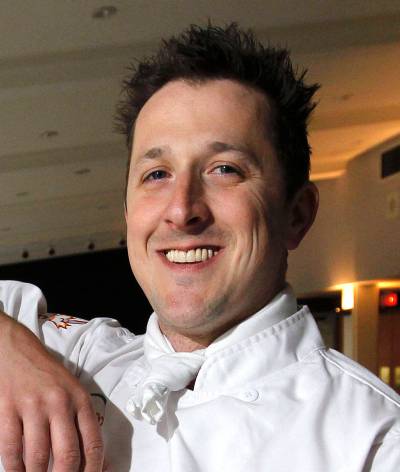
Stephen Bown
Yet it was also, as Bown clearly shows, a feat motivated by profit and imperialism. Macdonald and his colleagues were determined to prevent the U.S. from taking over B.C. and the northern Prairies. CPR investors just wanted to make money, which they eventually did.
But no one living in the vast territory then called Rupert’s Land was consulted at all. Yes, the Métis were able, with great effort and sacrifice, to gain some concessions, and the First Nations negotiated treaties that may have helped mitigate the effects of settlement had the government kept its promises.
While there were gains which must be acknowledged, the losses fell on those least able to bear them.
Faith Johnston is a Winnipeg writer and former teacher.

Dominion
History
Updated on Friday, November 10, 2023 9:50 AM CST: Corrects pub date of The Company to 2021