Artistic ambition, domestic strife
Maritime artist Mary Pratt’s paintings captured everyday scenes in stunning detail
Advertisement
Read this article for free:
or
Already have an account? Log in here »
To continue reading, please subscribe:

Digital Subscription
One year of digital access for only $205*
- Enjoy unlimited reading on winnipegfreepress.com
- Read the E-Edition, our digital replica newspaper
- Access News Break, our award-winning app
- Play interactive puzzles
*First annual payment billed as $205.00 + GST for one year. This annual subscription will automatically renew at $233.00 + GST every 52 weeks (10% off the regular annual price of $259.35). Offer available to new and qualified returning subscribers only. Cancel any time.
To continue reading, please subscribe:
Add Free Press access to your Brandon Sun subscription for only an additional
$1 for the first 4 weeks*
- Enjoy unlimited reading on winnipegfreepress.com
- Read the E-Edition, our digital replica newspaper
- Access News Break, our award-winning app
- Play interactive puzzles
*Your next Brandon Sun subscription payment will increase by $1.00 and you will be charged $17.95 plus GST for four weeks. After four weeks, your payment will increase to $24.95 plus GST every four weeks.
Read unlimited articles for free today:
or
Already have an account? Log in here »
Hey there, time traveller!
This article was published 02/12/2023 (1011 days ago), so information in it may no longer be current.
In the words of British art historian Katy Hessel, “Being a woman and an artist has never been easy.”
In fact, the life of acclaimed Canadian painter Mary Pratt exemplifies this statement in an engaging new biography about her 50-year art career. Rife with conflict and struggle, the narrative delineates the roles played by artistic ambition and domestic strife in the trajectory of her life as an artist, wife, and mother.
Pratt, who died in 2018, was best known for her fascination with the dazzling effects of light depicted in her still lifes and portraits.
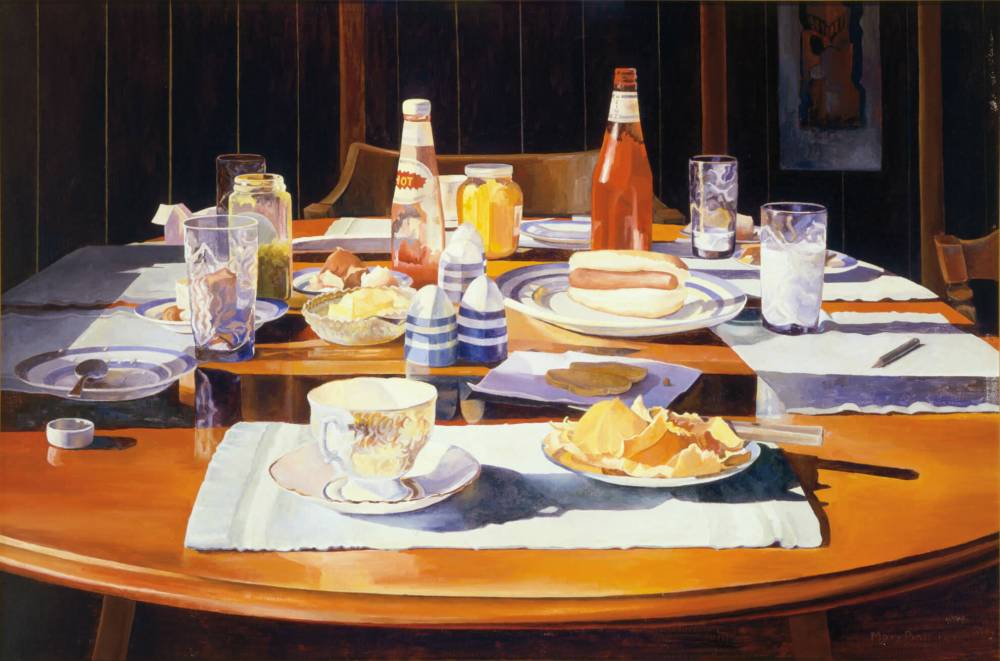
Collection of the Beaverbrook Art Callery; © Estate of Mary Pratt, courtesy of the estate of Mary Pratt and Goose Lane Editions
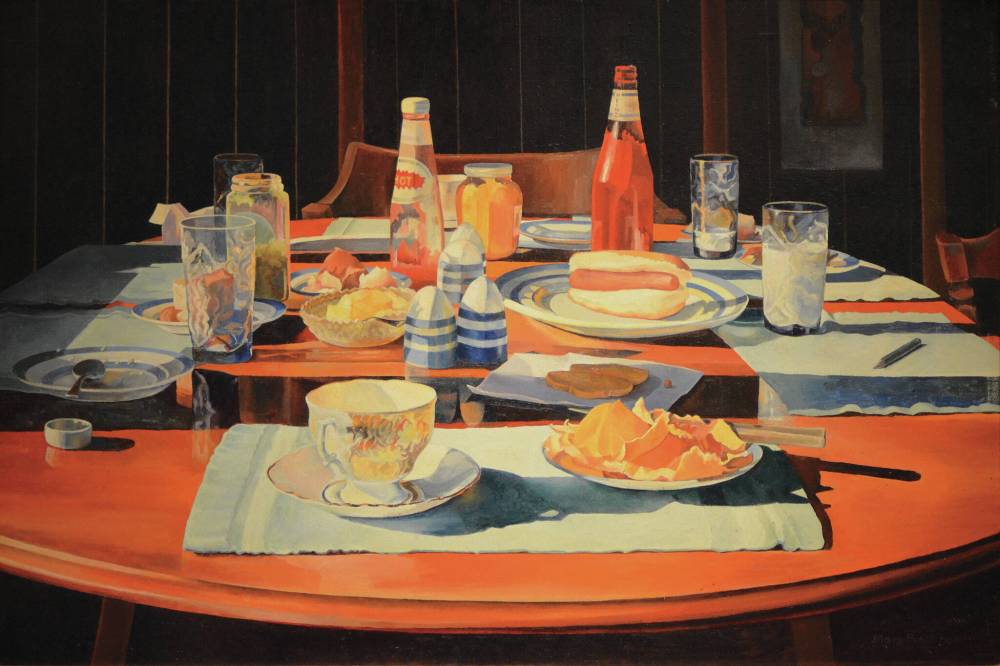
Mary Pratt’s 1969 painting Supper Table, oil on canvas. Light flooding the house one evening transformed objects on the uncleared table from mundane to beautiful.
Koval is a fine arts professor and curator who has written extensively on 19th-century artist J.M. Whistler. She currently lives in New Brunswick.
Born in Fredericton in 1935, Pratt (born Mary Frances West) demonstrated artistic talent at an early age, and her parents encouraged her to pursue it. After high school, she studied fine arts at Mount St. Allison University.
There she met Christopher Pratt, a classmate whom she married in 1957. Soon afterwards, they relocated to Scotland for art school, but later returned to Fredericton to complete their bachelor of fine arts degrees.
By the time they graduated in 1961, they had two small children under the age of three. One of Mary’s instructors told her, “There can only be one artist in the family and that’s Christopher!” That remark only made her more determined to be an artist.
At this point, Christopher Pratt was already a known quantity, with a National Gallery exhibit and several others, while Mary’s art career was stalled. That year, Christopher was offered a position as curator at the Memorial University gallery, thus they moved to St. John’s, N.L. However, the politics of the job produced panic attacks and ulcers, so he quit to paint full-time.
Mary Pratt
With little money coming in, the Pratts moved into his family’s isolated un-winterized cottage in rural Newfoundland. Mary still wanted to paint, but had little time because of the children. They’d moved five times in six years, and she was pregnant again. She could only paint for half-hour stints.
Then one morning, something magical happened. Mary noticed their unmade bed bathed in light, and a physical sensation overcame her. It felt “like a gut punch” or “an erotic charge.” She couldn’t get to her easel fast enough; she had found her artistic voice.
On another occasion, light flooded into the house one evening, transforming the objects on their uncleared supper table from mundane to beautiful. Mary needed to paint that scene but there was little time, so her camera captured that moment. Later she used the slide as a reference point for painting Supper Table. This method became a crucial step in Mary’s creative process.
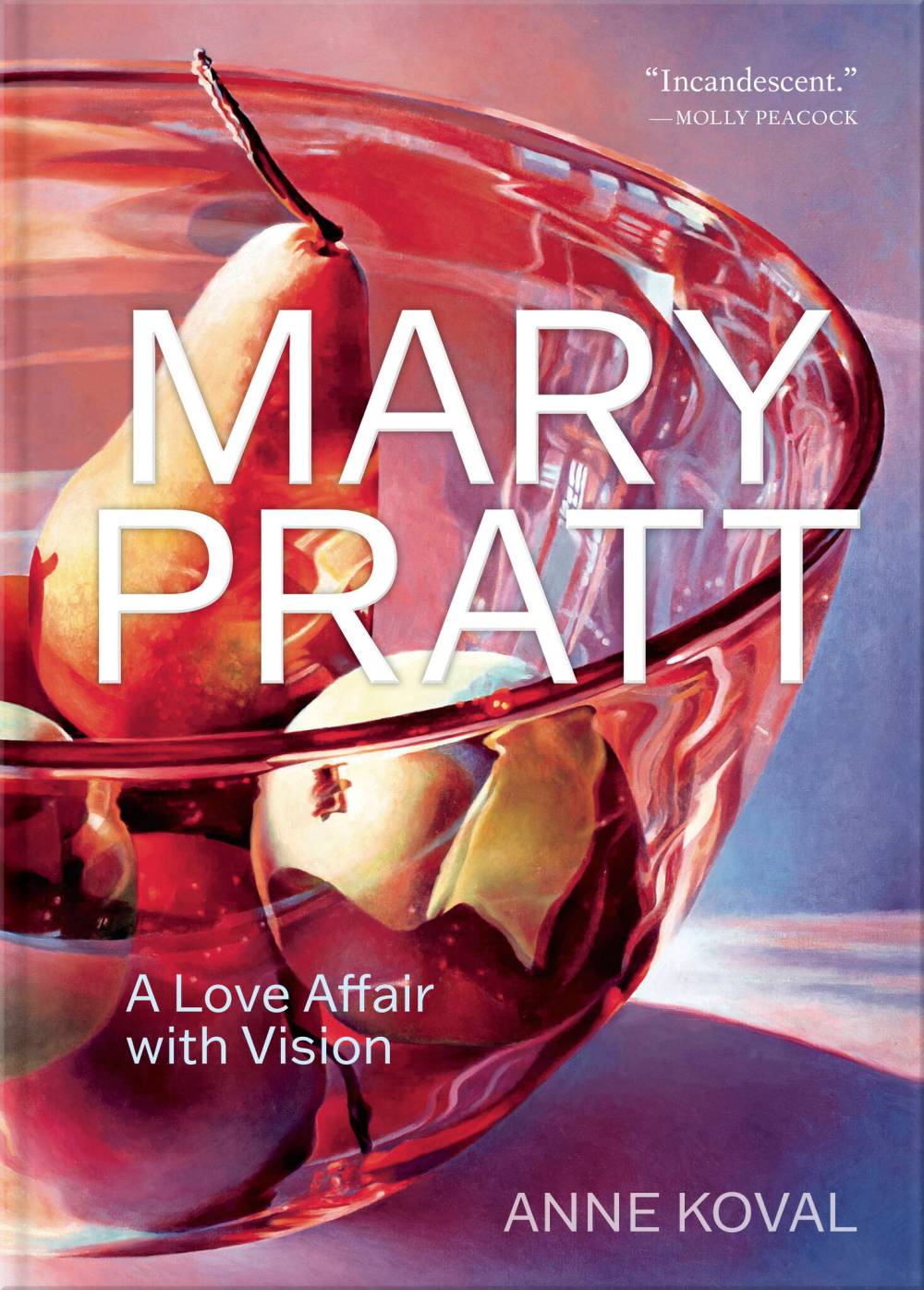
Beautiful reproductions of these paintings and other works are showcased throughout Koval’s book. Each chapter present a series of paintings that focuses on a commonality — either a theme or new direction in Mary’s work.
Koval’s crisp, succinct narrative intersperses details about Mary’s personal life that relate to the paintings; one chapter about weddings, for example, displays matrimonial portraits of her two daughters. At the same time, we learn about Mary’s concern about the tenuousness of her own marriage.

Alexandrya Eaton photo
Anne Koval
Also included are tidbits from Mary’s brutally honest journal entries and letters to her parents, adding a sense of intimacy and authenticity to the narrative.
Readers with an interest in art will surely enjoy this lucid, well-researched tribute to a strong-minded female painter who left her own unique mark on the Canadian art world.
Bev Sandell Greenberg is a Winnipeg critic and editor. She enjoys reading and writing stories about artists.
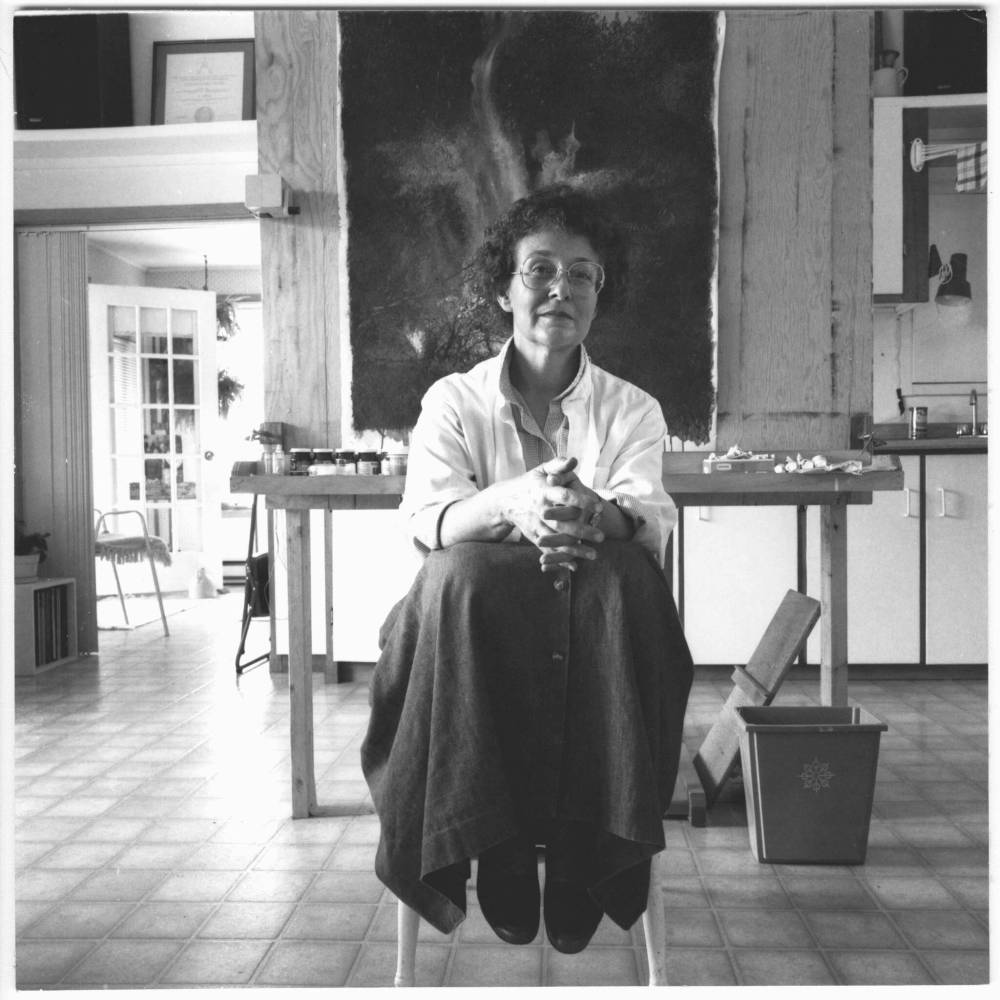
Courtesy the Owens Art Gallery, Mount Allison University and Goose Lane Editions
Mary Pratt in her studio in 1989.