Chekhov of the darp

Set in rural Mennonite Manitoba, Mitchell Toews’ short-story debut a stunner

Advertisement

Advertise with us

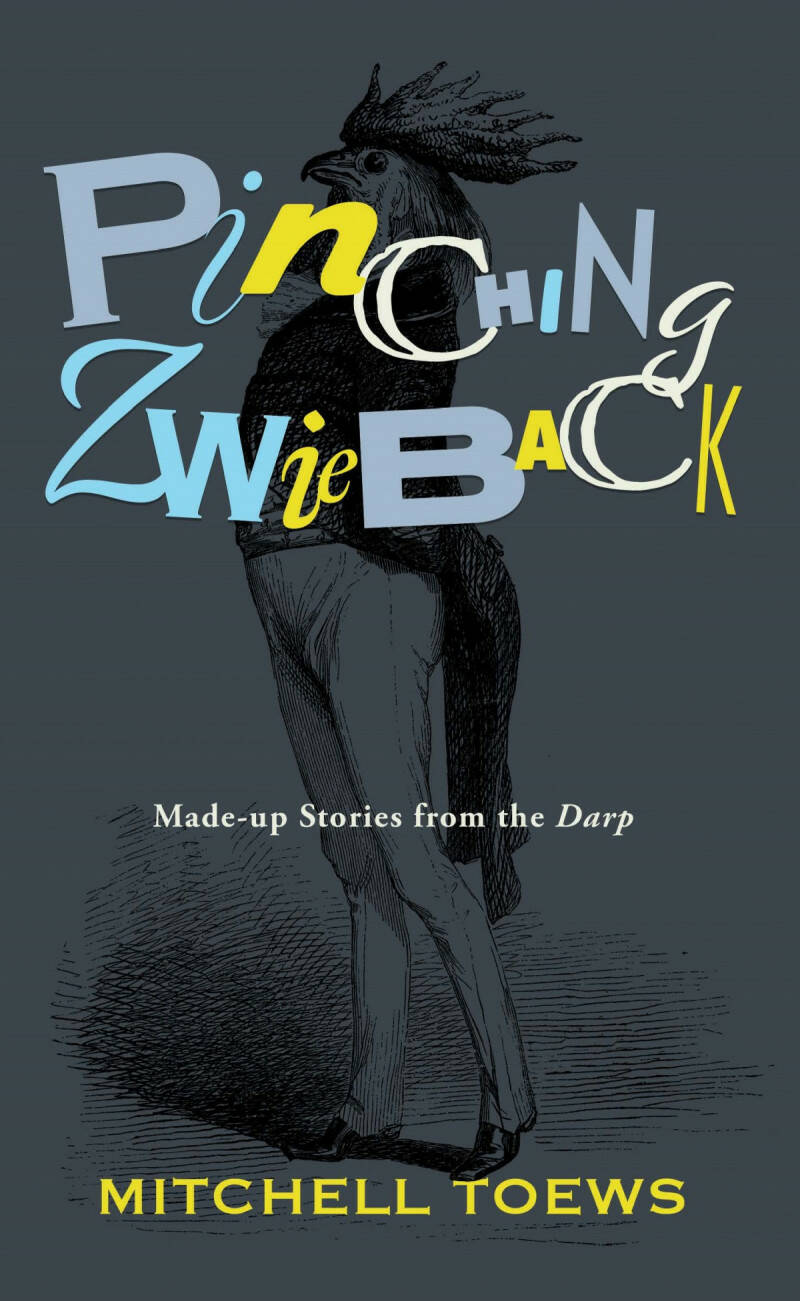
Pinching Zwieback, Mitchell Toews’ debut book of short stories, landed on my night table innocently enough, yet its searing emotional impact lingers. You can’t go wrong with a small-town setting, and Toews’ fictional darp (“village” in Mennonite Plautdietsch) yields great material.

Read this article for free:


or

Already have an account? Log in here »

To continue reading, please subscribe:

Subscribe and receive a limited-edition Free Press branded hat or tote.

Digital Subscription

One year of digital access for only $205*

  • Enjoy unlimited reading on winnipegfreepress.com
  • Read the E-Edition, our digital replica newspaper
  • Access News Break, our award-winning app
  • Play interactive puzzles

*First annual payment billed as $205.00 + GST for one year. This annual subscription will automatically renew at $233.00 + GST every 52 weeks (10% off the regular annual price of $259.35). Offer available to new and qualified returning subscribers only. Cancel any time.

To continue reading, please subscribe:

Add Free Press access to your Brandon Sun subscription for only an additional

$1 for the first 4 weeks*

  • Enjoy unlimited reading on winnipegfreepress.com
  • Read the E-Edition, our digital replica newspaper
  • Access News Break, our award-winning app
  • Play interactive puzzles
Start now

*Your next Brandon Sun subscription payment will increase by $1.00 and you will be charged $17.95 plus GST for four weeks. After four weeks, your payment will increase to $24.95 plus GST every four weeks.

Hey there, time traveller!
This article was published 30/12/2023 (981 days ago), so information in it may no longer be current.

Pinching Zwieback, Mitchell Toews’ debut book of short stories, landed on my night table innocently enough, yet its searing emotional impact lingers. You can’t go wrong with a small-town setting, and Toews’ fictional darp (“village” in Mennonite Plautdietsch) yields great material.

This marvelous collection places Toews, a Manitoba Mennonite, in the elevated ranks of Canadian short-story writer Alice Munro. Pinching Zwieback could have been penned by Russian social realist Anton Chekhov if he had emigrated to the Canadian Prairies. But Alice Munro is Canada’s Chekhov. Can we have two? To minimize confusion, let’s dub Toews Chekhov of the darp.

This collection is Munro’s Lives of Girls and Women according to men and boys. I’ve been waiting for a writer to realize coming-of-age material from a male point of view; Toews exceeded expectations.
Pinching Zwieback

Pinching Zwieback

But what about W.O. Mitchell’s classic novel, Who Has Seen the Wind? It’s about a Prairie boy as well, but these stories have more teeth, more grit. And they are deeply layered and perhaps even autobiographical.

Toews spent more than 50 years in Steinbach, so he’s earned his small-town credentials. Every sentence in this collection rings true: the tight-knit social circles, the rigid class hierarchy, the heighted community expectations and the urgent need to transcend suffocating religious constraints.

Pinching Zwieback reads like a master class in the short story form. It’s character-driven fiction par excellence. As the 20 linked stories unfold, endearing characters re-appear and mature. For the purposes of brevity, this review will focus on the character Matthew Zehen, son of baker Hart Zehen.

Toews doesn’t spare these small-town people their daily grind. These characters’ lives aren’t sugar-coated. They are difficult, the lessons learned painful. But you can’t question their authenticity. If you want escapism, read Colleen Hoover’s treacly romances. Pinching Zwieback is gritty social realism.

In Fall From Grace, young Matthew Zehen, who fears heights, is nonetheless lured to the precarious roof of the curling rink by his friend Davey. Their mischief is to lob crabapples at passersby.

“I had experienced Davey’s leadership in the past — his time at the helm of our spring flood raft and our subsequent capsized result should have been enough to teach me a lesson, but I was slow to accept some truths about some friends.”

Matthew’s parents’ response to the boyish mischief reveals a compassionate bond forged on mutual understanding.

“Your father broke his ankle jumping off the roof of the skating rink into a snowbank with Uncle Shoesnick,” confesses Matthew’s mother, Trudy. Punishment averted, lesson learned — for now.

As the Matthew character matures, we arrive at the meat of these stories. In Rommdriewe, Matthew’s beloved parents have tragically developed into full-blown alcoholics. His father, Hart the baker, is hospitalized, and Matthew returns home alone to survey the damage.
Janice Toews photo
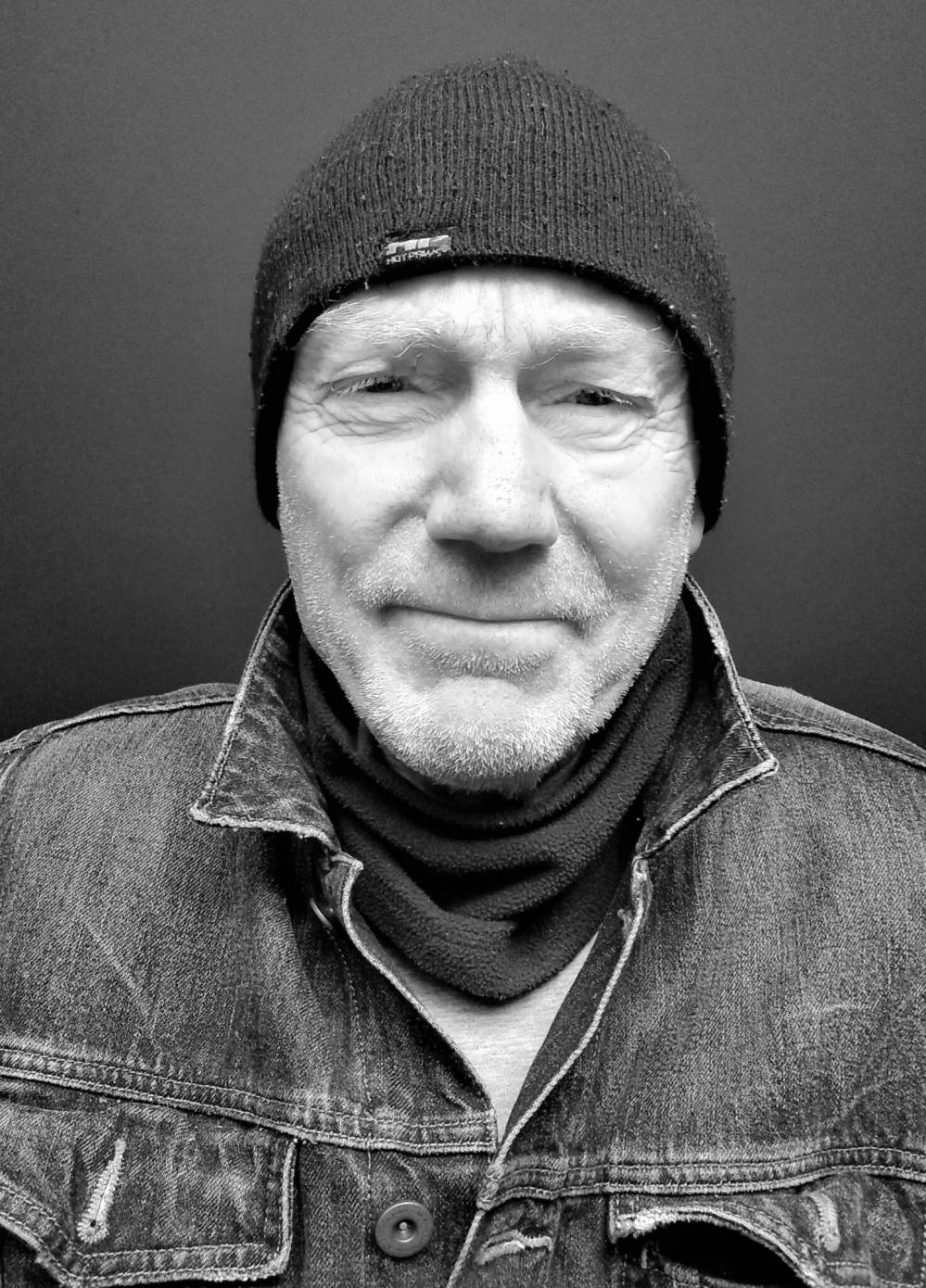
                                Mitchell Toews’ 20 linked small-town stories bring gritty social realism and character-driven fiction.

Janice Toews photo

Mitchell Toews’ 20 linked small-town stories bring gritty social realism and character-driven fiction.

Hart Zehen’s late-stage alcoholism is portrayed without sentimentality or false hope. Hart’s self-destructive lifestyle has pushed his son out of town and nothing can shift the reader’s attention from that painful emotional breach played out as a bedside vigil.

“I had all I needed to put it together. Abe and Dad pounding drinks and bullsh–ting in the shed. Her [Trudy, Matthew’s mother] drinking alone up in the house. She was drunk when she found them. Drunk in the hospital and making a scene. She sobered up as she waited for Dad to recover. Her better angels arrived then, together with remorse, shame and guilt. Then a bout of denial, and a trip home to get a drink. Just one.”

“Just one” — it’s pulled straight from the drunk’s lexicon, two words to summarize the alluring and enduring appeal of booze, the oblivion it provides and its firm hold on poor Trudy (and Hart). What else could Matthew do but leave town and forge a normal life elsewhere? It’s a tragic account of a family disease and the toll it exacts.

Bravo, Mitchell Toews. Pinching Zwieback is a brilliant debut. These may be “made-up” stories from the darp, but they read like field reports on the human condition.

Ex-urbanite Patricia Dawn Robertson makes her home in rural Saskatchewan. Her memoir, Media Brat, is forthcoming.

History

Updated on Sunday, December 31, 2023 4:21 PM CST: Fixes character name

Updated on Tuesday, January 2, 2024 2:42 PM CST: Corrects character name

Report Error Submit a Tip

More Stories

Letters, Sept. 5

7 minute read Yesterday at 2:01 AM CDT

Clearing the airRe: QDoc patients in middle of billing dispute (Sept. 4)

QDoc has been fortunate to have a genuine partner in the Manitoba government over the past several years. Premier Wab Kinew and Health Minister Uzoma Asagwara have been consistently clear that no Manitoban should go without care because of where they live, and that commitment is exactly why virtual care exists as a permanent, publicly available option today. We built MediNav, the province’s online appointment booking system, together with Manitoba Health, and that same collaborative spirit has helped make more than 350,000 patient visits possible through our platform — many of them evenings, overnights and weekends, reaching rural and underserviced communities that need it most.

We want to be direct with the people who rely on us: QDoc is not going anywhere. We continue to see patients today, and we will keep doing so tomorrow. The issue reported this week is a technical billing matter, not a service disruption, and we are actively working with the province to resolve it quickly, so we can keep growing our capacity to serve Manitobans rather than limiting it.

We also want to take responsibility for our part in the recent confusion. Our Aug. 24 message to a small subset of our patients was meant to keep our community informed, but its tone left some people more worried than they needed to be, and for that we apologize. That was never our intention.

‘Quite a journey’: dozens move into transitional housing downtown

Carol Sanders 4 minute read Preview

‘Quite a journey’: dozens move into transitional housing downtown

Carol Sanders 4 minute read Friday, Sep. 4, 2026

Dozens of residents have moved into transitional housing units in a former university building in downtown Winnipeg.

Housing, Addictions and Homelessness Minister Bernadette Smith said 42 residents have moved into suites on the third and fourth floors of a seven-storey building previously owned by Providence University College and Theological Seminary. There will be space for as many as 118 people who were in encampments or otherwise homeless.

The remaining units under renovation are expected to be ready and occupied in the coming weeks, Smith said.

“This has been two years in the making,” the minister said at a media event with residents, staff, neighbours and supporters. The building cost the province $24.4 million to purchase and renovate.

Read
Friday, Sep. 4, 2026

Dynacare labs quickly reach capacity ahead of strike

Nicole Buffie 5 minute read Preview

Dynacare labs quickly reach capacity ahead of strike

Nicole Buffie 5 minute read Yesterday at 3:06 PM CDT

Patients were being turned away from several Dynacare locations Saturday morning as people packed the labs in hopes of getting their blood collection done before workers strike.

By 10:30 a.m. the lobby at the Dynacare at 1581 Regent Ave. was standing-room only and walk-up patients were being turned away as the wait time for those lucky enough to get in creeped past two hours.

One woman got in right before workers cut off walk-ins at 10 a.m. after travelling to two other locations.

“I was driving by at 7:15 this morning and there was already a line-up to the road, so I was like ‘nope, not going there’ so I went to the one on Sterling Lyon (Parkway) and it was closed, and then I went to the one at St. Vital Mall and there had a line zig-zagging all the way through the corridors so I gave up and came back,” said Joanna, who declined to give her last name.

Read
Yesterday at 3:06 PM CDT

Art piece connects viewers to broader national landscape

Allison Gillmor 4 minute read Preview

Art piece connects viewers to broader national landscape

Allison Gillmor 4 minute read Yesterday at 2:01 AM CDT

WHAT IT IS: Copy Paperis a 2014 textile-based piece by Ontario-born, Winnipeg-based artist Kristin Nelson, currently on view at WAG-Qaumajuq as part of the exhibition Terra Cognita/Incognita.

Of the 125 works in the show — which uses historical and contemporary pieces from WAG-Qaumajuq’s permanent collection to explore how artists have represented the landscape over time and across cultures —probably the most attention-getting are the beautiful paintings of Canada’s lakes, plains, forests and mountains.

So, how does this seemingly modest, somewhat enigmatic work connect to Terra Cognita/Incognita’s larger themes?

WHAT IT’S ABOUT: In the middle of the exhibition, an antique desk holds several objects of beauty and utility, and this is where Copy Paper sneaks in, as something both “cognita and incognita,” known and unknown.

Read
Yesterday at 2:01 AM CDT

For newcomer pizza purveyors, it’s all about crafting solid foundations

David Sanderson 7 minute read Preview

For newcomer pizza purveyors, it’s all about crafting solid foundations

David Sanderson 7 minute read Yesterday at 2:00 AM CDT

A recent poll conducted by an Internet-based market-research firm determined that close to 20 per cent of people eschew their leftover pizza crust.

Some argued that the residual crust lacks flavour. Others submitted that it’s too hard or crunchy to enjoy sans toppings. Given that information, what are we to make of Crusty Craft Pizza, a five-month-old takeout spot whose owners are so confident in their European-style pizza crust that they’ve chosen to highlight it in their business moniker?

Whenever somebody informs them they don’t like pizza crust, their response is, well, they haven’t tried theirs, says Oleksii Samokvhal, who together with his wife, Iryna Mehedyn, opened Crusty Craft Pizza in early April, at 1311 Day St. in Transcona.

“It’s thin in the middle, with raised edges we hand-form ourselves,” says Mehedyn, a native of Ukraine who, like her Kyiv-born husband, relocated to Winnipeg to escape the conflict in their home country.

Read
Yesterday at 2:00 AM CDT

$8.7-million detox centre called ‘high-priced drunk tank’

Carol Sanders 4 minute read Preview

$8.7-million detox centre called ‘high-priced drunk tank’

Carol Sanders 4 minute read Friday, Sep. 4, 2026

The new facility to detain people in a drug psychosis for up to 72 hours is operating the way it should, the government said Friday, even though just 26 people have been held for that purpose since it opened.

“The (protective care centre) is doing what it’s meant to do: support people, meet them where they’re at, provide a caring environment,” Addictions Minister Bernadette Smith said after updated data were posted online.

The vast majority of those detained at the 20-room facility at 190 Disraeli Fwy. were recovering from alcohol intoxication, the update shows.

In total, 4,425 people were detained from the time the site opened on Dec. 2, 2025, until June 30, for an average of less than five hours.

Read
Friday, Sep. 4, 2026