More than everyday people
Sly Stone’s memoir chronicles highs, perilous lows and the toll of fronting pivotal funk-soul outfit
Advertisement
Read this article for free:
or
Already have an account? Log in here »
To continue reading, please subscribe:

Digital Subscription
One year of digital access for only $205*
- Enjoy unlimited reading on winnipegfreepress.com
- Read the E-Edition, our digital replica newspaper
- Access News Break, our award-winning app
- Play interactive puzzles
*First annual payment billed as $205.00 + GST for one year. This annual subscription will automatically renew at $233.00 + GST every 52 weeks (10% off the regular annual price of $259.35). Offer available to new and qualified returning subscribers only. Cancel any time.
To continue reading, please subscribe:
Add Free Press access to your Brandon Sun subscription for only an additional
$1 for the first 4 weeks*
- Enjoy unlimited reading on winnipegfreepress.com
- Read the E-Edition, our digital replica newspaper
- Access News Break, our award-winning app
- Play interactive puzzles
*Your next Brandon Sun subscription payment will increase by $1.00 and you will be charged $17.95 plus GST for four weeks. After four weeks, your payment will increase to $24.95 plus GST every four weeks.
Read unlimited articles for free today:
or
Already have an account? Log in here »
Hey there, time traveller!
This article was published 30/12/2023 (993 days ago), so information in it may no longer be current.
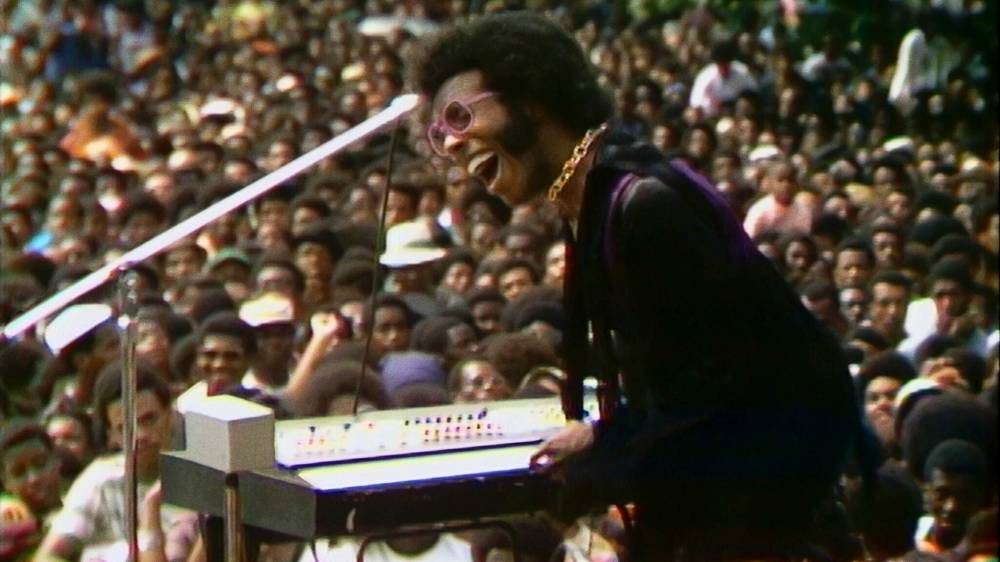
A highlight of 1969’s Woodstock festival was the early morning appearance of Sly and the Family Stone, which climaxed with Sly exhorting the crowd to shout, “Higher!”
Sly got higher — and eventually lower — over the next decades, and while the band produced great music, drugs took their toll.
Stone’s tragic and frustrating memoir, oddly named for one of the band’s biggest hits, notes the substance abuse while avoiding responsibility for damage to family, friends and the music.
Searchlight Pictures
Sly Stone, seen here performing at the Harlem Cultural Festival in 1969, presents the trappings and excesses of stardom dispassionately, despite the heavy toll they took on him and the band.
The fourth of five children in a musical family in Vallejo, north of San Francisco, Sylvester Stewart became “Sly” when a classmate misspelled his first name on the chalkboard. Rather than taking offense, Sly took his stage name, one of the few things he admits getting out of school.
After moving to the big city, Sly got the rest of his name as a DJ at radio station KSOL. When he played white British invasion music, some criticized the R&B station. “But that didn’t make sense to me,” Sly says. “Music didn’t have a color.”
Personal vices and relationships aside, Stone often argues for a liberal, live-and-let-live philosophy. Sly and the Family Stone, which included his brother and sister, was one of the first major mixed-race and mixed-gender bands.
Thank You is co-written with Ben Greenman, who has collaborated with other musicians, including Questlove, who wrote the foreword to Stone’s book, and Stevie Van Zandt on his memoir Unrequited Infatuations.
Chapters are named after songs. The prose seems choppy sometimes, perhaps reflecting Sly’s radio training and lyrical invention. Refusing to change his band, Sly notes: “Divisions were subtractions.” (Sly and the Family Stone disbanded in 1983.)
The narrative is heavy on name dropping — intriguing in the early chapters, when Stone crosses paths with artists and others who will also achieve fame, such as Grace Slick and an early opening act, the Santana Blues Band. Later in the book, it is often less effective.
Sly dissects the band’s albums, giving interesting background and interpretations to such hits as Stand, Que Sera Sera and Hot Fun in the Summertime. The memoir’s title, besides celebrating personal authenticity, puns “mice” and “elf” to acknowledge “small humble things that were reminders of how big the rest of the world was.”
The trappings and excesses of stardom are presented dispassionately. Stone’s much-publicized 1974 wedding to Kathy Silva, at Madison Square Garden, was followed by a concert (top ticket price: $8.50.) Sly thinks bragging about his cars may have caught the eye of the IRS; tax problems, and then family support, contribute to increasing stress.
A lot of Thank You’s anecdotes are entertaining, but other than his philosophizing about people getting along better, readers may spend time reading between the, ahem, lines as the drugs become more destructive and Stone seems more paranoid.
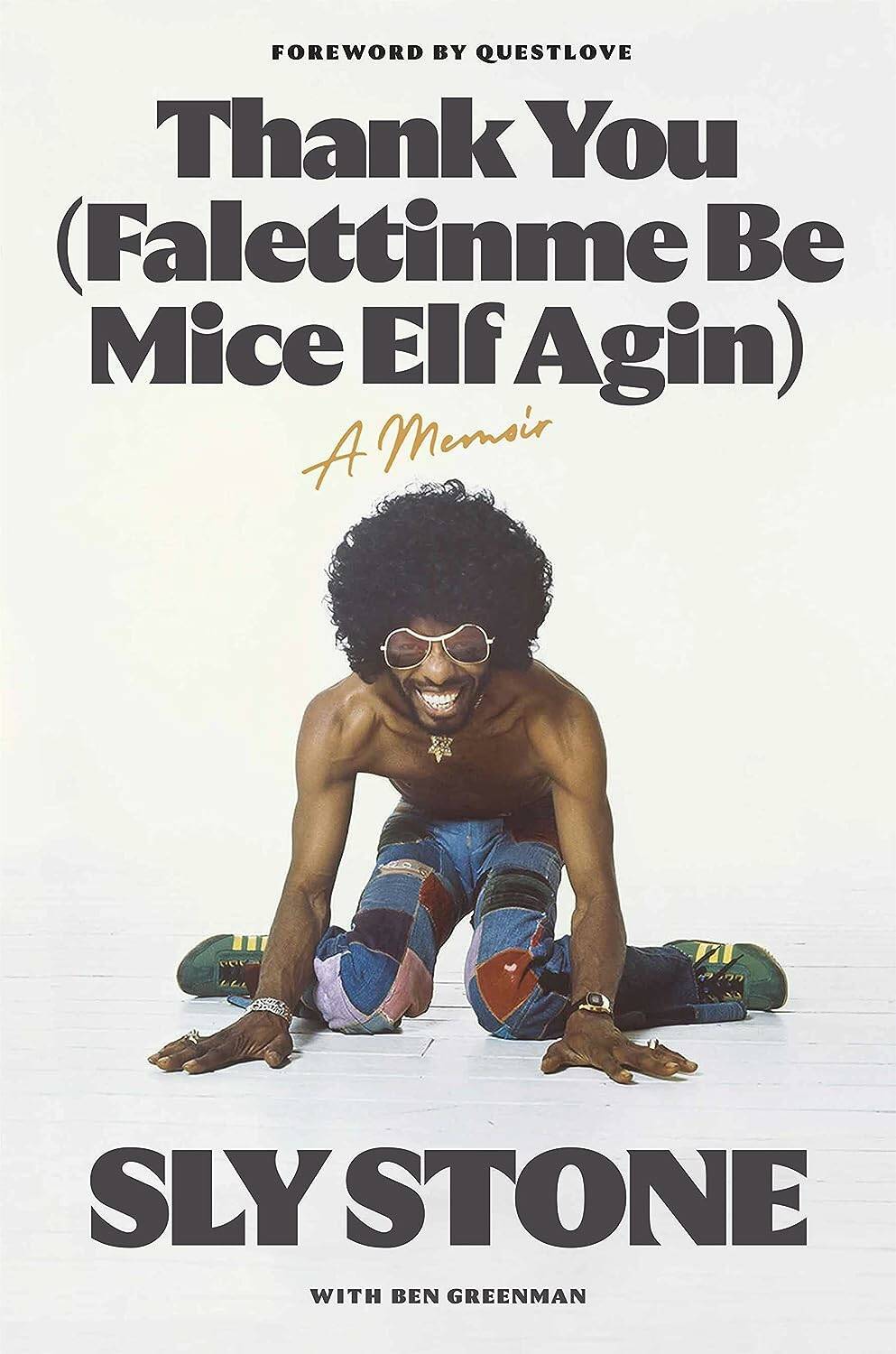
Thank You (Falettinme Be Mice Elf Agin)
Taking ownership of anything but the music is rarely the point. Stone admits to cheating on Kathy; when he finds her with someone else, he trashes her Mercedes. He blames the reputation for late and cancelled shows on unscrupulous promoters rather than drug use.
After the ‘80s, Stone’s memoir becomes more disjointed, and while he begins to admit the damage of his extremes, he downplays them.
Both his daughter and his girlfriend Arlene objected to hanging around with Ike Turner. But when Turner supplied the drugs and was given “his pick of the girls,” Sly had to talk him out of picking Arlene.
Still, he says, “The point is to care about all living things. That’s the bottom line. There’s got to be room for all of us to live… to say what we mean.”
Sly Stone himself says he has been clean since the pandemic. Whether he has said all he means about the way he has lived is an open question.
Bill Rambo remembers Sly and the Family Stone from high school dances when the music was new, and still finds it exciting and enjoyable.