Putting Yiddish film in the spotlicht

Advertisement
Read this article for free:
or
Already have an account? Log in here »
To continue reading, please subscribe:

Digital Subscription
One year of digital access for only $205*
- Enjoy unlimited reading on winnipegfreepress.com
- Read the E-Edition, our digital replica newspaper
- Access News Break, our award-winning app
- Play interactive puzzles
*First annual payment billed as $205.00 + GST for one year. This annual subscription will automatically renew at $233.00 + GST every 52 weeks (10% off the regular annual price of $259.35). Offer available to new and qualified returning subscribers only. Cancel any time.
To continue reading, please subscribe:
Add Free Press access to your Brandon Sun subscription for only an additional
$1 for the first 4 weeks*
- Enjoy unlimited reading on winnipegfreepress.com
- Read the E-Edition, our digital replica newspaper
- Access News Break, our award-winning app
- Play interactive puzzles
*Your next Brandon Sun subscription payment will increase by $1.00 and you will be charged $17.95 plus GST for four weeks. After four weeks, your payment will increase to $24.95 plus GST every four weeks.
Read unlimited articles for free today:
or
Already have an account? Log in here »
Hey there, time traveller!
This article was published 06/02/2024 (970 days ago), so information in it may no longer be current.
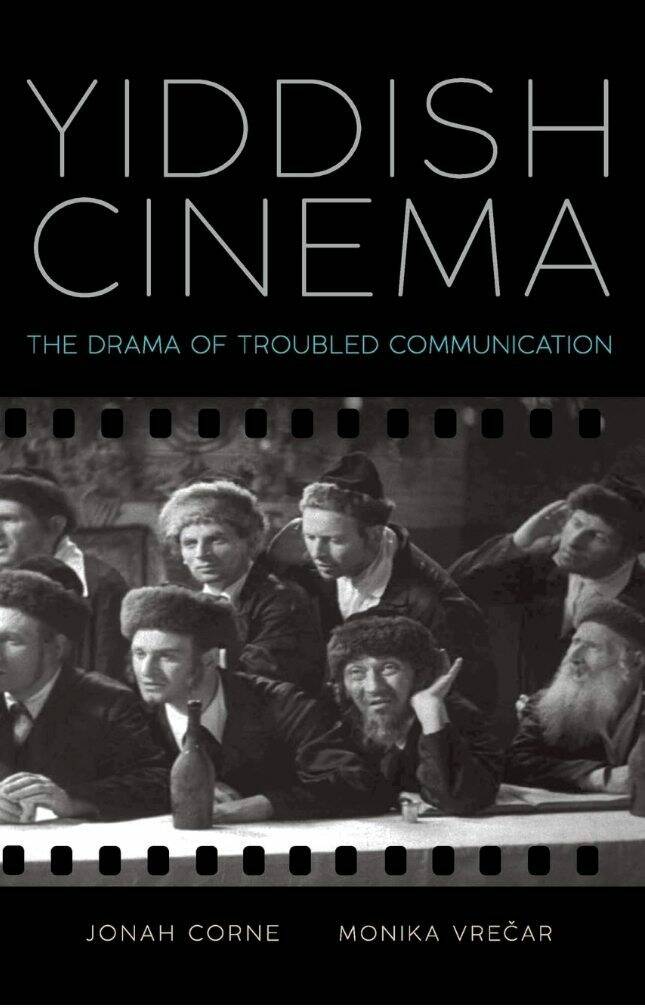
For the cover photo on their new book about Yiddish cinema, local academics Jonah Corne and Monika Vrečar chose a shot from the 1937 film adaptation of The Dybbuk, with eight men straining their necks to hear what the righteous tzaddik is trying to say.
The men look perplexed, focused and a bit lost, doing their best not to miss any nuance or nugget of information coming from the head of the table.
If the disciples don’t hear the spiritual leader’s latest piece of talmudic wisdom then and there, it’s reasonable to assume they never will again.
Midwest Films
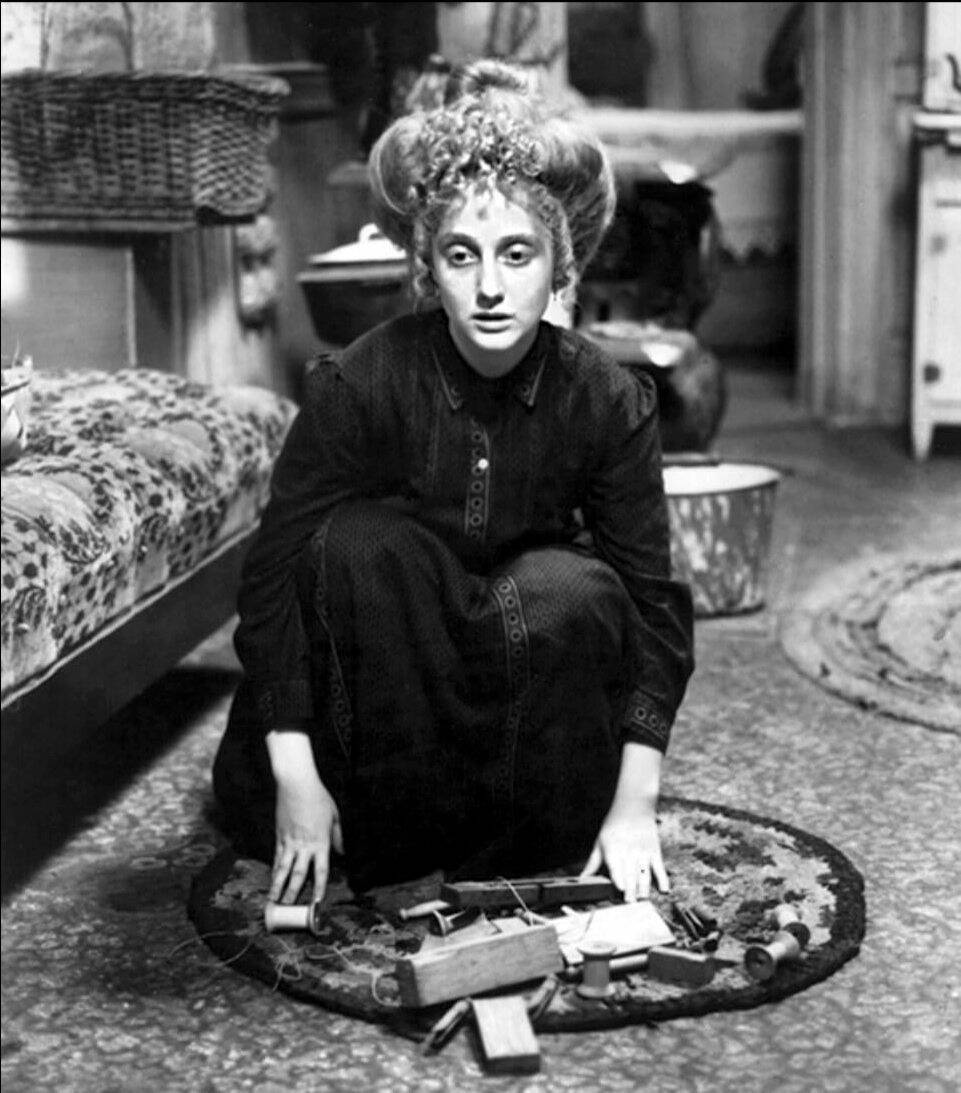
Carol Kane was nominated for an Oscar for 1975’s Hester Street, screening Feb. 11.
“There is this inherent trouble to their communication,” says Corne, an associate professor at the University of Manitoba. “We thought, ‘That image pretty much sums up what we were writing about.’”
Over the course of the last five years, Corne and Vrečar attempted to survey about 40 surviving feature films produced in the Yiddish language, spanning from the silent era through to the late 1940s.
The result — Yiddish Cinema: The Drama of Troubled Communication (SUNY Press) — reveals the film subset as a “strikingly cohesive, Jewishly charged, dramatically embodied system of ideas about media and (ex)communication.”
Corne and Vrečar will launch the book at 7:30 p.m. Wednesday at a free event at the Handsome Daughter — which itself sounds like it could be the title of a Yiddish matchmaking comedy — as part of the Rady Jewish Community Centre’s inaugural Put a Yid On It Festival of New Yiddish Culture.
Producer Shira Newman, co-ordinator of arts programming at the Rady JCC, says that the festival is a celebration and acknowledgment of the renewal of Yiddish language and culture.
“It’s all very intergenerational,” she says. In addition to the films, the festival will also have performances of Yiddish hip-hop and Yiddish infused folk rock, with a pair of concerts at the WECC.
“It’s really trying to acknowledge and celebrate this renewal of Yiddish language and culture that’s very intergenerational,” Newman says.
Once the dominant vernacular of eastern European Jewry, a recombinant language formed by building blocks of German, Hebrew and Aramaic, Yiddish is spoken today by an estimated 500,000 to one million people, according to the YIVO Institute for Jewish Language.
But before the language’s number of speakers dwindled — largely the result of the Holocaust and subsequent assimilation by European emigrés — Yiddish was preserved on film, a natural extension of the prominent world of Yiddish theatre, which served as the starting grounds for Hollywood stars such as John Garfield, Edward G. Robinson and Paul Muni.
Several of the most widely known Yiddish movies — including the 1936 folk comedy Yiddle With His Fiddle and 1939’s The Light Ahead, directed in the U.S. by Edgar G. Ulmer — will be screening as part of Put a Yid On It.
Corne, a film scholar born in Winnipeg, and Vrečar, a media scholar originally from Slovenia, found Yiddish films to be an understudied and somewhat underappreciated chapter in cinema history.
At university, Corne found his interest in Yiddish cinema was piqued, while Vrečar gravitated toward media philosophy, particularly that of the Czech Jewish scholar Vilem Flusser, whose prophetic writings on media and information dissemination are comparable to Marshall McCluhan’s.
“There was a fascinating interplay between the two where we realized we could merge our two interests and produce something neither one of us could have produced on their own,” Vrečar says.
For this book, the first monograph for the couple, Corne and Vrečar relied on Jewish theorists including Martin Buber, but mostly leaned on Flusser’s theories to drive their understanding of Yiddish cinema. Chief among those theories is Flusser’s concept of “groundlessness,” which manifests in many Yiddish films through a loss of connection, a destabilization of familiar surroundings and pressures to assimilate.

This experience is well documented in Joan Micklin Silver’s 1975 film Hester Street, showing at 2 p.m. on Feb. 11 at the Berney Theatre. Starring Carol Kane in an Oscar-nominated performance, the film is a masterful portrait of new and old worlds colliding, at heym and abroad.
Corne and Vrečar’s book, which clocks in at 300 pages before the acknowledgments, is extremely detailed, exploring films in the shund (trash) subgenre with the same academic rigour as classics such as The Dybbuk, The Living Orphan, Kol Nidre and Motel the Operator.
As a companion to films such as the ones being shown at Put a Yid On It, Corne and Vrečar’s book is hugely valuable, even if often weighed down by its extensive philosophical references.
But if readers are prepared to crane their necks, they’ll find a talmudic study of a genre that merits a second look.
ben.waldman@winnipegfreepress.com
Ben Waldman is a National Newspaper Award-nominated reporter on the Arts & Life desk at the Free Press. Born and raised in Winnipeg, Ben completed three internships with the Free Press while earning his degree at Ryerson University’s (now Toronto Metropolitan University’s) School of Journalism before joining the newsroom full-time in 2019. Read more about Ben.
Every piece of reporting Ben produces is reviewed by an editing team before it is posted online or published in print — part of the Free Press‘s tradition, since 1872, of producing reliable independent journalism. Read more about Free Press’s history and mandate, and learn how our newsroom operates.
Our newsroom depends on a growing audience of readers to power our journalism. If you are not a paid reader, please consider becoming a subscriber.
Our newsroom depends on its audience of readers to power our journalism. Thank you for your support.
Put a Yid On It: Festival of New Yiddish Culture
Feb. 7: Yiddle With His Fiddle screening (w/subtitles) 2 p.m., at Berney Theatre (123 Doncaster St.), $12
Feb. 7: Yiddish Cinema launch, 7:30 p.m., at the Handsome Daughter (61 Sherbrook St.), free
Feb. 8: The Light Ahead screening (w/subtitles), 2 p.m., at Berney Theatre, $12
Feb. 8: Beyond the Pale (concert), 7:30 p.m., at Berney Theatre, $30
Feb. 9: The Dybbuk screening (w/subtitles), 2 p.m., at Berney Theatre, $12
Feb. 10: Josh (SoCalled) Dolgin (concert), 8 p.m., West End Cultural Centre (586 Ellice Ave.), $20
Feb. 10: Bagels and A Bisl (a bit) of Yiddish, 10 a.m., Rady JCC Adult Lounge (123 Doncaster St.), $5
Feb. 11: Hester Street screening (w/subtitles), 2 p.m., at Berney Theatre, $12
More information at radyjcc.com
Ben Waldman is a National Newspaper Award-nominated reporter on the Arts & Life desk at the Free Press. Born and raised in Winnipeg, Ben completed three internships with the Free Press while earning his degree at Ryerson University’s (now Toronto Metropolitan University’s) School of Journalism before joining the newsroom full-time in 2019. Read more about Ben.
Every piece of reporting Ben produces is reviewed by an editing team before it is posted online or published in print — part of the Free Press‘s tradition, since 1872, of producing reliable independent journalism. Read more about Free Press’s history and mandate, and learn how our newsroom operates.
Our newsroom depends on a growing audience of readers to power our journalism. If you are not a paid reader, please consider becoming a subscriber.
Our newsroom depends on its audience of readers to power our journalism. Thank you for your support.
Advertisement Advertise With Us
Advertisement Advertise With Us