Memoir of losing son a tough, touching read
Advertisement
Read this article for free:
or
Already have an account? Log in here »
To continue reading, please subscribe:

Digital Subscription
One year of digital access for only $205*
- Enjoy unlimited reading on winnipegfreepress.com
- Read the E-Edition, our digital replica newspaper
- Access News Break, our award-winning app
- Play interactive puzzles
*First annual payment billed as $205.00 + GST for one year. This annual subscription will automatically renew at $233.00 + GST every 52 weeks (10% off the regular annual price of $259.35). Offer available to new and qualified returning subscribers only. Cancel any time.
To continue reading, please subscribe:
Add Free Press access to your Brandon Sun subscription for only an additional
$1 for the first 4 weeks*
- Enjoy unlimited reading on winnipegfreepress.com
- Read the E-Edition, our digital replica newspaper
- Access News Break, our award-winning app
- Play interactive puzzles
*Your next Brandon Sun subscription payment will increase by $1.00 and you will be charged $17.95 plus GST for four weeks. After four weeks, your payment will increase to $24.95 plus GST every four weeks.
Read unlimited articles for free today:
or
Already have an account? Log in here »
Hey there, time traveller!
This article was published 20/04/2024 (896 days ago), so information in it may no longer be current.
As she approached the age of 50, Alexandra Fuller was already well-acquainted with death. Having grown up in war-torn Zimbabwe, she knew the ravages of it up close. Her sister Olivia tragically drowned while still a toddler and in more recent years Fuller had grieved the passing of her beloved father.
Nothing could have prepared her, however, for the death of her son Fi, who died in his sleep at the age of 21.
Fuller grew up in Zimbabwe (then Rhodesia), in the 1970s and ’80s. She left Africa for the United States in her 20s and now resides in Wyoming with her two children.
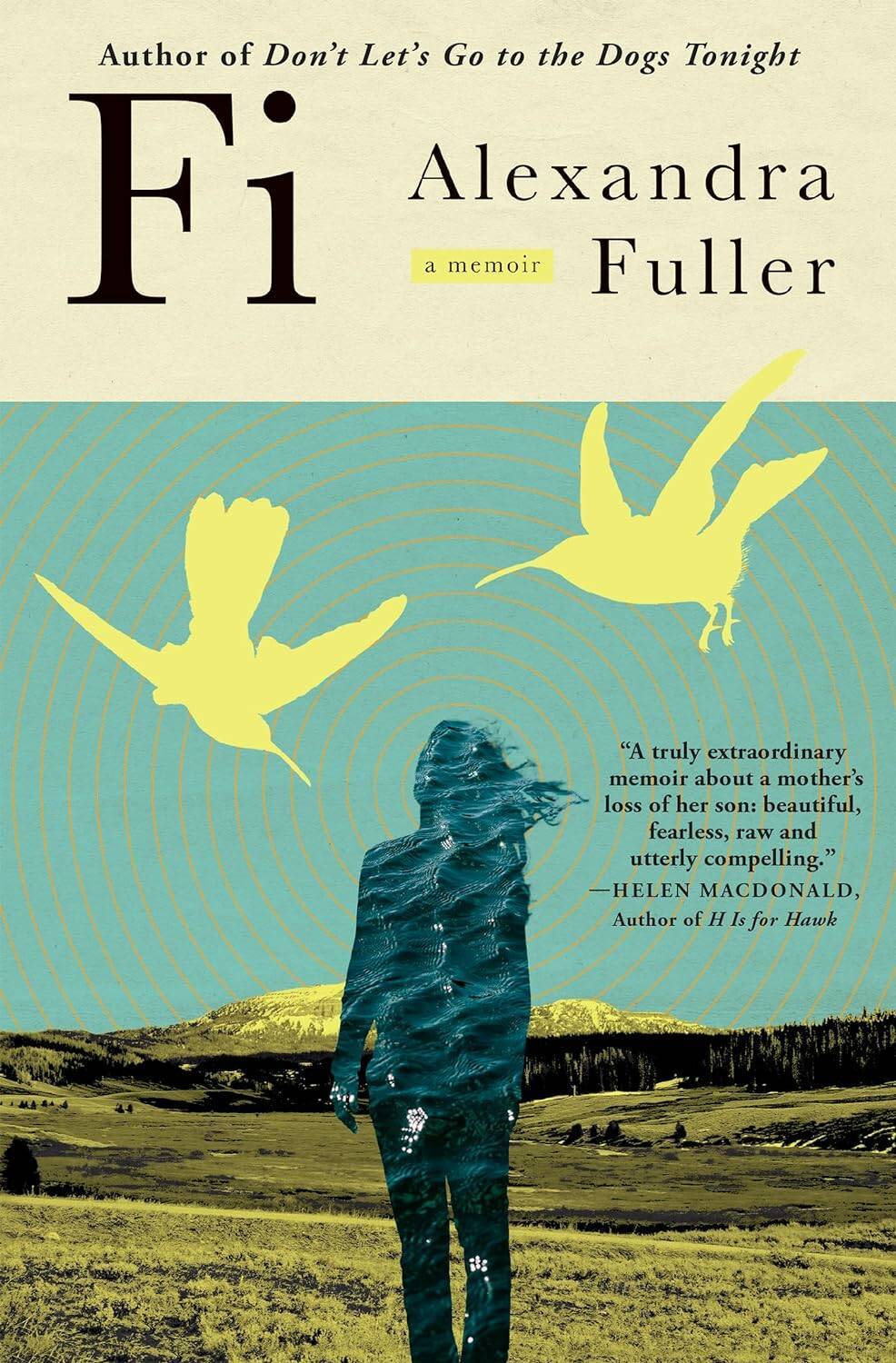
Fi
An award-winning writer, she has written seven previous books, including several memoirs such as Don’t Let’s Go to the Dogs Tonight (2003) and Travel Light, Move Fast (2019).
As in her previous memoirs, Fuller is unyielding in her honesty, laying herself bare on the page. With unflinching candour she recounts the agonizing weeks, days, hours and minutes following Fi’s death, her downward spiral into grief and her eventual reconnection with herself and the world around her. And only Fuller could inject humour into a story such as this.
Fuller’s poetic prose belies the horrific nature of the story she is telling, making use of alliteration, verse and plays on words in delightful ways, such as when she talks about a mother’s love: “A vestment, then, mother love, slipped over our heads when we’re not looking — so, invested and also, forever altered.”
While trying to care for her two young daughters, Fuller is unsure how she herself will survive, how she can continue living while her son — “Fi to rhyme with tree, to rhyme with tea, to rhyme with me.” — was gone, or, as she puts it, “…left the limits of my understanding.”
Literally crippled by grief, Fuller still admits, “[y]ou have to participate in your own life… survive enthusiastically whatever happens, or you’ll never rise again. Discipline is borrowed backbone. I’d have been sunk, drunk, gone under without it. Discipline is the only gift you can give your future self.”
Although counted among her saving graces, discipline is only one of many things Fuller tried on the road to recovery.

Living in Wyoming, nature plays a significant role as Fuller attempts to make sense of an inexplicable event. She communes with birds, deer, the moon — all in search of her son.
Eventually, she turns a corner when, after 10 days at an all-female silence retreat in Alberta, Fuller realizes that care had “cracked the place between my grief world and the whole rest of the universe.”
As a memoir, Fi is certainly not light, but for devotees of Fuller’s artful writing, it is most definitely worth the read and will undoubtedly hit home with any readers grieving the loss of a loved one.
It may also offer hope. “[T]o accept the death of a loved one is to arrive at the knowledge that love itself cannot die or change or end. Love goes on and on, blowing your mind, blasting out of your heart, endlessly.”
Lindsay McKnight works in the arts in Winnipeg.