U.S. sisters’ plight in Middle East riveting
Advertisement
Read this article for free:
or
Already have an account? Log in here »
To continue reading, please subscribe:

Digital Subscription
One year of digital access for only $205*
- Enjoy unlimited reading on winnipegfreepress.com
- Read the E-Edition, our digital replica newspaper
- Access News Break, our award-winning app
- Play interactive puzzles
*First annual payment billed as $205.00 + GST for one year. This annual subscription will automatically renew at $233.00 + GST every 52 weeks (10% off the regular annual price of $259.35). Offer available to new and qualified returning subscribers only. Cancel any time.
To continue reading, please subscribe:
Add Free Press access to your Brandon Sun subscription for only an additional
$1 for the first 4 weeks*
- Enjoy unlimited reading on winnipegfreepress.com
- Read the E-Edition, our digital replica newspaper
- Access News Break, our award-winning app
- Play interactive puzzles
*Your next Brandon Sun subscription payment will increase by $1.00 and you will be charged $17.95 plus GST for four weeks. After four weeks, your payment will increase to $24.95 plus GST every four weeks.
Read unlimited articles for free today:
or
Already have an account? Log in here »
Hey there, time traveller!
This article was published 25/05/2024 (861 days ago), so information in it may no longer be current.
The horrors perpetrated by the Islamic State in Iraq and Syria (ISIS) shocked the world almost a decade ago. One of the most shocking facts to emerge was that people from around the world supported and fought with ISIS, often a result of online radicalization.
American journalist Jessica Roy’s fascinating first book delves deeply into the experiences of two sisters who became entangled with ISIS supporters. One of the sisters spent significant time in Syria with her extremist husband and is now in jail for aiding and abetting terrorist activities.
Roy, a former news editor of New York magazine’s The Cut and a frequent contributor to the New York Times, has also worked for Elle, where she often penned lighter pop-culture pieces on topics such as “Hot Irish Guy Summer” and “Barbie Botox.”
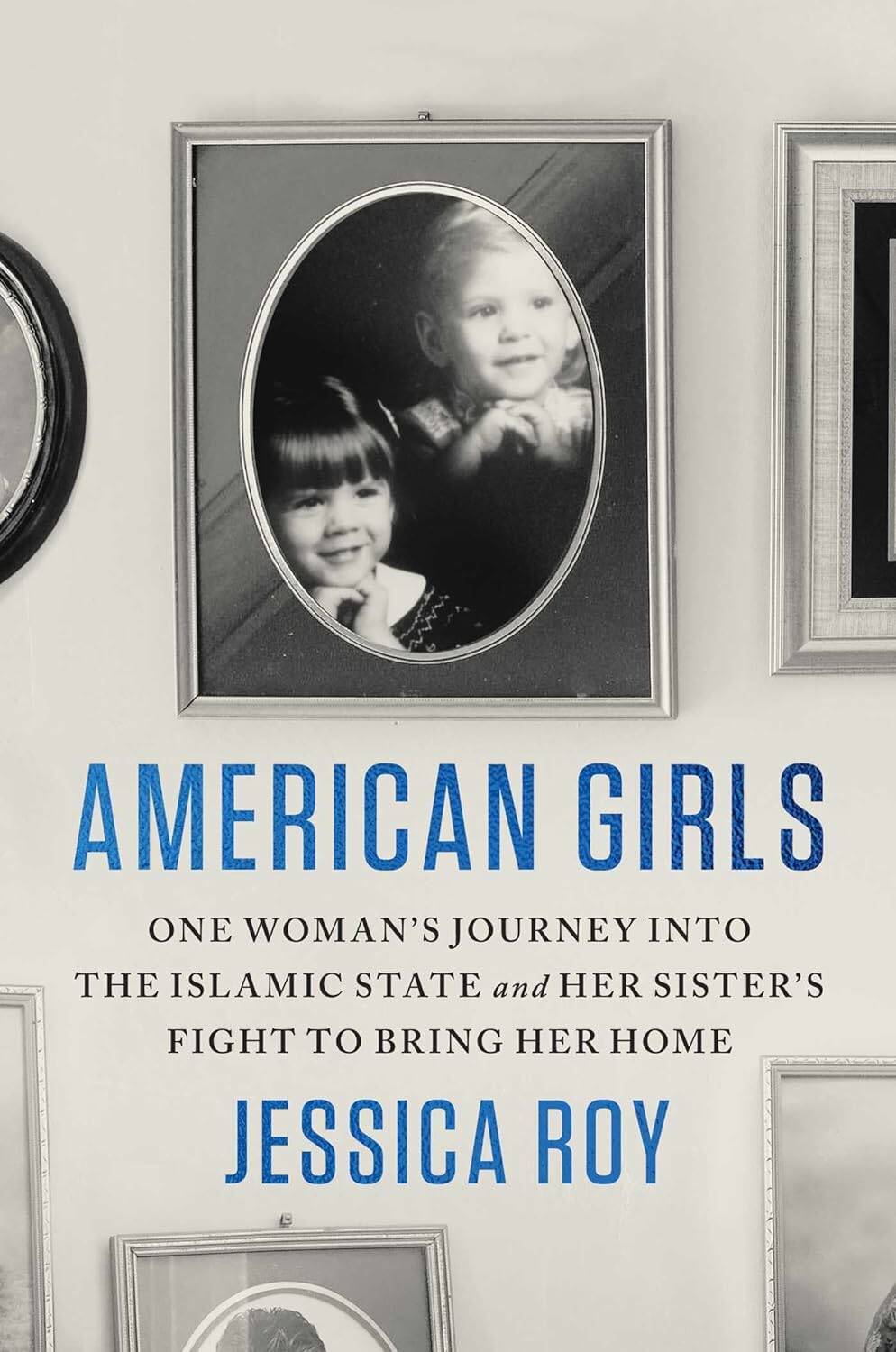
American Girls
In American Girls, however, Roy writes clearly and concisely about far more serious subjects: international terrorism and complex family dynamics.
Samantha and Lori Sally were raised as strict Jehovah’s Witnesses in Arkansas and Oklahoma. Victims of early sexual abuse that their parents and church minimized or ignored, they rebelled. Lori and Sam tended to commit rashly, marrying or moving in with men too quickly.
Lori eventually married Jason Elhassani, one of several brothers in a family from Morocco. When immigration officers showed up at her house, Lori discovered that his name was really Yassine and his immigration status was not clear.
Moussa, an even more volatile individual than his depressed and abusive brother Yassine, swiftly captured Sam’s heart. They married and had a daughter, Nadia.
While recounting the complicated and dismal family dynamics of the Sally sisters, Roy also chronicles the rise of the Islamic State. At first, the Sally sisters’ only connection to ISIS was a third Elhassani brother, who obsessively shared extremist social media and videos.
As Yassine’s international package-forwarding company floundered, probably becaming involved in sketchy transactions, Moussa began to buy into ISIS propaganda as well.
Samantha eventually helped Moussa smuggle gold and currency to Hong Kong, then to Morocco and other destinations in the Middle East.
During a “vacation” to Turkey in 2015, Moussa took Sam, Nadia, and Michael, her son by a previous marriage, into Syria, to Raqqa, the centre of ISIS’ administration of the new “caliphate.”
Roy details their horrific struggles there, almost exclusively from Sam’s point of view, with some support from others with whom they were involved, including some Yezidi children who Sam arranged to purchase. She says that this involvement in human trafficking was to save the “slaves.”
Michael, meanwhile, was being used in ISIS propaganda videos, a 10-year-old American “proving” that ISIS was an international phenomenon.
As life became more and more brutal for Sam and her children, she contacted Lori about finding ways to get them out of Syria.

Lori’s attempts to help with Sam’s eventual departure don’t really justify the book’s subtitle, but definitely add to the tragic and convoluted difficulties of their fraught relationship.
Did Sam actually support ISIS, or just go to Syria because of her children? Or was she, as Roy conjectures, a “hoarder of extreme experiences” who followed Moussa after running out of such thrills in the U.S.?
Roy doesn’t attempt simple answers to that question, or pat conclusions to myriad intricate and devastating details of the girls’ lives. An epilogue does what it can to tie up loose ends, but satisfying closure is probably not possible.
Still, American Girls is a thorough and thought-provoking examination of the interplay of personal and international relationships.
Bill Rambo is a retired teacher who lives in Landmark.