Gay hairstylist’s romantic fixation spans decades
Advertisement
Read this article for free:
or
Already have an account? Log in here »
To continue reading, please subscribe:

Digital Subscription
One year of digital access for only $205*
- Enjoy unlimited reading on winnipegfreepress.com
- Read the E-Edition, our digital replica newspaper
- Access News Break, our award-winning app
- Play interactive puzzles
*First annual payment billed as $205.00 + GST for one year. This annual subscription will automatically renew at $233.00 + GST every 52 weeks (10% off the regular annual price of $259.35). Offer available to new and qualified returning subscribers only. Cancel any time.
To continue reading, please subscribe:
Add Free Press access to your Brandon Sun subscription for only an additional
$1 for the first 4 weeks*
- Enjoy unlimited reading on winnipegfreepress.com
- Read the E-Edition, our digital replica newspaper
- Access News Break, our award-winning app
- Play interactive puzzles
*Your next Brandon Sun subscription payment will increase by $1.00 and you will be charged $17.95 plus GST for four weeks. After four weeks, your payment will increase to $24.95 plus GST every four weeks.
Read unlimited articles for free today:
or
Already have an account? Log in here »
Hey there, time traveller!
This article was published 08/06/2024 (856 days ago), so information in it may no longer be current.
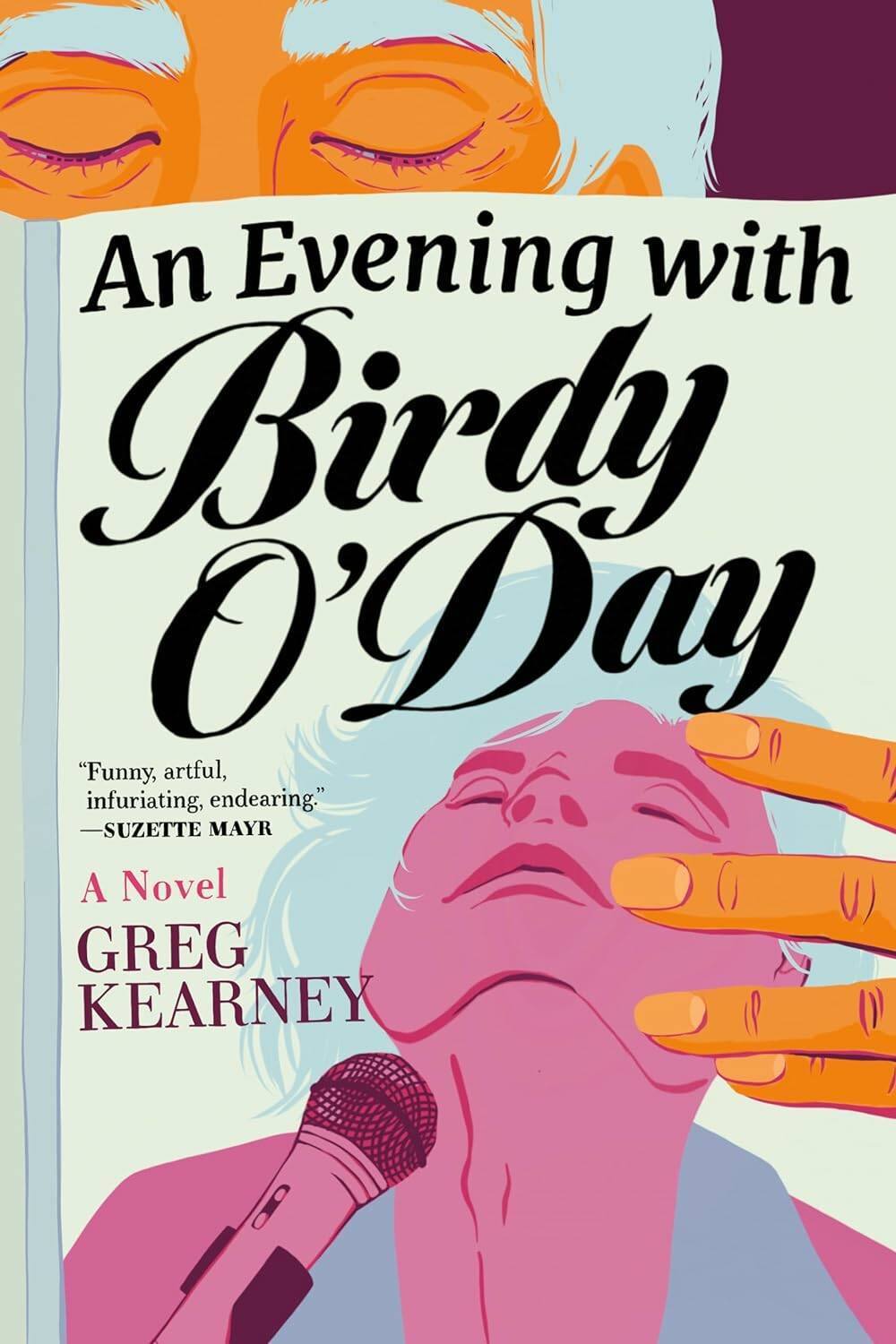
Set in Winnipeg from the early 1960s up until the present, An Evening with Birdy O’Day is the second novel by Toronto/Winnipeg-based writer and playwright Greg Kearney.
The book is narrated by Roland Keener, a 69-year-old gay hairstylist who recounts a childhood spent with Birdy, his precocious classmate turned surrogate brother and romantic fixation. When Birdy abruptly leaves Winnipeg at 16 to chase his popstar dreams, Roland remains both obsessed with and heartbroken by his friend.
The two don’t cross paths again until a past-his-prime Birdy announces a hometown show, to which Roland and his long-term partner Tony are invited. In anticipation of the performance, the ensuing story occurs as Roland is newly gripped by thoughts of Birdy.
An Evening With Birdy O’Day
Although Roland is clearly in love from the get-go, his feelings intensify when Birdy’s tumultuous home life as a child leads Roland’s mother Margaret to adopt the boy. Neither Birdy or Roland are closeted as kids, and Kearney writes their queerness as problematic only for those not in community with them. When a fifth-grade science project entitled “All About Hair!!!!!!” (the six sparkly exclamation points courtesy of Birdy) draws reproachful looks from teachers and passers-by, Roland notes the incident as “the first time [he] was clocked as a burgeoning queer, or at the very least, as a worrisome accomplice” by suspicious adults.
As such an accomplice, Roland’s narration possesses an irreverence that harkens back to Scott Thompson’s Buddy Cole character in the Kids in the Hall, remarking how Birdy’s first girlfriend “only has one eyelid” and describing the poetic stylings of Margaret’s partner Barbara in excruciating physical detail.
But it is during heartfelt passages dealing with darker stuff that Kearney truly sells the humour. He writes trauma, grief and especially chronic illness not only with levity, but a devastating universality — whether it’s a fatal stroke brought on by alcoholism, debilitating fibromyalgia, slow-onset MS or the aftermath of an HIV diagnosis. In the working-class Winnipeg depicted here, bad things frequently happen, and sometimes talking about them plainly is the only way to cope.
Roland’s deadpan delivery is also owed to Margaret, and the camaraderie between the two is palpable, as is the care with which Kearney develops Margaret’s character as a young single mother turned successful therapist turned late-bloomer lesbian. Though she is often shocked by her son’s recklessness, Margaret remains Roland’s biggest advocate.
Birdy’s biggest advocate is, of course, himself; he knows exactly what he wants his life to be, despite a glaring lack of role models. When a potential hero does appear, he is ultimately a disappointment, chronicled in a hilariously unnerving chapter backed by a Southern (Manitoba) Gothic setting.

Even after this rude awakening, Birdy is never embarrassed of himself, only of others’ reactions to his own histrionics and manipulative behaviour. Though Roland bears the brunt of these antics, it is also clear that Birdy behaves this way as a survival mechanism.
Having depended on Birdy’s dreams for his own survival, Roland hates not so much that his friend has become successful, but that Roland has been left behind, with nothing to do but document Birdy’s rise to fame in a commemorative scrapbook. Eventually finding community on his own, Roland comes of age against a vibrant backdrop of gay bars and gathering places, and although some names have been changed, readers familiar with the history of queer Winnipeg nightlife might still recognize these old haunts. But will Roland recognize Birdy after 53 years of estrangement?
The answer is yes, as Birdy now has “only his bare self to show,” finally coming out publicly (to much sought-after applause) after years of evading questions about his sexuality. At a backstage reunion after the show, Birdy proposes more Big Plans that feed into Roland’s longtime celebrity obsession, but the aging hairstylist and his partner have long-ago put down roots.
Perhaps Roland was never meant to follow Birdy on his flights of fancy, as Kearney instead honours the nuances of found family alongside the heartbreaking feat of being a queer elder still living in his hometown.
Nyala Ali writes about race and gender in contemporary narratives.
An Evening with Birdy O’Day: A Novel
By Greg Kearney
Arsenal Pulp Press, 336 pages, $25
Related Articles
Winnipeg coming-of-age novel takes book club centre stage tonight
Advertisement Advertise With Us
Advertisement Advertise With Us