Northern exposure
Reporter’s escapades at a struggling Whitehorse newspaper, and in love, detailed in deft debut novel
Advertisement
Read this article for free:
or
Already have an account? Log in here »
To continue reading, please subscribe:

Digital Subscription
One year of digital access for only $205*
- Enjoy unlimited reading on winnipegfreepress.com
- Read the E-Edition, our digital replica newspaper
- Access News Break, our award-winning app
- Play interactive puzzles
*First annual payment billed as $205.00 + GST for one year. This annual subscription will automatically renew at $233.00 + GST every 52 weeks (10% off the regular annual price of $259.35). Offer available to new and qualified returning subscribers only. Cancel any time.
To continue reading, please subscribe:
Add Free Press access to your Brandon Sun subscription for only an additional
$1 for the first 4 weeks*
- Enjoy unlimited reading on winnipegfreepress.com
- Read the E-Edition, our digital replica newspaper
- Access News Break, our award-winning app
- Play interactive puzzles
*Your next Brandon Sun subscription payment will increase by $1.00 and you will be charged $17.95 plus GST for four weeks. After four weeks, your payment will increase to $24.95 plus GST every four weeks.
Read unlimited articles for free today:
or
Already have an account? Log in here »
Hey there, time traveller!
This article was published 08/06/2024 (855 days ago), so information in it may no longer be current.
In this engrossing first novel by Calgary writer Nadine Sander-Green, a young journalism graduate named Millicent heads north to Whitehorse, in fall 2011, for her first reporter job with the struggling daily, the Golden Nugget.
Sander-Green tackles many meaty topics: female friendship, the current state of newspapers, political grandstanding, Indigenous rights, first love, hope versus reality. The author offers serious insight into all of these while showing Millicent’s adapting to life and aggressive wooing by an unusual middle-aged man named Pascal.
Meanwhile, the reader wonders, does the title of the book have anything to do with the superstition that, if you say, “Rabbit rabbit rabbit” out loud on the first day of the month, you will have good luck throughout the month?

Allison Seto photo
Nadine Sander-Green tackles a number of meaty topics in her first novel — political grandstanding, Indigenous rights, first love and more.
Millicent’s first assignment, from her colourful boss, Franc, is to cover a press conference by Yukon premier Jakowsky. The premier tries to show the importance of a Chinese company’s plan to establish a major mine in the vast area known as The Vista. He tries to comfort the Gwich’in First Nation people who believe that any development will kill the caribou, their main source of food. The Nugget photographer, Bryce, sympathizes with Millicent when Franc doesn’t run her story.
Millicent’s new home is 50 kilometres down the Alaska highway, where her college friend Sophie lives in an apartment. Sophie, who has “the unpredictable beauty of a model,” has settled into a job at a bar. She welcomes Millicent and seems intent on livening up her life.
Feeling that she needs a good original story, Millicent discovers there is a man living in a school bus parked in the local Walmart. She meets him — Pascal is a good-looking man likely in his mid-40s. When she sees his equipment — “two computer monitors, wires, microphones, and video cameras of different sizes” — he tells her “I’m a filmmaker. I make documentaries, reality TV shows, that sort of thing… Now I’m about to get my big break… It’s a reality TV show. I’m calling it Cribs with Engines. I will be travelling around the country on this bus, helping people convert their vehicles into living spaces.”
When Millicent thinks she should get back to work, Pascal talks her into going for a drive in the area — “to show her his life.”
Her resulting story is a hit, but she’s not satisfied with just that — she wants to know Pascal better. Shy as she is, Millicent’s interest in Pascal leads to an intense love affair and the need for her to lie — to Sophie and others — about where she spends her nights.
Interwoven with Millicent’s personal activities is the move by Charlie, who is Gwich’in, to run against Jakowsky in the coming election. As Millicent interviews him, Sander-Green examines how and why people vote the way they do.
At this stage, Millicent is enjoying her new relationship. “They were at their best when they were alone. No one else could know the inside of a relationship… its tender, beautiful parts,” Sander-Green writes.
One night, when Millicent is about to go to sleep with Pascal on the bus, he says “Goodnight, little rabbit.”
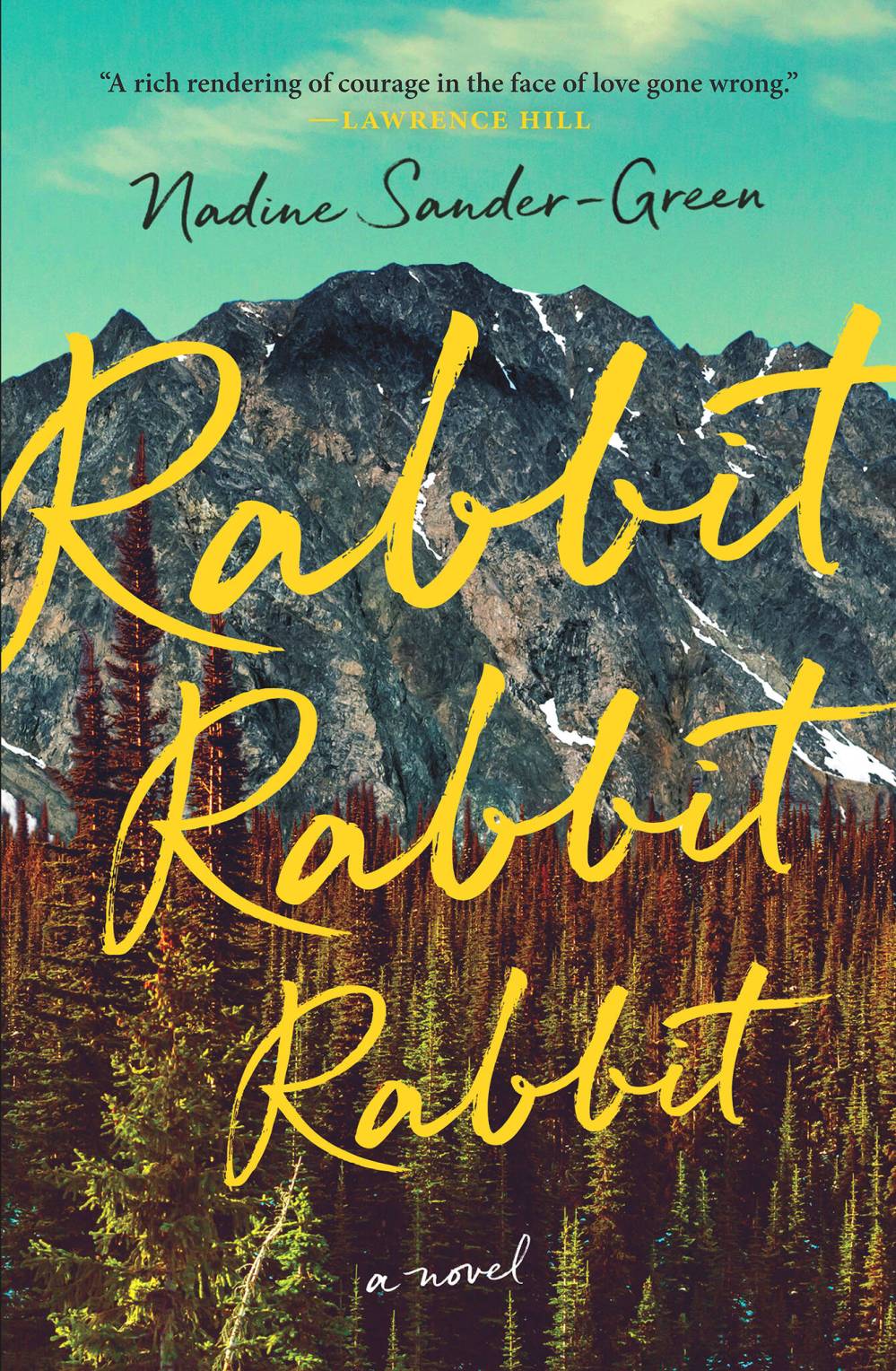
Rabbit Rabbit Rabbit

“Why do you call me that?” she asks.
“I don’t know. You are cute. Like a little rabbit.”
Perhaps this is meant to harken back to the second chapter when Millicent, settling into her reporting job, thinks back to “the very gentle atmosphere of the Horizon Institute that drew her to it in the first place … and the fact that in the spring, the main courtyard was filled with hundreds of baby rabbits that students, unwisely, cradled in their arms while sitting on their Mexican blankets studying for exams.”
Millicent’s time with Pascal loses its lucky lustre — when there seems to be no sign of a producer for Pascal’s TV show and when Sophie resolves her curiosity about Pascal. Still, Rabbit Rabbit Rabbit remains an intriguing novel.
Winnipeg author Dave Williamson is the founder of the Creative Communications program at Red River College.