

Camino hike a deliciously satisfying trek
Advertisement
Read this article for free:
or
Already have an account? Log in here »
To continue reading, please subscribe:
Monthly Digital Subscription
$0 for the first 4 weeks*
- Enjoy unlimited reading on winnipegfreepress.com
- Read the E-Edition, our digital replica newspaper
- Access News Break, our award-winning app
- Play interactive puzzles
*No charge for 4 weeks then price increases to the regular rate of $19.95 plus GST every four weeks. Offer available to new and qualified returning subscribers only. Cancel any time.
Monthly Digital Subscription
$4.99/week*
- Enjoy unlimited reading on winnipegfreepress.com
- Read the E-Edition, our digital replica newspaper
- Access News Break, our award-winning app
- Play interactive puzzles
*Billed as $19.95 plus GST every four weeks. Cancel any time.
To continue reading, please subscribe:
Add Free Press access to your Brandon Sun subscription for only an additional
$1 for the first 4 weeks*
*Your next subscription payment will increase by $1.00 and you will be charged $16.99 plus GST for four weeks. After four weeks, your payment will increase to $23.99 plus GST every four weeks.
Read unlimited articles for free today:
or
Already have an account? Log in here »
Hey there, time traveller!
This article was published 29/06/2024 (560 days ago), so information in it may no longer be current.
This multifaceted book blends the story of hiking the 790-kilometre Camino de Santiago historical route through northern Spain, an appreciation of the country’s culinary history and dishes (including recipes) and author Lindy Mechefske’s account of using the adventure to solve personal issues (it’s a pilgrimage route, after all).
Mechefske is qualified on all counts. She’s the author of four previous books on food and culture. A lifelong walker — at age five she hiked in the Adirondacks with her father — Mechefske has hiked and climbed in the Alps, Appalachians and England’s Lake District and Peak District. She started the Camino trail working through the loss of her father, her mother’s declining health and her own divorce.
What drew her to the Camino was not that it’s the pathway of Celtic druids or Romans, nor the remains of St. James at the end, but “the idea of a long, hard, slow walk,” what she thinks of as medicine.
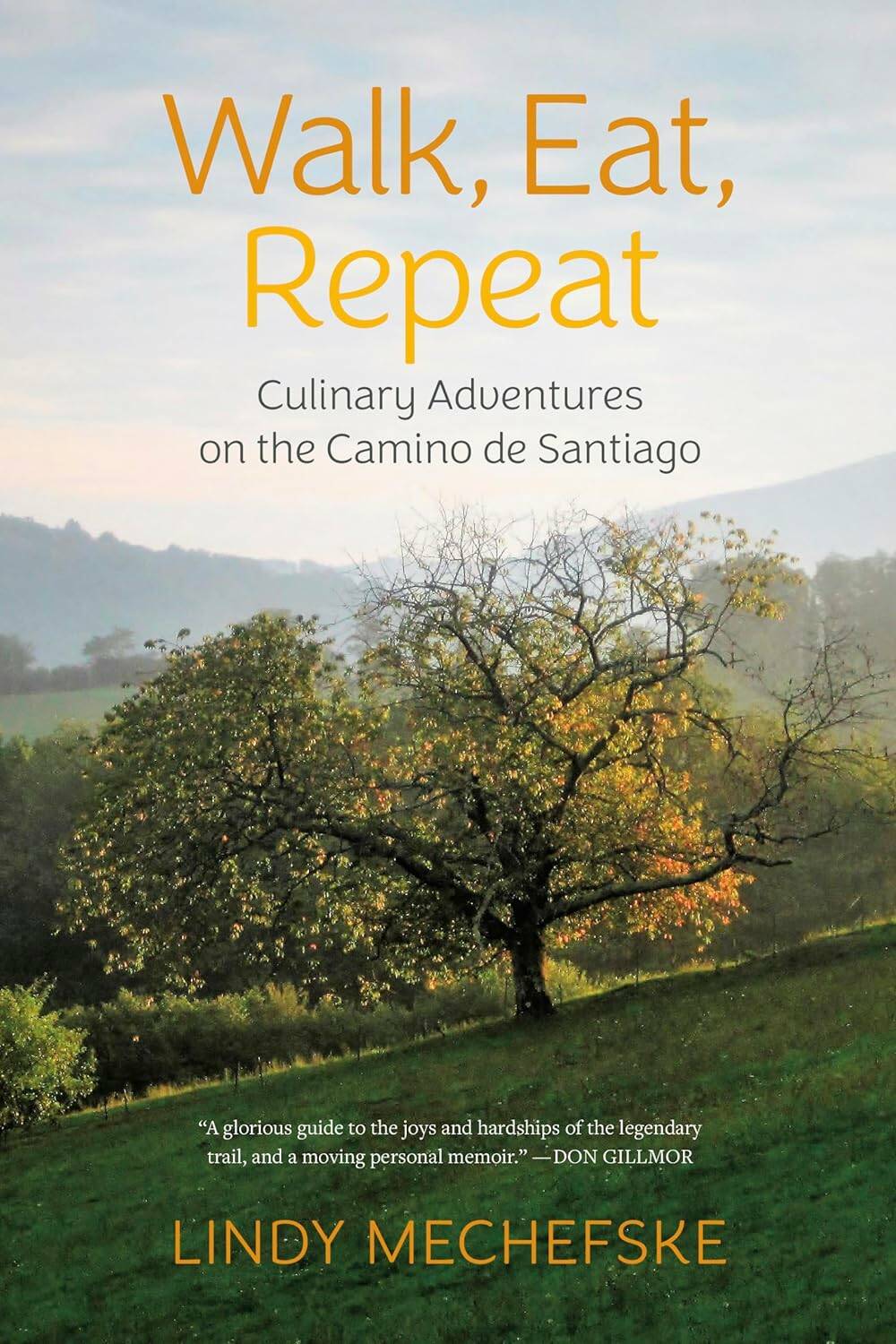
Walk Eat Repeat
The trail is officially El Camino de Santiago de Compostela (loosely translated as The Way of Saint James of the Field of Stars) but commonly known as El Camino, The Way or simply the Camino.
She travelled the Camino Frances, so named because it starts in France, just outside the border with Spain. It is the oldest route to the Santiago de Compostela finish line and heavily travelled, which was safer for a woman travelling alone most of the way.
She takes readers through preparations — from choosing the right equipment (especially boots) and how to pack it, to travel arrangements, to learning enough Spanish to book into an albergue (hostel) at end of day and order food.
The book is much, much more than a how-to, as necessary as those details are. It is a slice of life on the Camino: the exhilaration and drudgery of walking 25 or 30 kilometres a day on sometimes-difficult paths; the joy (and occasional dread) of meeting other walkers from around the world; the sights, sounds and smells of the rudimentary dormitory hostels; the absolute joy of a glass of wine and delicious meal in a local café or bar; the absolute distress of being offered a cup of instant coffee and slice of toast for breakfast at some albergues; the time, over 26 days of walking, to assess her current life and decide how to improve it.
Mechefske had the companionship of a Canadian friend for the first while, but walked most the way alone — or as alone as you can be on a busy, internationally recognized trail. She did meet many interesting, friendly walkers and spent some enjoyable time with them on the trail or during the village stopovers, but no one was interested in forging a full-time alliance. The Camino is known for attracting walkers like the author, who cherish time truly alone with the exertion, the countryside and their thoughts.
Mechefske’s background as a food writer shows in the descriptions of local foodstuff and meals, and wine, and most chapters include a recipe for a dish she had that day. She describes Spain as one of the world’s great food cultures.
An important note is that the author did not plan to write a book about the trail; that was a decision made after her return to Canada. She didn’t take extensive notes or conduct interviews while on the trail, yet has written an interesting, informative, layered book with (spoiler alert) a happy ending.
Whether the book encourages readers to tackle an almost 800-kilometre trek like the Camino Frances or something shorter and closer to home, it pays to listen to Mechefke’s credo: “We lose something by not walking. We lose a simple, fundamental and organic connection to the Earth itself.”
Chris Smith is a Winnipeg writer.