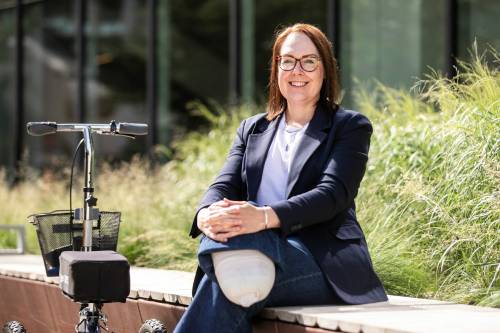
Editor proved she had a taste for success
Advertisement
Read this article for free:
or
Already have an account? Log in here »
To continue reading, please subscribe:

Digital Subscription
One year of digital access for only $205*
- Enjoy unlimited reading on winnipegfreepress.com
- Read the E-Edition, our digital replica newspaper
- Access News Break, our award-winning app
- Play interactive puzzles
*First annual payment billed as $205.00 + GST for one year. This annual subscription will automatically renew at $233.00 + GST every 52 weeks (10% off the regular annual price of $259.35). Offer available to new and qualified returning subscribers only. Cancel any time.
To continue reading, please subscribe:
Add Free Press access to your Brandon Sun subscription for only an additional
$1 for the first 4 weeks*
- Enjoy unlimited reading on winnipegfreepress.com
- Read the E-Edition, our digital replica newspaper
- Access News Break, our award-winning app
- Play interactive puzzles
*Your next Brandon Sun subscription payment will increase by $1.00 and you will be charged $17.95 plus GST for four weeks. After four weeks, your payment will increase to $24.95 plus GST every four weeks.
Read unlimited articles for free today:
or
Already have an account? Log in here »
Hey there, time traveller!
This article was published 06/07/2024 (788 days ago), so information in it may no longer be current.
Judith Jones, who died in 2017 at age 93, spent her long and productive life in the editing trenches of New York publishing.
Her main claim to fame was discovering, signing and working with iconic cookbook author Julia Child, who published her transformational classic, Mastering the Art of French Cooking, in 1961.
Jones published a memoir, The Tenth Muse, in 2007. Her eventual biographer, Sara B. Franklin, writes that she was captivated by Jones’ book when she came across it in college but felt it “lacked interiority” and “glossed over her larger literary life.”
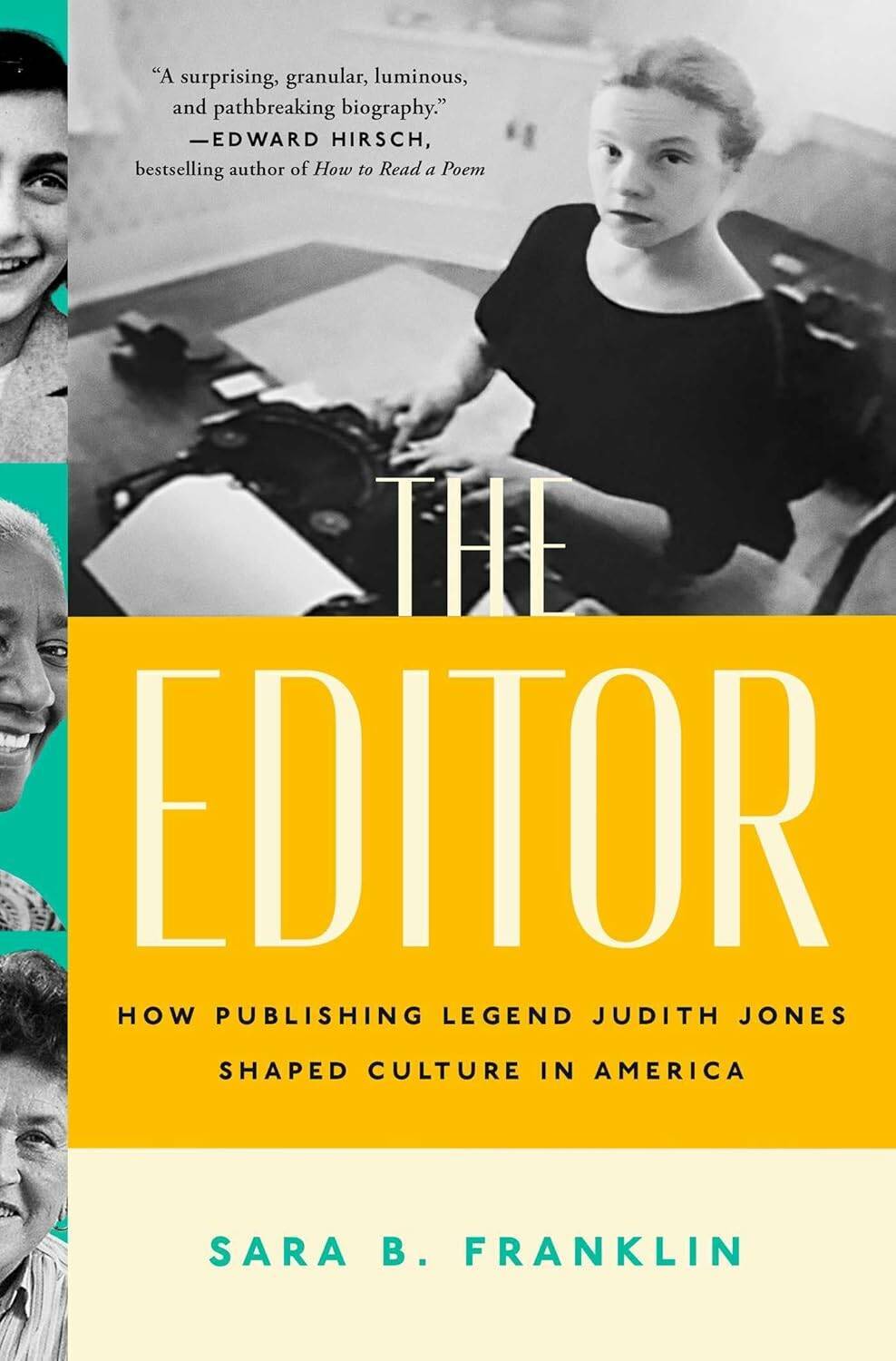
The Editor
Franklin’s first book, The Editor (which began life as her PhD thesis in food studies), is a competent and informative effort. Her feminist motives are never far from the surface.
Franklin portrays Jones, to whom she refers as Judith throughout, as a product of her time and place. She was born Judith Bailey in 1924 to a well-off WASP family in Vermont.
Jones rebelled against her mother’s conventional expectations. As a literature student in college during the Second World War, she began an affair with her professor, the poet Theodore Roethke.
But she obviously internalized the feminine virtues of her social class.
Modesty, primness and grace were not only the hallmarks of Jones’ personality, Franklin insists, but also of her editorial style.
“To read Judith’s authors is to encounter ‘the invisible hand of an extraordinary editor,’” Franklin writes, quoting the praise of journalist Laura Shapiro. “‘Of course you don’t see her. That’s why she was great.’”
Contrast this with the heavy blue pencils of, say, Gordon Lish and Maxwell Perkins, 20th-century macho editors who have been lionized in biography after biography.
Jones, who started at Knopf in 1957 after a decade with Doubleday, worked for 20 years for another American male editing legend.
Robert Gottlieb, who is still kicking at age 93, treated her with sexist disdain and even refused to give her a raise, Franklin contends.
But clearly Jones always knew what she was doing. In Paris in 1950, working for Doubleday as an adventuresome young lady abroad, she recommended an unknown French edition of a Dutch wartime memoir, The Diary of Anne Frank, for U.S. publication.
Back in New York she championed the debut poetry collection by another unknown, Sylvia Plath. Early in her long stint at Knopf, she was assigned to edit novels by John Updike and Anne Tyler, both of whom stayed with her for decades.
But it was in the field of cookbooks that Jones made her mark. Following the success of Child, she developed a stable of authors who formed a who’s who of American cooking: Edna Lewis, Anna Thomas, Kit Foster and Claudia Roden, among them.

The second half of the book is given over largely to Jones’ exploits in the food genre. She had always been an enthusiastic cook herself, in partnership with her husband of almost 50 years, Dick Jones, a divorced journalist with two children by his first marriage.
The couple, sadly, had no children themselves. But they adopted Jones’ niece and nephew at age 10 and 13 when their parents died.
For research, Franklin had access not just to Jones’ personal papers but to the voluminous Knopf archives held at the University of Texas. She also conducted interviews with Jones’ colleagues and family members.
Glaringly missing, however, and with no explanation, is an interview with Tyler. Also an odd absence, in a biography of this type, is a section of photographs.
Morley Walker is a retired Free Press editor and writer.