A coven to covet
Trio’s quest a rewarding, charming look at loss, self-acceptance and helping others
Advertisement
Read this article for free:
or
Already have an account? Log in here »
To continue reading, please subscribe:

Digital Subscription
One year of digital access for only $205*
- Enjoy unlimited reading on winnipegfreepress.com
- Read the E-Edition, our digital replica newspaper
- Access News Break, our award-winning app
- Play interactive puzzles
*First annual payment billed as $205.00 + GST for one year. This annual subscription will automatically renew at $233.00 + GST every 52 weeks (10% off the regular annual price of $259.35). Offer available to new and qualified returning subscribers only. Cancel any time.
To continue reading, please subscribe:
Add Free Press access to your Brandon Sun subscription for only an additional
$1 for the first 4 weeks*
- Enjoy unlimited reading on winnipegfreepress.com
- Read the E-Edition, our digital replica newspaper
- Access News Break, our award-winning app
- Play interactive puzzles
*Your next Brandon Sun subscription payment will increase by $1.00 and you will be charged $17.95 plus GST for four weeks. After four weeks, your payment will increase to $24.95 plus GST every four weeks.
Read unlimited articles for free today:
or
Already have an account? Log in here »
Hey there, time traveller!
This article was published 20/07/2024 (788 days ago), so information in it may no longer be current.
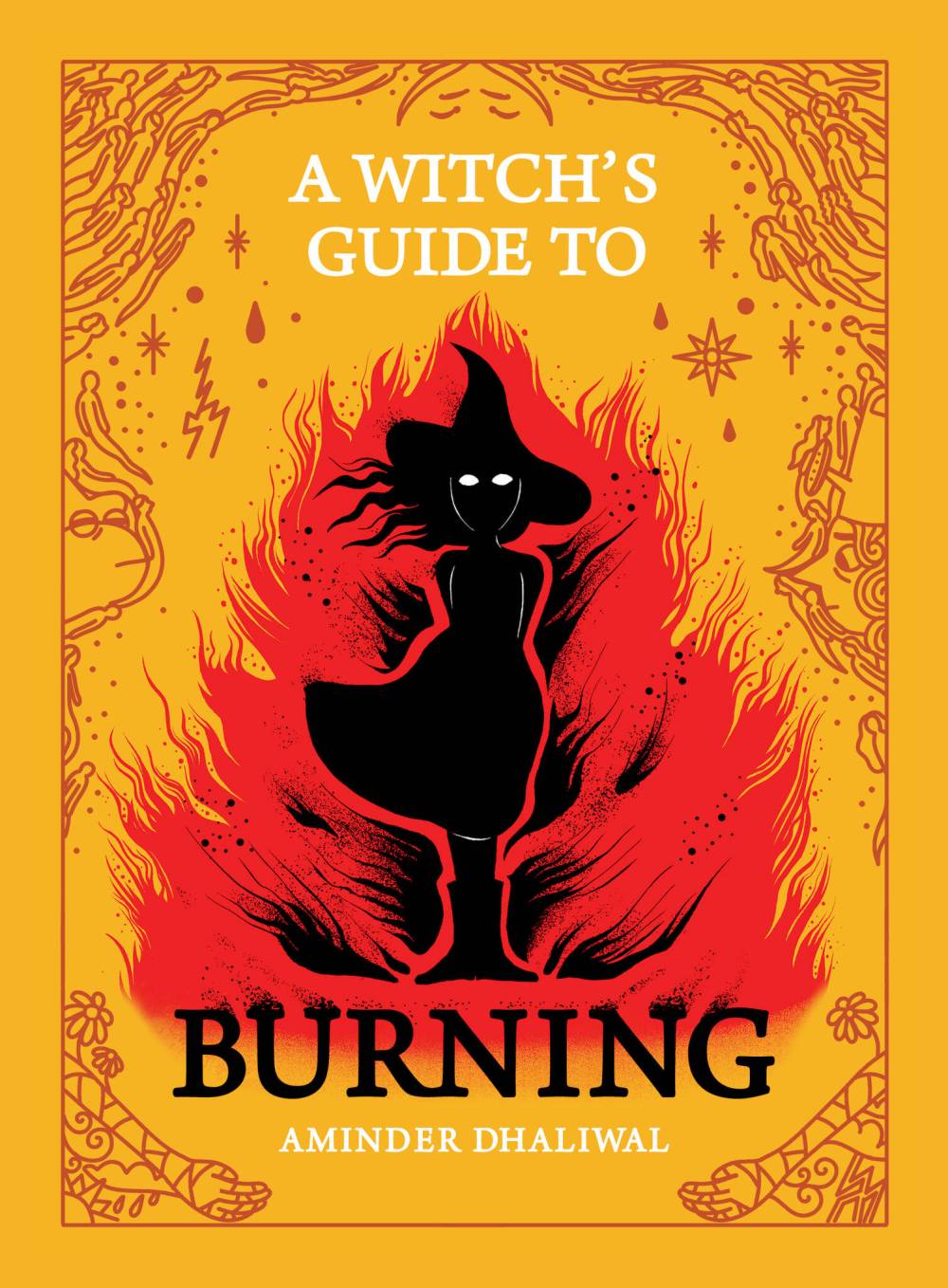
A Witch’s Guide to Burning is the third book by Canadian-born cartoonist Aminder Dhaliwal. Like its graphic novel predecessors (the eye-opening Cyclopedia Exotica and Ignatz-winning Woman World), this book began as a comic on Instagram, but instead of being speculative or science fiction, it’s firmly rooted in the fantasy genre.
The book tells the story of Singe, a witch who has barely survived an attempted burning by the villagers of her hometown after being unable to keep up with their demand for her magic. Semi-conscious and disoriented, she is greeted by the witch-doctor Yew-Veda and her toad companion Bufo Wonder. The enchanting pair then take Singe on a quest to restore her strength and memories.
To the duo’s dismay, Singe blames herself for what has happened, at first wishing to return to the villagers to prove her worth to them again. Here, Dhaliwal crafts a clear, incisive parallel to a lack of work-life balance and the ways in which it contributes to burnout and low self-worth — it is telling, for example, that Singe first mistakes Bufo for a dead toad instead of one who is resting, and that she is often frustrated by Yew-Veda’s slow pace and sometimes imperfect spell-casting.
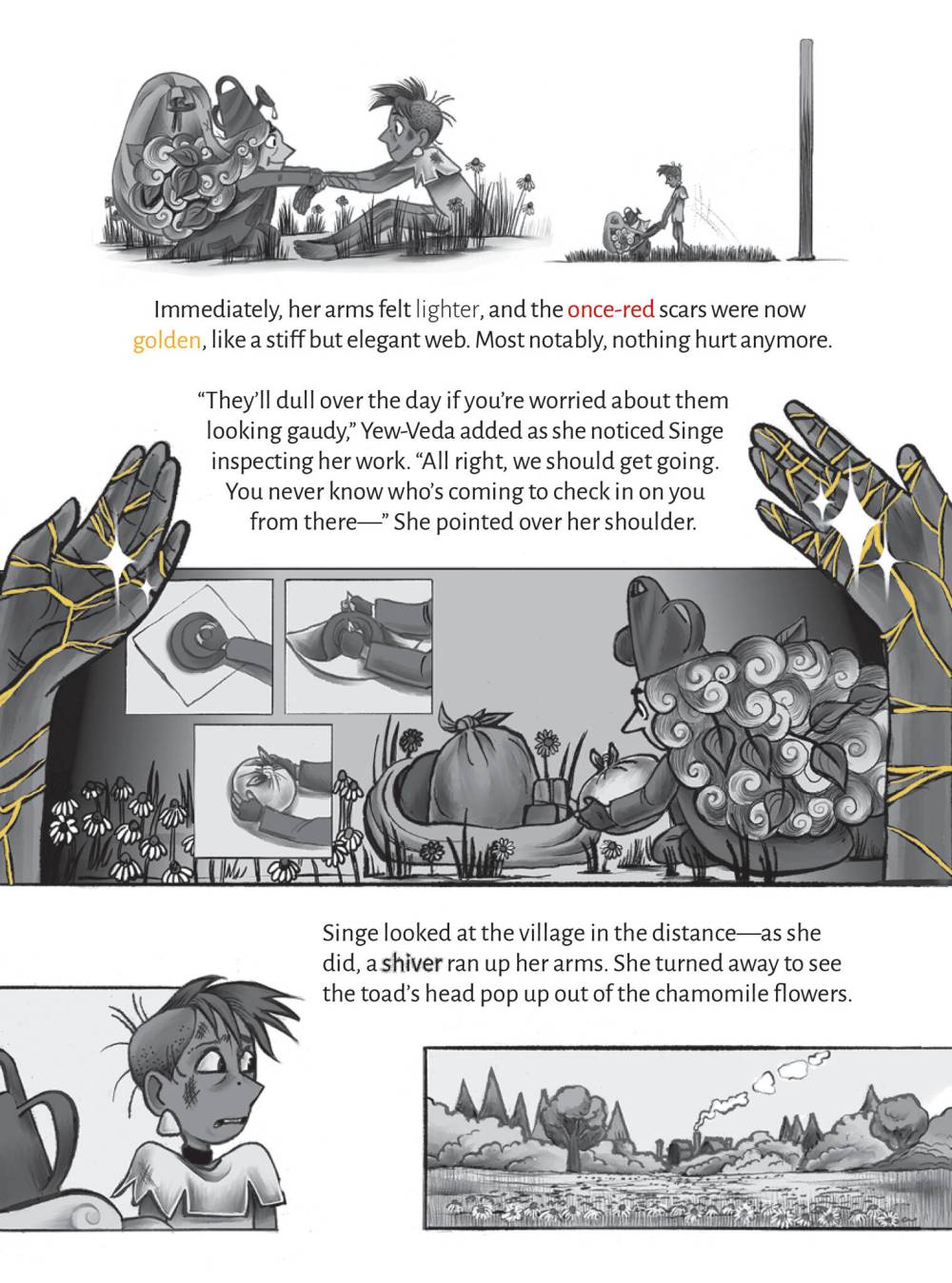
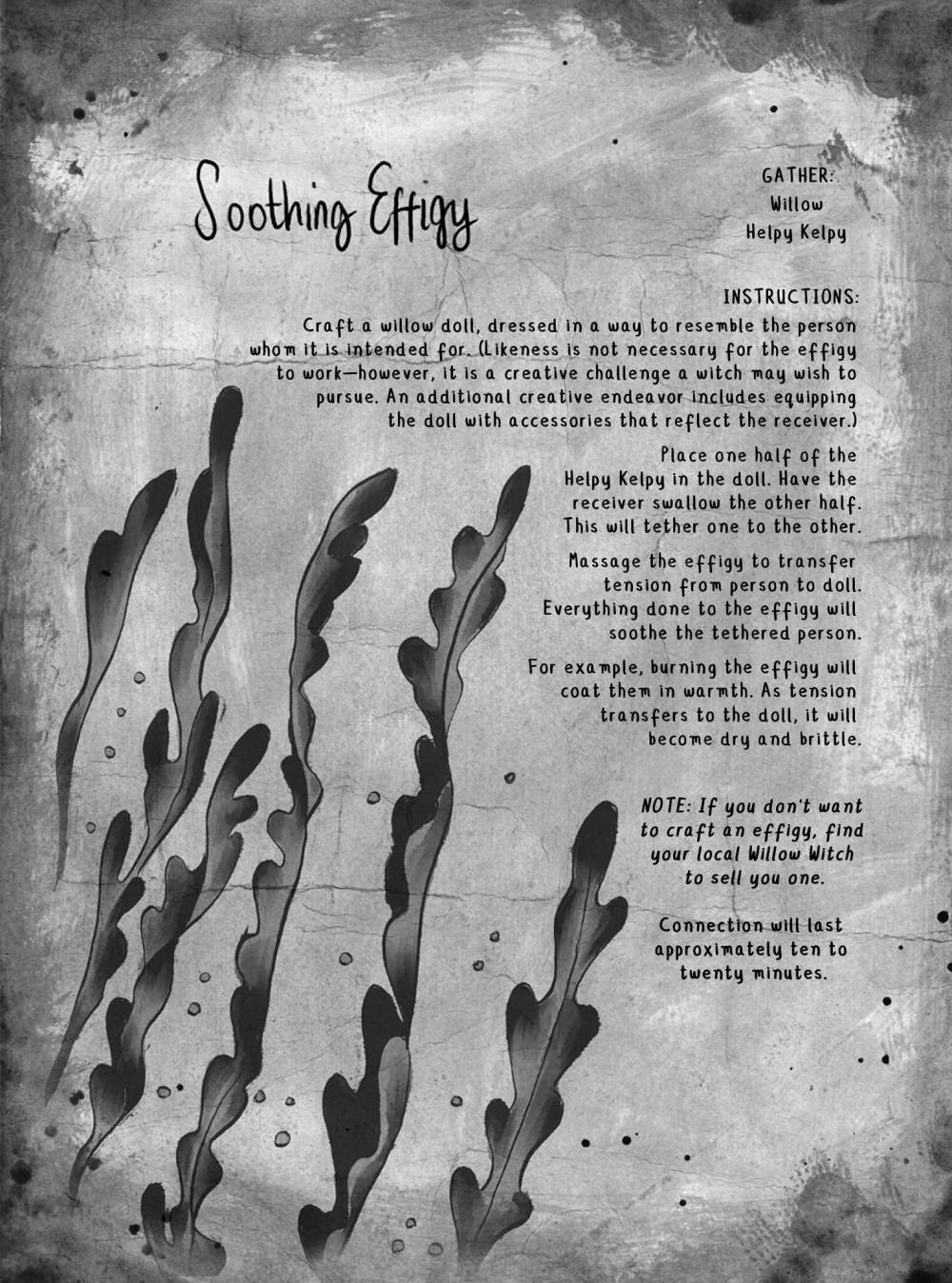
It’s revealed that the witch-doctor is also in recovery from a burning, during which her personal spellbook was also destroyed. As she uses her magic to help Singe, pages from her destroyed tome of spells are reconstructed for the reader, and it is rewarding to see the two witches’ relationship grow along with Yew-Veda’s rebuilt spellbook.
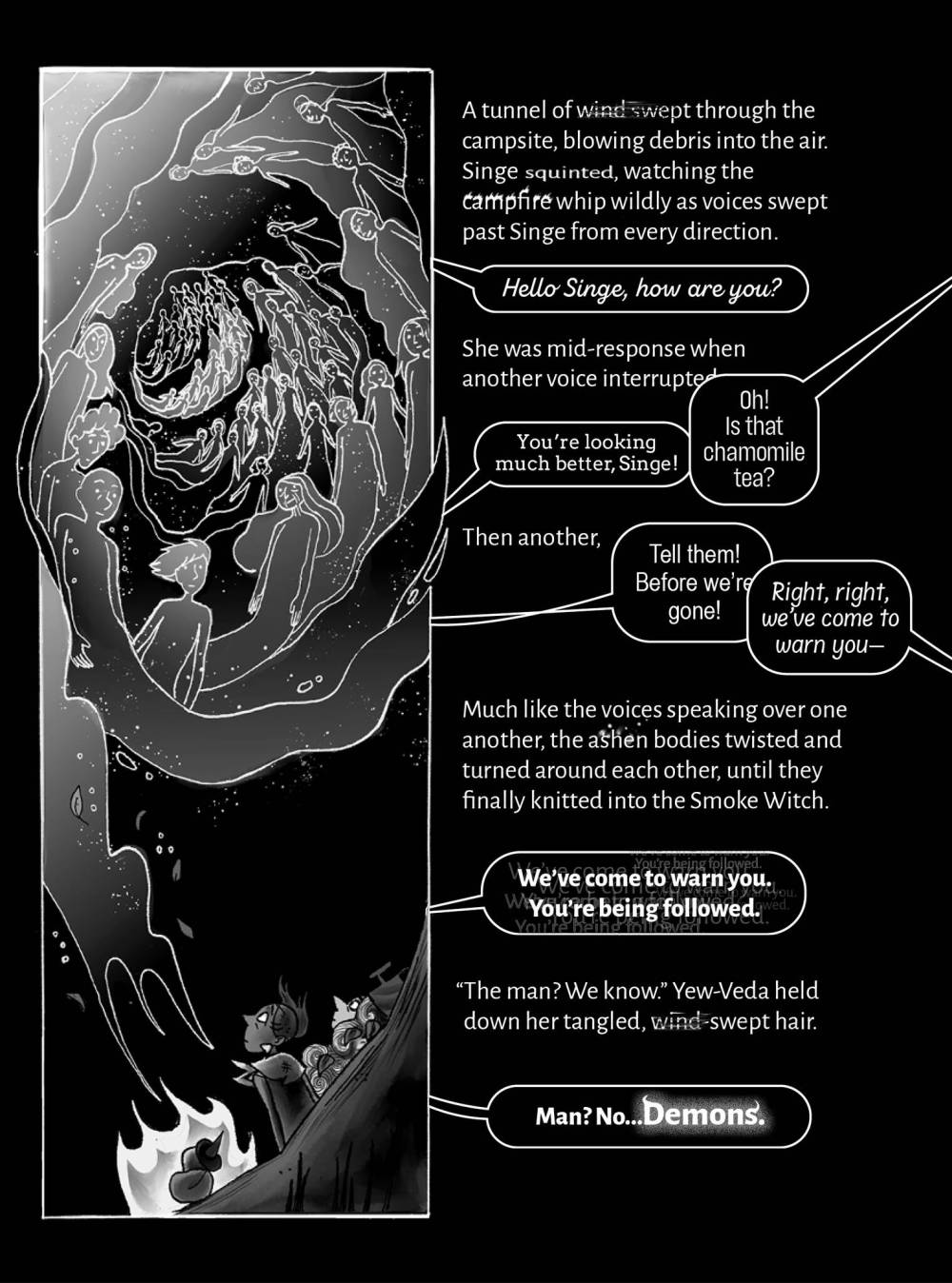
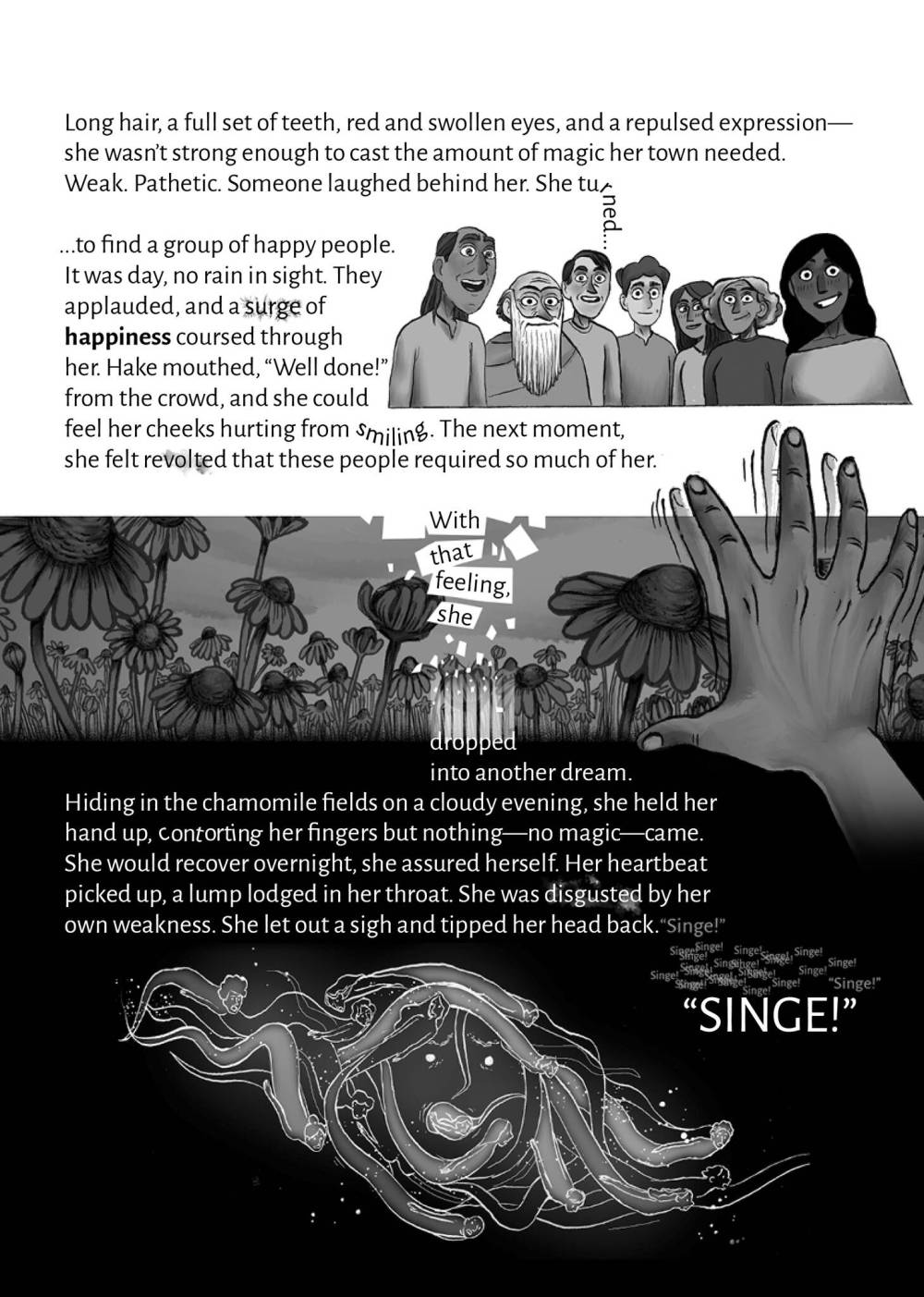
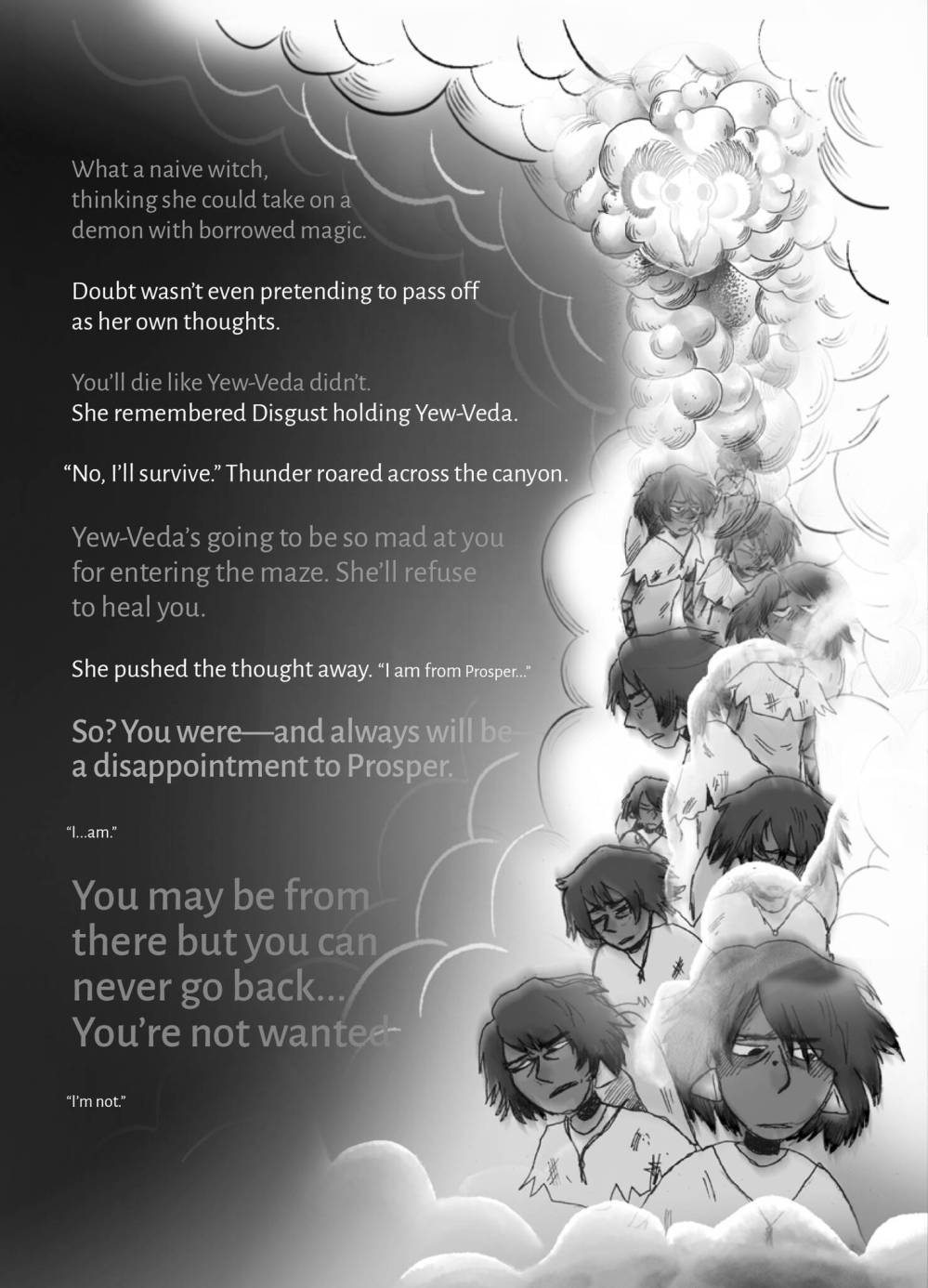
The integration of the spellbook pages is also one facet of Dhaliwal’s experimentation with form; instead of structuring the book as a traditional graphic novel divided into panels, she breaks up longer sections of illustrated prose with innovative use of other, more visual components. The book’s varied, shifting typography, for example, leads the reader’s eye through the story in a similar manner to that of a panel, while creating a type of concrete poetry that adds to the imagery and mood. Though these instances are plentiful, they have the most impact when depicted through elemental words like wind, fog, and notably, smoke, which is integral to the story.
As the proverbial smoke clears, the lore surrounding witch-burning and magic becomes more prescient. Dhaliwal’s Smoke Witch, for example, emerges in the first few pages to initiate Singe’s recovery, but its collective power bears even more emotional weight as it aids the the travellers to defeat the cleverly conceptualized foes they encounter.
The personalities crafted here are remarkably vivid and genuine in their interactions with each other, but also possess a compelling interiority — especially Bufo, who at first seems to be comic relief, but reveals a surprising depth of character as the story progresses.
Visually, Dhaliwal’s whimsical, expressive character design will likewise charm fans of animated adventure series such as Amphibia, The Owl House (on which the artist also worked), and modern cartoon classic Over the Garden Wall.
As Dhaliwal weaves together themes of loss, self-acceptance and the transformative power of receiving help from others, the story grows immersive to the point that it could have been even better served through a more interactive medium. One gets the sense that A Witch’s Guide to Burning might have been first conceived as a visual novel or digital puzzle-story and, like Singe does at first, some readers might struggle with the story’s deliberate pacing.
However, those who love fantasy, folklore or open-world games will likely be enthralled by this trio’s journey and the nurturing magic that binds them together.
Nyala Ali writes about race and gender in contemporary narratives.
A Witch’s Guide to Burning