Munro’s coverup themes seen in new light
Advertisement
Read this article for free:
or
Already have an account? Log in here »
To continue reading, please subscribe:

Digital Subscription
One year of digital access for only $205*
- Enjoy unlimited reading on winnipegfreepress.com
- Read the E-Edition, our digital replica newspaper
- Access News Break, our award-winning app
- Play interactive puzzles
*First annual payment billed as $205.00 + GST for one year. This annual subscription will automatically renew at $233.00 + GST every 52 weeks (10% off the regular annual price of $259.35). Offer available to new and qualified returning subscribers only. Cancel any time.
To continue reading, please subscribe:
Add Free Press access to your Brandon Sun subscription for only an additional
$1 for the first 4 weeks*
- Enjoy unlimited reading on winnipegfreepress.com
- Read the E-Edition, our digital replica newspaper
- Access News Break, our award-winning app
- Play interactive puzzles
*Your next Brandon Sun subscription payment will increase by $1.00 and you will be charged $17.95 plus GST for four weeks. After four weeks, your payment will increase to $24.95 plus GST every four weeks.
Read unlimited articles for free today:
or
Already have an account? Log in here »
Hey there, time traveller!
This article was published 16/08/2024 (777 days ago), so information in it may no longer be current.
The explosive recent public revelation that the late Alice Munro, a celebrated Canadian Nobel Prize-winning author, sided with her sexually exploitive second husband at the expense of her own exploited daughter, Andrea Skinner, came as a shock worldwide.
But should it have? Is it not what her stories were telling us for some time? That despite the brilliant self-inventions and steppings-out of the girls and women of her earlier fictions — most notably in Lives of Girls and Women, the luminous collection of linked stories published in 1974 at the height of the women’s movement and admired and loved by millions — she herself had chosen to step back into an older social conventionality in her fictions. And also, it seems, in her life.
In effect, she retreated back into a fairly restricted realm of domesticity, whose rules included “stand by your man no matter what,” and “make whatever necessary moral compromises you need to make to preserve the perceived social order around you while retaining a modicum of self-expression.”
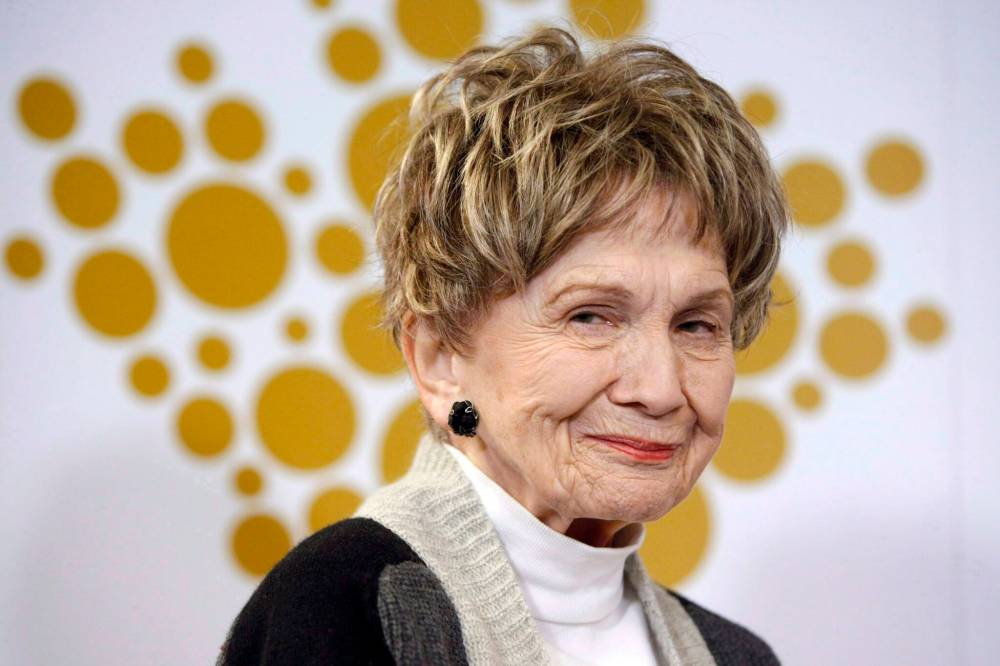
CHAD HIPILITO / THE CANADIAN PRESS FILES
Alice Munro’s later writing hints at the author’s personal ideology, argues Di Brandt.
This was the kind of world her mother and grandmothers knew about and were forced to live in, the kind of world she led us to the brink of transforming in her early works.
Munro perhaps thought she didn’t have a choice in this retreat, given the difficulty of earning a living and finding community as a single woman writer in Canada, even for an international celebrity. Of course, from her readers’ point of view, given her exceptional prestige and power with words, she surely did. This is why her fans worldwide feel so betrayed.
How many people do we know like Alice Munro, who behaved similarly to the way she did and many of her later female characters do, closing back down into pre-feminist social conventionality during the anti-feminist backlash of the 1990s and beyond? Women who re-adopted rules of a past conventionality, even while enjoying many of the new professional and self-authoring opportunities for women made possible by the movement?
Women were widely supported in this retreat by the mainstream, so we shouldn’t fall back into “blame the mother for everything” habits that belong to that same conventionality.
In Andrea Skinner’s story, the fingers point, first of all, to the perpetrating stepfather, Gerald Fremlin, then secondly to the custodial parent, Jim Munro, who kept sending his daughter back to his ex-wife’s home for summer holidays, even after he knew of the abuse.
Thirdly, it points to Munro herself, who chose to call her daughter a liar when she was finally told about the abuse years later, and chose to stay with the abuser, whom she may have (alarmingly) suspected of a history of abuses. She stayed even after he was found guilty of assault in court for a few of the abuses perpetrated against his young stepdaughter.
She was strongly supported in this coverup by the court in its lenient sentencing, by her ex-husband and by the journalists, booksellers, publishers and neighbours who knew of the abuses and remained silent.
After that, disturbingly, the fingers also point at the rest of us, the reading world. We must examine our own affiliations and assumptions as people, as citizens, as readers, as we absorb the shock of this terrible news.
It is moving to see how many journalists and booksellers and professors and readers are doing just that, as we become more alert to the “creepiness factor” in Munro’s stories.
Authors do not write arbitrary fictions. They write about the world we all live in, they write about things we all care about. Literary writing is often a deep teaching about how people live, held up in the bright light of desire, hope and aspiration of how we would want to live.
In hindsight, we see how many of Munro’s later fictions are about coverups, accommodations made to morally questionable and even horrific deeds. There’s a scrupulous sense of honesty in the stories — that’s part of the pleasure of reading them — but there is often closure around the doers and their deeds, as opposed to opening up new wider imaginative possibilities. Coverup of personal misdeeds or, at the very least, serious moral compromise to get by is one of Munro’s major themes.
We’re in a world learning moment. We might do well to remember the central tenets of the women’s movement of the 1970s and ’80s, which made so many liberatory changes available to women — and everyone — at that time. Perhaps they could be taken up again now to help complete the work women were trying to enact then.
Tenets like “the personal is the political.” Like women’s liberation depends on active, pervasive consciousness-raising and political networking. Like looking to the inspirational influence of Indigenous women’s ceremonies and ways of knowing. Like honouring the intergenerational relations of girls and women. Like cultivating embodied ways of thinking and being, celebrating the erotic and reproductive joys and wonders of the flesh.
Like allowing women the freedom to step away from these things into careers and other self-inventions.
And like the widespread disclosure of sexual abuses in the domestic sphere, as well as the workplace and universities, accompanied by innovative new therapies to help address the victims’ traumas compassionately and transformatively, and solid steps to correct these widespread misdeeds on systemic and educational levels.
The #MeToo movement didn’t introduce this latter theme so much as re-enact it in Hollywood and related scenes of the digital era, where the extensive social changes and protective legislations against sexual harassment and abuse had somehow slipped through the cracks.
Is it time to extend our Human Rights Codes and respectful environment policies and restorative processes beyond the workplace now? To include greater systemic and administrative accountability for fathers and mothers and other caretakers of children and vulnerable persons? And also (heresy!) to the administrators of religious and other community-based organizations?
It would require new rounds of pervasive consciousness-raising, networking, political lobbying and legal reforms. But perhaps the time for doing this additional round of work, to complete and augment the vision and aspirations of the women’s movement, and of the early inspirational writing of women like Alice Munro, has arrived.
“What would happen if one woman told the truth about her life?” wrote American poet Muriel Rukeyser in 1968. “The world would split open.”

Turns out that’s still true today. Andrea Skinner, you’ve split the world open for us, all over again. Helluva story! You are the noble heir to your mother’s early vision of liberation and self-direction, so generously depicted in Lives of Girls and Women. You are Del Jordan, grown up to become healer, truthteller and discomforting inspiration to the immense world of readers previously called together by your famous mother.
There is much new work to be done in revisiting the lives of girls and women — and everyone — now.
Let’s not stop reading or celebrating Munro’s works. But let’s not let their limitations, illuminated by the revelation of the author’s own personal limitations, stop or excuse us from the revisionary work called for in the present, in our literary practices as in our social and professional lives.
Your story hurts. Your story inspires. Thank you for the challenge, Andrea Skinner.
Di Brandt is a longtime professor of Canadian literature and creative writing. Her life was lit up by Lives of Girls and Women when it first appeared. She wrote a guest column called “Love Letters to Winnipeg” for the Free Press while serving as Winnipeg’s inaugural poet laureate (2018-19).