

Exploration of coding reveals a wired world of abstractions
Advertisement
Read this article for free:
or
Already have an account? Log in here »
To continue reading, please subscribe:
Monthly Digital Subscription
$0 for the first 4 weeks*
- Enjoy unlimited reading on winnipegfreepress.com
- Read the E-Edition, our digital replica newspaper
- Access News Break, our award-winning app
- Play interactive puzzles
*No charge for 4 weeks then price increases to the regular rate of $19.00 plus GST every four weeks. Offer available to new and qualified returning subscribers only. Cancel any time.
Monthly Digital Subscription
$4.75/week*
- Enjoy unlimited reading on winnipegfreepress.com
- Read the E-Edition, our digital replica newspaper
- Access News Break, our award-winning app
- Play interactive puzzles
*Billed as $19 plus GST every four weeks. Cancel any time.
To continue reading, please subscribe:
Add Free Press access to your Brandon Sun subscription for only an additional
$1 for the first 4 weeks*
*Your next subscription payment will increase by $1.00 and you will be charged $16.99 plus GST for four weeks. After four weeks, your payment will increase to $23.99 plus GST every four weeks.
Read unlimited articles for free today:
or
Already have an account? Log in here »
Hey there, time traveller!
This article was published 07/09/2024 (457 days ago), so information in it may no longer be current.
There is a very real cost to relinquishing control of our lives to machines and machine logic, and in his latest book Andrew Smith, journalist and author of Totally Wired, details his odyssey learning code and discovering the “haunting alien logic” under which it operates.
In Devil in the Stack, his exploration of how coding is transforming the world, Smith struggled to learn how coding works and interviewed a great many programmers and computer scientists to understand the effects of entrusting construction of the digital infrastructure we all use to coders, a group of “overwhelming white and Asian men.”
Females makes up only about seven per cent of coders and Blacks about three per cent, he writes, making for a skewed view of the world and what code should be doing.
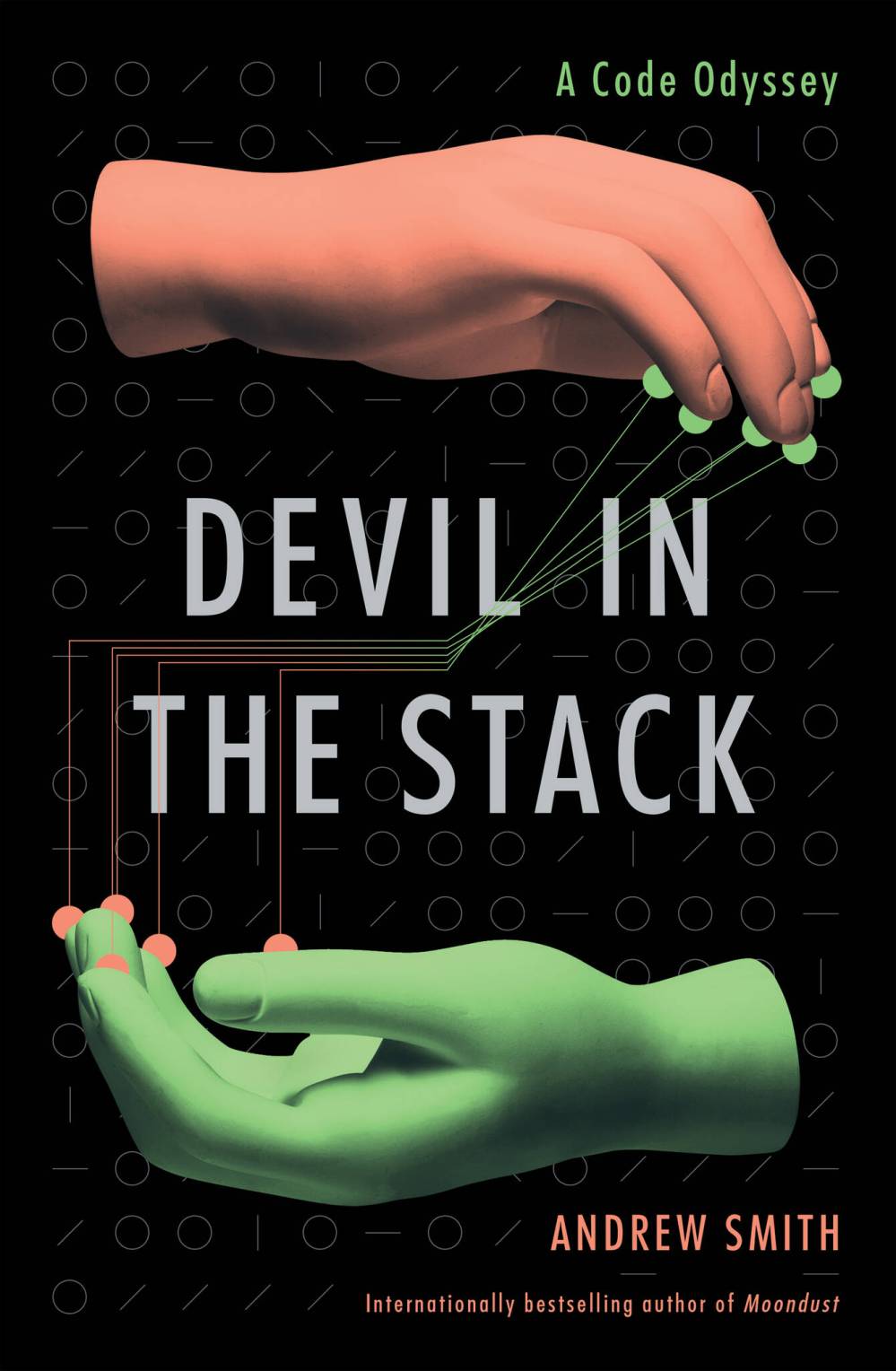
Devil in the Stack
Smith’s interest in coding began in late 2013 when the journalist was trying to track down rumours that someone knew who was behind the new cryptocurrency Bitcoin for a BBC assignment that didn’t pan out. Only later did he realize his focus on Bitcoin obscured the story primed to define the next decade: “Computer code was seeping unchallenged and at an accelerating rate into every area of our existence.”
He adds: “Within a few short years almost nothing any of us did would happen without it. And the world didn’t seem to be getting better.”
Smith describes the intricacies of coding and the myriad codes whose names and varying uses may baffle the layperson, but it illustrates the complexity of the work and its evolution. He profiles many coders he meets along the way.
The author tracks the history of coding from early computing pioneers such as Ada Lovelace, George Boole, John von Neumann and Alan Turing to the coding cultures in place at global high-tech companies today. He is in awe of the British codebreakers during the Second World War and Turing’s groundbreaking work.
Smith addresses the problems emerging with the latest craze of AI (artificial intelligence, which he contends should be described as “machine learning”) and the need for diligence.
If you’re wondering what stack the devil is in, it’s the set of technologies used to develop an application.
After his conversations with so many coders, Smith concludes that coding depends on abstractions that are then packaged and abstracted by additional layers of code. These abstractions alienate users and coders from the consequences of their online actions, suggesting that social media companies are inured to the harms they cause because the workings of their self-learning algorithms are opaque even to those who create them. He discusses the psychological impact of immersing oneself in those abstractions and on the workplace dynamics that generate a form of ruthless and antisocial mode of innovation.

“This is not what I expected to find when I set out to study code. It takes a while to get over my shock and contemplate what to do with this information. Precedents are less than promising,” Smith laments.
The author states that resisting the toxic forms in the digital world will take a concerted effort. “Big Tech pushback and lobbying against moderation of their power will be as intense as the motor and oil industries’ decades-long war on climate science, and for the same reasons,” he writes.
Smith dedicates the book to “those who would move slow and fix things,” a reversal of an informal motto at Facebook for many years that urged staff to move fast and break things.
It’s good advice in many spheres other than just the digital universe.
Chris Smith is a Winnipeg writer.