Dizzying memory gap propels tense legal thriller
Advertisement
Read this article for free:
or
Already have an account? Log in here »
To continue reading, please subscribe:

Digital Subscription
One year of digital access for only $205*
- Enjoy unlimited reading on winnipegfreepress.com
- Read the E-Edition, our digital replica newspaper
- Access News Break, our award-winning app
- Play interactive puzzles
*First annual payment billed as $205.00 + GST for one year. This annual subscription will automatically renew at $233.00 + GST every 52 weeks (10% off the regular annual price of $259.35). Offer available to new and qualified returning subscribers only. Cancel any time.
To continue reading, please subscribe:
Add Free Press access to your Brandon Sun subscription for only an additional
$1 for the first 4 weeks*
- Enjoy unlimited reading on winnipegfreepress.com
- Read the E-Edition, our digital replica newspaper
- Access News Break, our award-winning app
- Play interactive puzzles
*Your next Brandon Sun subscription payment will increase by $1.00 and you will be charged $17.95 plus GST for four weeks. After four weeks, your payment will increase to $24.95 plus GST every four weeks.
Read unlimited articles for free today:
or
Already have an account? Log in here »
Hey there, time traveller!
This article was published 28/09/2024 (742 days ago), so information in it may no longer be current.
You are being watched.
If you believe that, you’re ready to plunge head first down the rabbit hole created by L.J. Shepherd, a human rights barrister who lives in Cardiff.
If you’re skeptical, take a few moments to suspend disbelief before continuing.
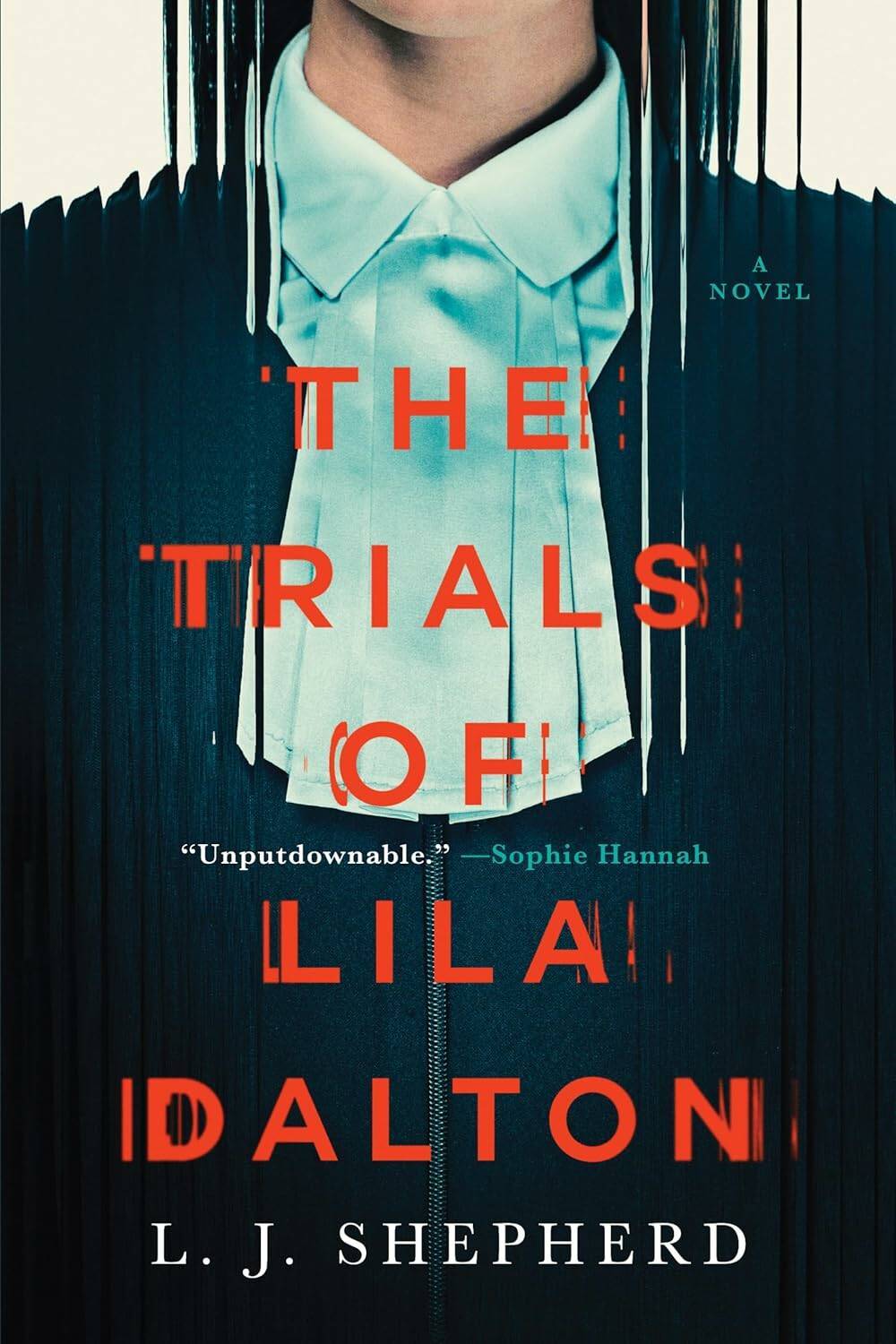
The Trials of Lila Dalton
At the bottom of the rabbit hole, Shepherd is stirring a heady brew of speculative fiction and courtroom drama to create The Trials of Lila Dalton. Described in a jacket blurb as “unputdownable,” the novel might better be described as something from which you can’t escape once you’re in it.
This is a world where inhabitants believe Earth is hollow and a mysterious “they” are controlling minds, although there’s only a vague notion of who “they” might be. It’s a world where conspiracy theories flourish.
This is also the world in which Lila Dalton, a young barrister, finds herself in a courtroom with no memory of how she came to be there. She’s on her own since her silk (the equivalent of King’s Counsel, for Canadians) has been in an accident. Her client is accused of mass murder, but she can’t remember any details of the case.
And Lila needs to take care — someone is threatening her daughter if she fails to get her client off.
To complicate matters, conspiracy nutcases have infiltrated the government, and police and the government have infiltrated these groups. Often, it’s impossible to tell the good guys from the bad guys.
As the story unfolds, it becomes a cautionary tale about the dangers of the internet and a philosophical examination of the nature of truth. Readers will learn Dalton is the victim of mind control; some of her memories have been wiped out, and memories of things that never happened have been inserted.

Malcolm, a helpful court usher and self-described billionaire thanks to an app he invented, tells Lila “The internet dismantled our concept of singular truth. People became increasingly nationalistic and tribalistic. The free press, democracy, everything else crumble with it. Especially justice… There’s no more innocent until proven guilty. The mob is now judge, jury and executioner.”
Dev, a journalist for an anti-fascist zine, tells Lila that last year “The internet became fully commercialized across North America. The way information can travel and be disseminated will mutate in ways that will become both dangerous and exciting… Until now the world has lived under the guise of an absolute reality. These are known truths. From this point onward, that will break down so rapidly that the singularity of truth and reality will disappear.”
The action is set on an island in the North Atlantic because, as Dev explains, “The government decided to solve the problem of having foreign criminals tried and imprisoned in British courts and incarcerated in British prisons. Their solution was to offshore criminals, sending them to an overseas territory to be tried for their crimes. Not just foreign criminals, but domestic terrorists. They’re shipped over here to await on remand; then they’re tried here, and if they’re convicted, they’re imprisoned here.”
The Trials of Lila Dalton is a complex and fascinating tale. A few short years ago it would have been prophetic. Today, sadly, it is holding up a mirror to society, and what it reveals is just plain ugly.
Gordon Arnold is a Winnipeg writer.