

Citizen plain
Clinton’s post-White House biography lacks emotional resonance
Advertisement
Read this article for free:
or
Already have an account? Log in here »
To continue reading, please subscribe:
Monthly Digital Subscription
$1 per week for 24 weeks*
- Enjoy unlimited reading on winnipegfreepress.com
- Read the E-Edition, our digital replica newspaper
- Access News Break, our award-winning app
- Play interactive puzzles
*Billed as $4.00 plus GST every four weeks. After 24 weeks, price increases to the regular rate of $19.95 plus GST every four weeks. Offer available to new and qualified returning subscribers only. Cancel any time.
Monthly Digital Subscription
$4.99/week*
- Enjoy unlimited reading on winnipegfreepress.com
- Read the E-Edition, our digital replica newspaper
- Access News Break, our award-winning app
- Play interactive puzzles
*Billed as $19.95 plus GST every four weeks. Cancel any time.
To continue reading, please subscribe:
Add Free Press access to your Brandon Sun subscription for only an additional
$1 for the first 4 weeks*
*Your next subscription payment will increase by $1.00 and you will be charged $16.99 plus GST for four weeks. After four weeks, your payment will increase to $23.99 plus GST every four weeks.
Read unlimited articles for free today:
or
Already have an account? Log in here »
Hey there, time traveller!
This article was published 04/01/2025 (456 days ago), so information in it may no longer be current.
Bill Clinton’s not the beguiling writer his wife is.
This, Clinton’s second memoir, runs from Jan. 21, 2001 — the day after he ceased being president of the United States after eight years in office — to August 2024, just as Kamala Harris succeeded Joe Biden as the Democrats’ nominee for president. Clinton penned a prior memoir, My Life, in 2004 that covered his life up to and through his two-term presidency.
His writing is clear and informative but lacks the gusto of Hilary Clinton’s recent memoir, Something Lost, Something Gained, who brings touches of emotion to her account even when dealing with complex, unsexy public policy issues. Her spouse, not so much.

Olivier Douliery / Associated Press files
Bill Clinton, seen here in with wife Hillary, has a clear, informative writing style but is short on sharing how he feels about what he’s recounting.
In Citizen Clinton is big on events, causes, actions and transactions. He’s laborious and detailed about what happened, but often you get little sense of how he felt about what he’s recounting.
Even as an ex-president, Clinton remained frequent witness to events from America’s political epicentre. Not to mention, his other insider status: husband of the secretary of state during the Barack Obama administration and the losing presidential candidate in 2016.
Yet his memoir too often reads like an embellished CV-cum-travelogue.
There are too many chapters detailing the acronymic global charitable ventures he threw himself into post-presidency. We get lengthy accounts, and financial accountings, of the doings of Clinton Global Initiative (CGI), Clinton Hunter Development Initiative (CHDI), Clinton Climate Initiative (CCI), Clinton Development Initiative (CDI), Clinton Foundation (CF) and Clinton Health Access Initiative (CHAI). It’s akin to reading a potted summary of a series of corporate annual reports.
And while it’s commendable — and even desirable for fundraising purposes — for an ex-president to lend the weight of his name to a charitable enterprise, you start to wonder after the sixth time his name fronts something philanthropic whether every initiative he involved himself in need bear his name.
He also has an annoying habit of teasingly teeing up an interesting or provocative issue, only to abruptly stop and say he’ll deal with it further in a later chapter. This might work in a textbook, but it doesn’t in a memoir. It interrupts the flow of his narrative and creates a didactic tone.
When he does finally warm to his subject matter, he’s a fine writer and can spiritedly marshal facts and argument.
Witness his analysis, at once astute and heartfelt, of what’s gone wrong in the American heartland and has given rise to a Trumpist state:
“The drop in life expectancy for white working-class men and women was being driven by more than rising rates of diabetes, heart disease, suicide, and fatal overdoses, and for women, smoking. Underneath those challenges was a sense of hopelessness. A lot of those people were dying of a broken heart. They had lost their sense that they mattered, so before long the rest of America didn’t matter to them.
“They were ripe for rage-based tribalism, something that as a white Southerner I was all too familiar with.”
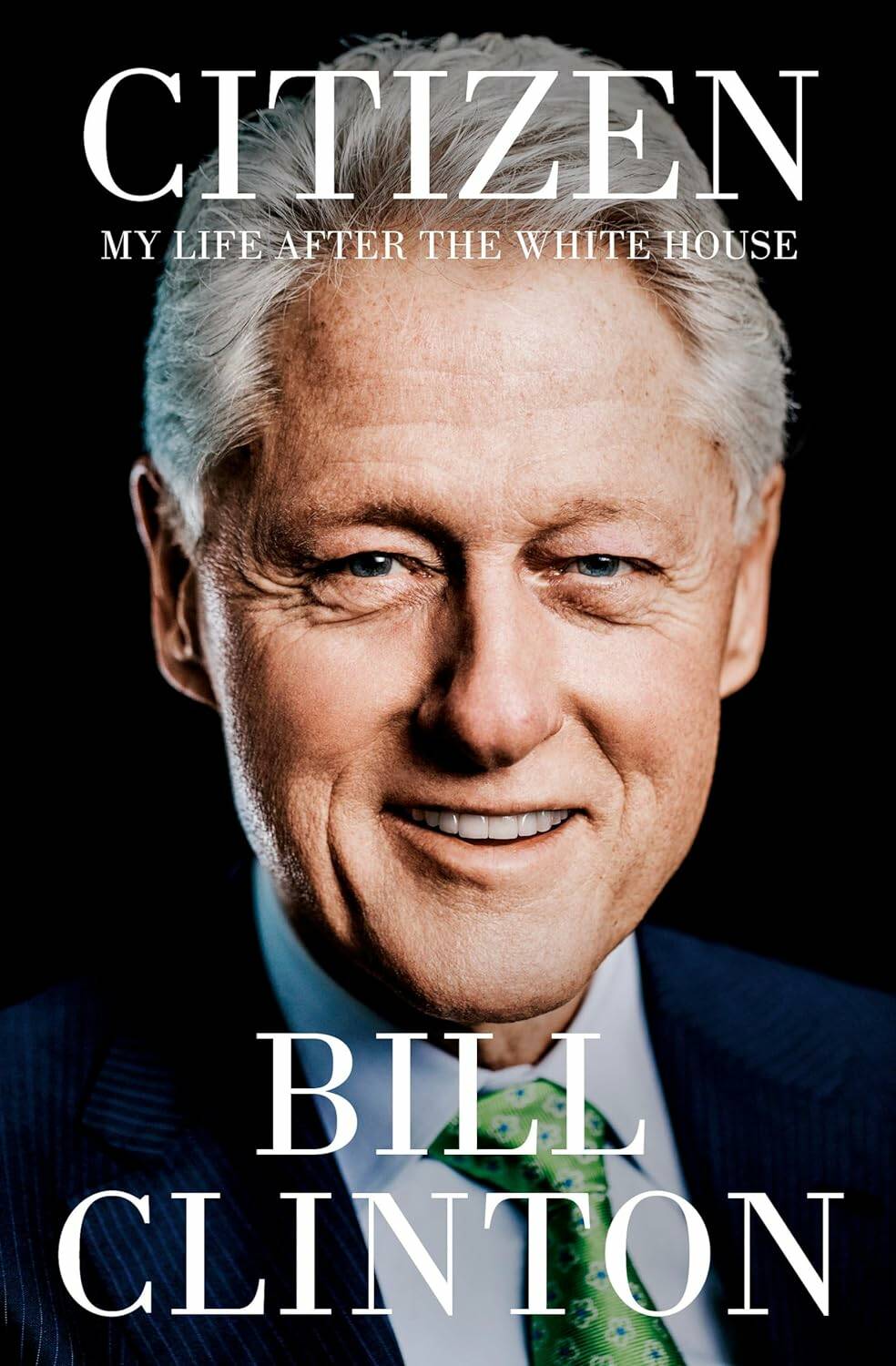
Citizen
The only other time he gets really exercised — and makes a lively and cogent argument — is his recounting of the ultimately bogus issue of Hillary’s use of a private email device and server while acting as secretary of state. It’s an issue both Donald Trump and former FBI director James Comey played, critically, to the hilt. Clinton takes pains to explain there was regulatory permission for her to do this, and that she did so on the recommendation of, and following the example of, a prior Republican occupier of that office, Colin Powell.
He makes a strong case that that phony issue cost her the 2016 U.S. presidential election and that “Hillary didn’t do anything to endanger national security.”
Clinton, even post-presidency, continued to meet with major geopolitical figures. But there’s a dearth of illuminating or penetrating sketches of either major American actors or global leaders.
A good memoir has elements of storytelling — albeit factual storytelling — and at least glimpses of feelings and admissions.
Clinton tells us a lot about what he did after vacating the highest office of our global-superpower neighbour. But not enough about what he thought or felt about those doings.
Douglas J. Johnston is a Winnipeg lawyer and writer.