A mess of misinformation
Flawed studies, social media and celebrity figures sway public opinion while obscuring truth
Advertisement
Read this article for free:
or
Already have an account? Log in here »
To continue reading, please subscribe:
Digital Subscription
One year of digital access for only $1.44 a week*
- Enjoy unlimited reading on winnipegfreepress.com
- Read the E-Edition, our digital replica newspaper
- Access News Break, our award-winning app
- Play interactive puzzles
*Billed as $5.77 plus GST every four weeks. After 52 weeks, price increases to the regular rate of $19.95 plus GST every four weeks. Offer available to new and qualified returning subscribers only. Cancel any time.
To continue reading, please subscribe:
Add Free Press access to your Brandon Sun subscription for only an additional
$1 for the first 4 weeks*
- Enjoy unlimited reading on winnipegfreepress.com
- Read the E-Edition, our digital replica newspaper
- Access News Break, our award-winning app
- Play interactive puzzles
*Your next Brandon Sun subscription payment will increase by $1.00 and you will be charged $17.95 plus GST for four weeks. After four weeks, your payment will increase to $24.95 plus GST every four weeks.
Read unlimited articles for free today:
or
Already have an account? Log in here »
Hey there, time traveller!
This article was published 18/01/2025 (640 days ago), so information in it may no longer be current.
Our remarkably diverse species shares, at least, a drive towards the good life. In doing so, we make innumerable decisions based on information available from our environment and experience.
Timothy Caulfield is a professor and research director at the University of Alberta and the author of books such as The Science of Celebrity …or Is Gwyneth Paltrow Wrong About Everything? and The Cure For Everything: Untangling The Twisted Messages About Health, Fitness, and Happiness. In his latest book, he examines the ways this search for information, and thus for certainty, is undercut by nefarious agents, continuing his advocacy for science, communication and common sense.
We live in a hyperconnected world, suffused with unprecedented access to information. But does that necessarily imply more informed decision-making? Whether our reasoning is informed by science, the pursuit of virtue or the court of public opinion, Caulfield cautions we risk confusion and enthralment to influences outside easy recognition. These forces, be they political, economic or social, vie for our attention and resources.

Curtis Trent photo
Alberta-based Timothy Caulfield is the author of five books on misinformation.
Science may mine objective truth, but the extraction is undertaken by fallible human beings. Researchers are embedded within a structure that often rewards quantity over quality of publication. Predatory academic journals abound, lacking peer review or even active editorial boards, lending a veneer of credibility to shoddy research. Decision-makers and cultural influencers amplify hype-driven and bias-confirming headlines for their own benefit.
We see this concerning trend when we examine almost any controversial subject, be it medicine, commerce or even our diets. Public opinion is readily swayed by social media and celebrity figures whose positions often rely on a single controversial or flawed study. Bad research, even when identified, can take years to retract, yet continues to exert a pull when its conclusions support the sales pitches of hucksters and charlatans.
Not only is the current undertaking of science problematic, but its very language is deliberately leveraged to sell ideas and products. Words carelessly borrowed from academia are used to convey authority and suggest novelty. “Green” and “natural” are marketed to appeal to our desire to do and be good, but lack any reliable definition. After all, if your organic shampoo isn’t quantumly activated, is it even worth washing your hair?
Whether we want to purchase a new vacuum, understand a child’s flu symptoms or make travel plans, we almost inevitably turn to online sources for perspective. Relying on public opinion lists and best-ofs rarely puts us on firmer ground. That the one-time top-rated restaurant in London on TripAdvisor, The Shed at Dulwich, never actually existed highlights how often the information we consume is dishonestly manufactured. Paid and fake reviews abound on social media, and even experts are able to identify fraudulent reporting with no better accuracy than a coin flip.
For a book that takes a fairly bleak view of the information economy enveloping us, The Certainty Illusion is both an accessible and entertaining read. True to his own advice, Caulfield skilfully translates arguments from speciality fields into plain language. He’s humorous and more than capable of providing both argumentation and example. Though it is perhaps ironic that the cover of the book itself touts an immunity to misinformation when Caulfield himself suggests this is ultimately impossible.
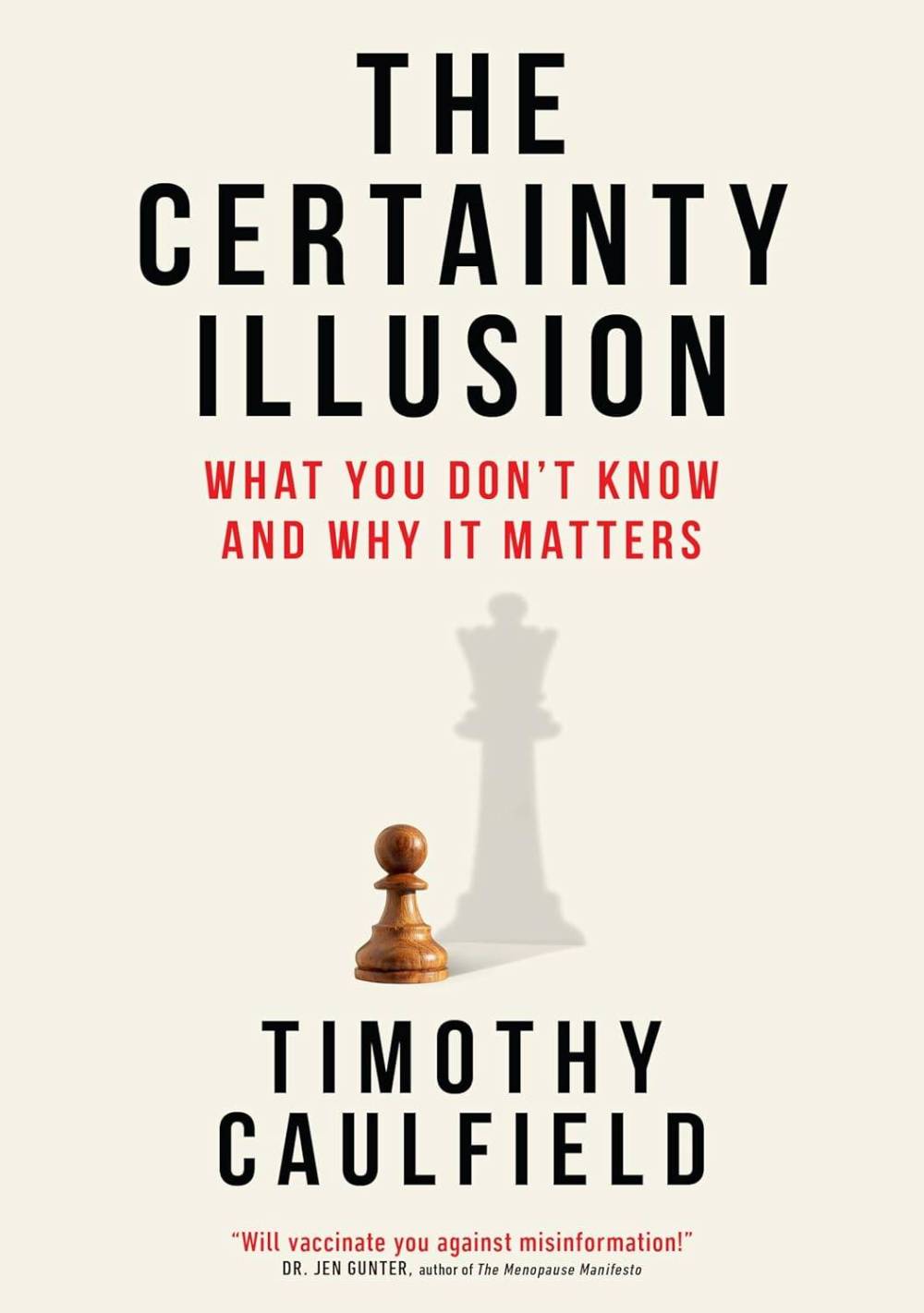
The Certainty Illusion
If we’re to avoid falling further into a morass of ignorance, then it’s science where Caulfield calls for revolution.
Few researchers would complain about incentivizing quality of publication or in repudiating junk publications. The funding and communication of science also needs to be overhauled. Caution needs to be extended when claims of censorship by the scientific community are made: rebels and revolutionaries exist, but it’s ultimately the science, not the hype, that matters.
We’re collectively enjoined to identify when online content triggers strong instinctual response and to pause before sharing, to tread lightly when relying on reviews and online opinions and, implicitly, to directly reconnect with those closest to us as sources of common vision.
This is a book for all of us, but especially those of us who think we don’t need it.
If you’re in that group, then you’d be well-advised to thoroughly research reviews of Caulfield’s work on Goodreads, or simply to trust me — I’m a reviewer.
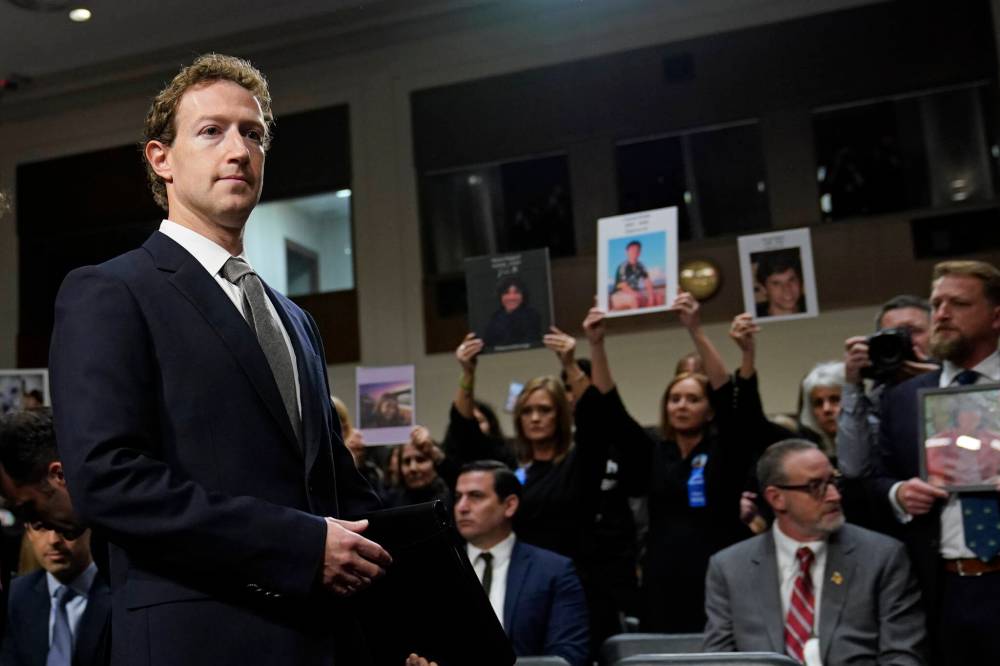
Susan Walsh / Associated Press files
Mark Zuckerberg, seen here in 2024, recently pledge to eliminate fact checking on Meta social media platforms such as Facebook and Instagram.
Jarett Myskiw writes book reviews for the Free Press.
The Certainty Illusion: What You Don’t Know and Why It Matters
By Timothy Caulfield
Allen Lane, 312 pages, $35
Related Articles
Hollywood crock-buster: From detox programs to v-steams, celebs are steering us wrong

Advertisement Advertise With Us
Advertisement Advertise With Us