Dating ecology 101: ‘Swipe with your eyes open’

Advertisement
Read this article for free:
or
Already have an account? Log in here »
To continue reading, please subscribe:

Digital Subscription
One year of digital access for only $205*
- Enjoy unlimited reading on winnipegfreepress.com
- Read the E-Edition, our digital replica newspaper
- Access News Break, our award-winning app
- Play interactive puzzles
*First annual payment billed as $205.00 + GST for one year. This annual subscription will automatically renew at $233.00 + GST every 52 weeks (10% off the regular annual price of $259.35). Offer available to new and qualified returning subscribers only. Cancel any time.
To continue reading, please subscribe:
Add Free Press access to your Brandon Sun subscription for only an additional
$1 for the first 4 weeks*
- Enjoy unlimited reading on winnipegfreepress.com
- Read the E-Edition, our digital replica newspaper
- Access News Break, our award-winning app
- Play interactive puzzles
*Your next Brandon Sun subscription payment will increase by $1.00 and you will be charged $17.95 plus GST for four weeks. After four weeks, your payment will increase to $24.95 plus GST every four weeks.
Read unlimited articles for free today:
or
Already have an account? Log in here »
Hey there, time traveller!
This article was published 14/02/2025 (602 days ago), so information in it may no longer be current.
When Treena Orchard started swiping on dating apps a few years ago, she had no intention of writing a book about them.
“I soon became very confused and fascinated by the chaos, and how dating had changed so much since I had last been dating — which was in the analog way,” says Orchard, 52, an anthropologist who studies sexuality and an associate professor at Western University’s School of Health Studies in London, Ont.
“I found it perplexing, but also fascinating as a sexuality scholar.”

SUPPLIED
Sexuality scholar Treena Orchard wrote her book after she started swiping on dating apps.
And so, she started taking notes.
The result: Sticky, Sexy, Sad: Swipe Culture and the Darker Side of Dating Apps (University of Toronto Press, 2024) — a funny, vulnerable and insightful memoir-meets-field notes that examines both the promises and pitfalls of digital dating.
The Free Press chatted with Orchard about the work involved in “being on the apps,” the changing landscape of online dating, and what it all means for our human hearts.
This interview has been edited and condensed for clarity.
FP: One thing that really struck me about your book is how much work the dating apps are! It’s shockingly labour intensive, from taking the photos and creating a profile to the actual act of meeting people.
Treena Orchard: The way that the apps are marketed is carefree, fun, easy, quick, efficient — that’s the narrative. And it’s like, OK, well, I had to spend hours and hours talking with people who I didn’t always want to be talking with for so long because I wanted to meet in person.
I’m still not a huge texter, but I found I had to put so much pre-dating labour — pre-in-real-life dating labour — into discussing things with people and meeting so many different kinds of people before any of them were actually going to not flake out and actually go on an in-person date. I just found it staggering that people would be so happy to text for sex and be sexy and flirty, but then when you mention an in-person date, they would vanish and then you’d have to start all over again with someone new.
FP: The way we talk about dating is fascinating and a little gross. Being “back on the market” comes to mind. That commodification comes through in the way these apps are designed. We’re all just products to be marketed.
TO: That’s a really good point. Anthropologists are also very attuned to language and the example of a dating market — it makes you feel like livestock. That desire is being commodified, and that desire, pleasure, connection is wrapped up and looks just like anything else that is on our phones.
You know, we shop in a particular way. And the dating industry is very smart because they just copied it: a lot of the format; visually, what the apps look like. It’s similar for a reason. They’re like, “OK, people are already on their phones so much now, let’s bring romance and fun and sex into this and see what happens.”
FP: It does seem like there’s a growing pushback against these apps, driven in large part by gen Z, who seem to be abandoning them. Have you noticed this?
TO: I think it’s gen Z, but I think there’s also other folks pushing back against this Big Brother idea about how much of our data is being harvested without our consent for free by these companies. It also really reveals that certain apps, at least the way that they’re designed for the time being, they’ve kind of run their course.
And people are using dating apps differently. I learned this from my students: what a lot of the kids on campus are doing, at least this is what they described to me, is they’ll see someone on campus, and then they’ll look for them on the apps. So, quite the opposite of how these devices are actually designed. That really is an interesting example of digital creativity on the part of these young people as well.
FP: In writing the book, was there anything that surprised you?
TO: Chapter 4 is called Copy & Paste, and that’s because I thought, “My stories are identical to those of almost every single person I speak with — irrespective of their social location, their demographics, their age.”
That’s so different from my analog days, where I was pretty rocking and rolling and living my own colourful, often very dark but certainly unique romantic life. Now, it’s literally like we are telling the same stories. I needed to make sense of that, and also why is it so boring?
FP: Why is it so boring?
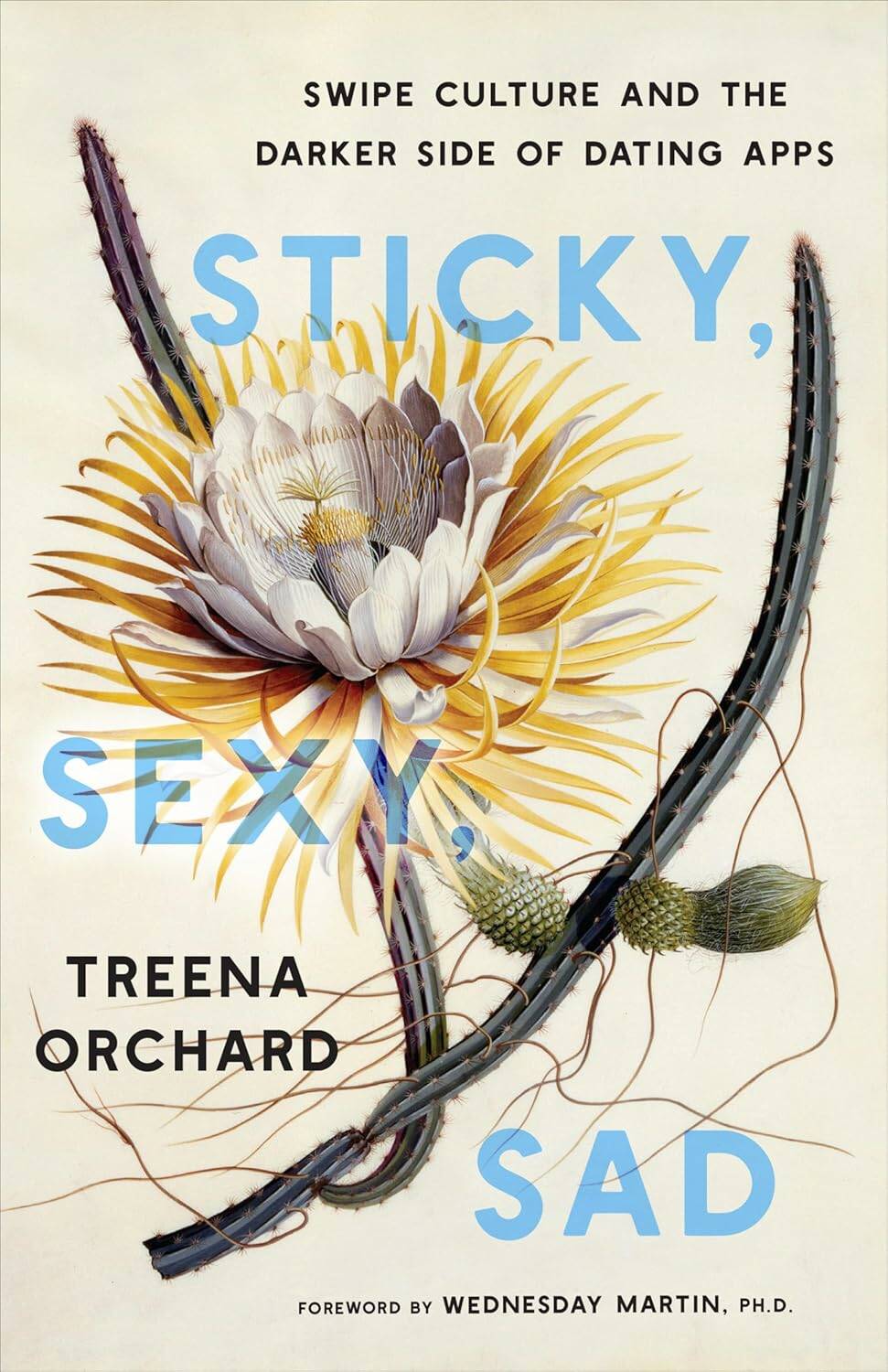
University of Toronto Press
TO: Well, because it’s the same conversations, over and over. No one is interested in using their imagination. And people are nervous, right? So sometimes, basic generic things get talked about.
Of course, part of that generic nature is because we’re all using similar platforms, so they are producing the same experiences. But it also points to the fact that we really, really have very anemic social dialogues about sexuality and dating. We don’t talk about it much. We kind of view dating as something juvenile in a lot of ways, like something that you do before you get married — and that system is not in place anymore.
I really wanted to honour and learn more about dating because it’s so important.
FP: What’s next for dating apps?
TO: There’s a lot of talk about AI dating apps. There’s AI that can filter through matches if you give your parameters and do that work for you — which is also another indication that dating apps aren’t working.
There’s one called Rizz that uses AI to provide dating coaching within the app. So it’s not just about AI picking people for you, they’re also using AI to coach you, to help you think of new lines, new places to go, whatever it is they’re going to provide for you.
I think there are some interesting ways that AI can be included, as well as some creepy ways. One of the things I did in dating apps, I expanded my frame of reference and I went for people I normally wouldn’t go for. Now, is AI going to be able to do that for me? So, there’s lots of questions.
FP: What do you hope people take away from this book — or thinking about dating apps in general?
TO: Dating and digital platforms, I mean, they are here to stay, so swipe with your eyes open. Remember that you are not alone swiping. There is a corporation that is directing your experience, there’s an algorithm that’s directing who you see and who you don’t see.

There are opportunities for us to push back against the dating app industry that we don’t like. We’re seeing that in dropping stock prices, in changing CEOs — they’re scrambling to make themselves relevant. We do have the power to change the things that we don’t like, but we need to collectively act in a way that sends those messages.
And if you’re going to date, maybe think about ways to enrich your dating ecology. Maybe don’t rely exclusively on digital means. I think another reason people are pushing back against dating apps is because we know somewhere in our human hearts that we are designed for an in-person life.
● ● ●
Do you have experience on the apps? Are they leaving you hot — or cold? We want to hear from you. Email Jen at the address below, and she may reach out for a future story about dating apps.
jen.zoratti@winnipegfreepress.com
Jen Zoratti is a columnist and feature writer working in the Arts & Life department, as well as the author of the weekly newsletter NEXT. A National Newspaper Award finalist for arts and entertainment writing, Jen is a graduate of the Creative Communications program at RRC Polytech and was a music writer before joining the Free Press in 2013. Read more about Jen.
Every piece of reporting Jen produces is reviewed by an editing team before it is posted online or published in print – part of the Free Press‘s tradition, since 1872, of producing reliable independent journalism. Read more about Free Press’s history and mandate, and learn how our newsroom operates.
Our newsroom depends on a growing audience of readers to power our journalism. If you are not a paid reader, please consider becoming a subscriber.
Our newsroom depends on its audience of readers to power our journalism. Thank you for your support.
Jen Zoratti is a columnist and feature writer working in the Arts & Life department, as well as the author of the weekly newsletter NEXT. A National Newspaper Award finalist for arts and entertainment writing, Jen is a graduate of the Creative Communications program at RRC Polytech and was a music writer before joining the Free Press in 2013. Read more about Jen.
Every piece of reporting Jen produces is reviewed by an editing team before it is posted online or published in print – part of the Free Press‘s tradition, since 1872, of producing reliable independent journalism. Read more about Free Press’s history and mandate, and learn how our newsroom operates.
Our newsroom depends on a growing audience of readers to power our journalism. If you are not a paid reader, please consider becoming a subscriber.
Our newsroom depends on its audience of readers to power our journalism. Thank you for your support.
Advertisement Advertise With Us
Advertisement Advertise With Us