Duel narratives mine lingering Ivorian trauma
Advertisement
Read this article for free:
or
Already have an account? Log in here »
To continue reading, please subscribe:
Digital Subscription
One year of digital access for only $1.44 a week*
- Enjoy unlimited reading on winnipegfreepress.com
- Read the E-Edition, our digital replica newspaper
- Access News Break, our award-winning app
- Play interactive puzzles
*Billed as $5.77 plus GST every four weeks. After 52 weeks, price increases to the regular rate of $19.95 plus GST every four weeks. Offer available to new and qualified returning subscribers only. Cancel any time.
To continue reading, please subscribe:
Add Free Press access to your Brandon Sun subscription for only an additional
$1 for the first 4 weeks*
- Enjoy unlimited reading on winnipegfreepress.com
- Read the E-Edition, our digital replica newspaper
- Access News Break, our award-winning app
- Play interactive puzzles
*Your next Brandon Sun subscription payment will increase by $1.00 and you will be charged $17.95 plus GST for four weeks. After four weeks, your payment will increase to $24.95 plus GST every four weeks.
Read unlimited articles for free today:
or
Already have an account? Log in here »
Hey there, time traveller!
This article was published 12/04/2025 (561 days ago), so information in it may no longer be current.
GauZ’ is the pen name of author Armand Patrick Gbaka-Brédé, born in Côte d’Ivoire. It’s a shortening of his tribal name, Gauzorro, given to him by his grandmother, which he adopted in university in rebellion against his parents’ embrace of colonial names.
GauZ’ further rebelled by refusing a scholarship to study in France, choosing instead to travel throughout his own country. Later, he spent time in France as an undocumented student while working as a security guard, spending two years there before returning home, where he now works as a journalist and publisher. His first novel, translated into English as Standing Heavy, was shortlisted for the 2023 Booker Prize. Comrade Papa, previously published in French and translated into English by Frank Wynne, won several awards, including the 2018 Africa Prize.
Comrade Papa tells the story of two people — a white man named Dabilly who leaves France in 1880 to seek adventure in West Africa, and an unnamed boy with Ivorian roots born in Amsterdam to communist parents a century later, who returns to the country of his ancestry when their mother dies. Because of the intentionally fragmented style and distant narration, it’s initially a bit of a challenge to identify with these two protagonists, but gradually they emerge as distinct and well-drawn characters.
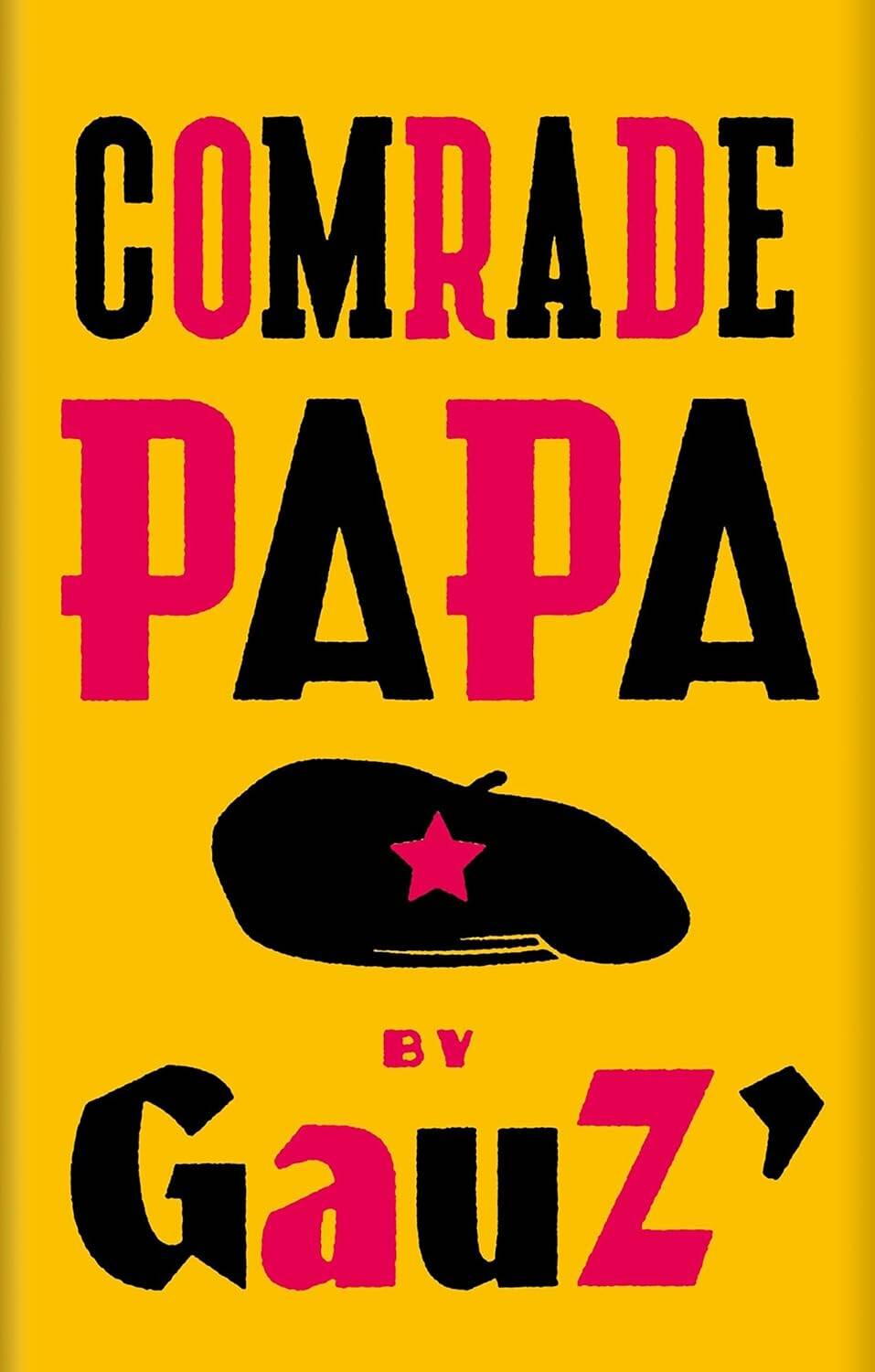
Comrade Papa
The child misspells many of the words he hears — Miss Guided for misguided, medi-evil for medieval, and so on — which are interesting to read in translation. Dabilly knows more about European colonial expansion than a man of his humble origins likely would: he is both a character and a vessel for the author’s voice.
The story of the race of European powers to claim ownership over Africa is tragic, and one whose trauma lingers into the present day. But Comrade Papa, while not shying away from the terrible legacy of this history, is also very funny. From the child’s reaction to being given a Coke — he’s thirsty and wants to drink it, but is also shocked his host is not troubled by offering them the product of a capitalist company — to Dabilly’s descriptions of the awkwardness of white men encountering Africa and Africans for the first time, there are layers of satire and hilarity that bridge the divisions of race, class, gender and time.
At the same time, Comrade Papa takes a devastating look at the history of colonialism in Africa. It has only been just over a century since Britain, France and others became determined not just to take resources (mainly persons they enslaved) from Africa, but to assert their claims over the territory. However, the land fights back: one in two white men will be dead in two years, due to mosquito-borne illnesses and other tropical diseases.
As Comrade Papa shows, the French colonized duplicitously, concealing their true intentions while trading with the people they encountered, and then giving chiefs treaties to sign in order to offer them protection from the military might of the other colonists. In the world of the novel, the British have just conquered the Ashanti and ransacked their capital of Kumasi, and other West African peoples are afraid. The French are also wary of the British; according to Dabilly, their attitude towards Africans falls into two categories: negrophobes, or negrophiles.
When the boy arrives in Côte d’Ivoire a century later, it is to a country devastated by colonialism — the school system is highly regimented, with some of the students having fled from surrounding countries as refugees. The child was seen as Black in Europe, but due to his mixed heritage, is seen as white in Africa.
GauZ’s love for his country and its people shines through on every page of Comrade Papa. Though Dabilly arrives as a would-be conqueror, he becomes fascinated by the new sights, sounds and traditions he encounters, and eventually falls in love with the places and people he came to subjugate. The book’s end reveals the surprising link between Dabilly and the child, reminding us that we are all connected.
Comrade Papa is a fascinating read for those who want an insider perspective on nations and people we in the West often only hear about in the negative. This is a postcolonial novel that questions the dominant narrative with humour and heart.
Zilla Jones is a Winnipeg-based writer of short and long fiction. Her debut novel The World So Wide launches Wednesday, April 23 at McNally Robinson Booksellers’ Grant Park location, where she will be joined in conversation by Chimwemwe Undi.