A shucking good read
Ruminations on the oyster’s cultural cache a mouth-watering delight
Advertisement
Read this article for free:
or
Already have an account? Log in here »
To continue reading, please subscribe:

Digital Subscription
One year of digital access for only $205*
- Enjoy unlimited reading on winnipegfreepress.com
- Read the E-Edition, our digital replica newspaper
- Access News Break, our award-winning app
- Play interactive puzzles
*First annual payment billed as $205.00 + GST for one year. This annual subscription will automatically renew at $233.00 + GST every 52 weeks (10% off the regular annual price of $259.35). Offer available to new and qualified returning subscribers only. Cancel any time.
To continue reading, please subscribe:
Add Free Press access to your Brandon Sun subscription for only an additional
$1 for the first 4 weeks*
- Enjoy unlimited reading on winnipegfreepress.com
- Read the E-Edition, our digital replica newspaper
- Access News Break, our award-winning app
- Play interactive puzzles
*Your next Brandon Sun subscription payment will increase by $1.00 and you will be charged $17.95 plus GST for four weeks. After four weeks, your payment will increase to $24.95 plus GST every four weeks.
Read unlimited articles for free today:
or
Already have an account? Log in here »
Hey there, time traveller!
This article was published 26/04/2025 (524 days ago), so information in it may no longer be current.
What do oysters have in common with capitalism, philosophy and masculinity? Munich-based author Andreas Ammer ponders this and many other questions about the oyster and its history in his most recent publication.
At times part textbook, at others part autobiography, Portrait of an Oyster invites readers to deepen their appreciation for the slimy aquatic creatures that have become a global delicacy.
Ammer argues that while oysters once provided much-needed nutrients, they now “have more in common with art than with food.” No longer are they a staple in the modern diet; instead, oysters are typically consumed as a fleeting (often expensive) treat over a white tablecloth with lemon wedges and white wine.

Mike Sudoma / Free Press files
Oysters are no longer a staple in the modern diet; rather, they’re typically consumed as a fleeting (often expensive) treat with lemon wedges and white wine.
Still, Ammer insists that eating one’s first oyster is a life-altering moment not unlike sexual maturity. It seems unsurprising that the dish has long been thought of as an aphrodisiac. Retelling one famous chef’s first encounter with oysters as an adolescent boy, he quotes “I had, somehow, become a man. I had had an adventure, tasted forbidden fruit and everything that followed in my life… would all stem from this moment.”
Throughout Portrait of an Oyster, Ammer considers how human history, all the way back to our evolution, has been wrapped up with that of the oyster. Eating them reminds us of our animal instincts in a way that no other dish can. Because the diner must separate the living creature from its shell to eat it, oysters remind us that humans “are also predators that have to kill their prey before consuming it.”
Ammer has an impressive career history as a university lecturer, opera director, television producer and radio playwright. He’s clearly dedicated to his craft, which is reflected in the book’s detail.
While researching for the book, Ammer traveled to France — where, apparently, you can buy oysters from a vending machine at one particular company’s headquarters. There he also met with multigenerational oyster farmers to learn more about the historic, current and future practices of oyster harvesting and farming.
In addition to the interesting information found within its pages, the book itself is lovely to look at. With its light blue hardcover and full-coloured images, it would make a pleasant addition to any coffee table or bedside shelf. Delicate illustrations by artist Falk Nordmann demonstrate the artistry to be found in our natural world.
From the oyster’s historical place in art and culture to the possible environmental implications of genetically modified oysters, Portrait of an Oyster really does paint a colourful picture of the surprisingly complicated creatures.
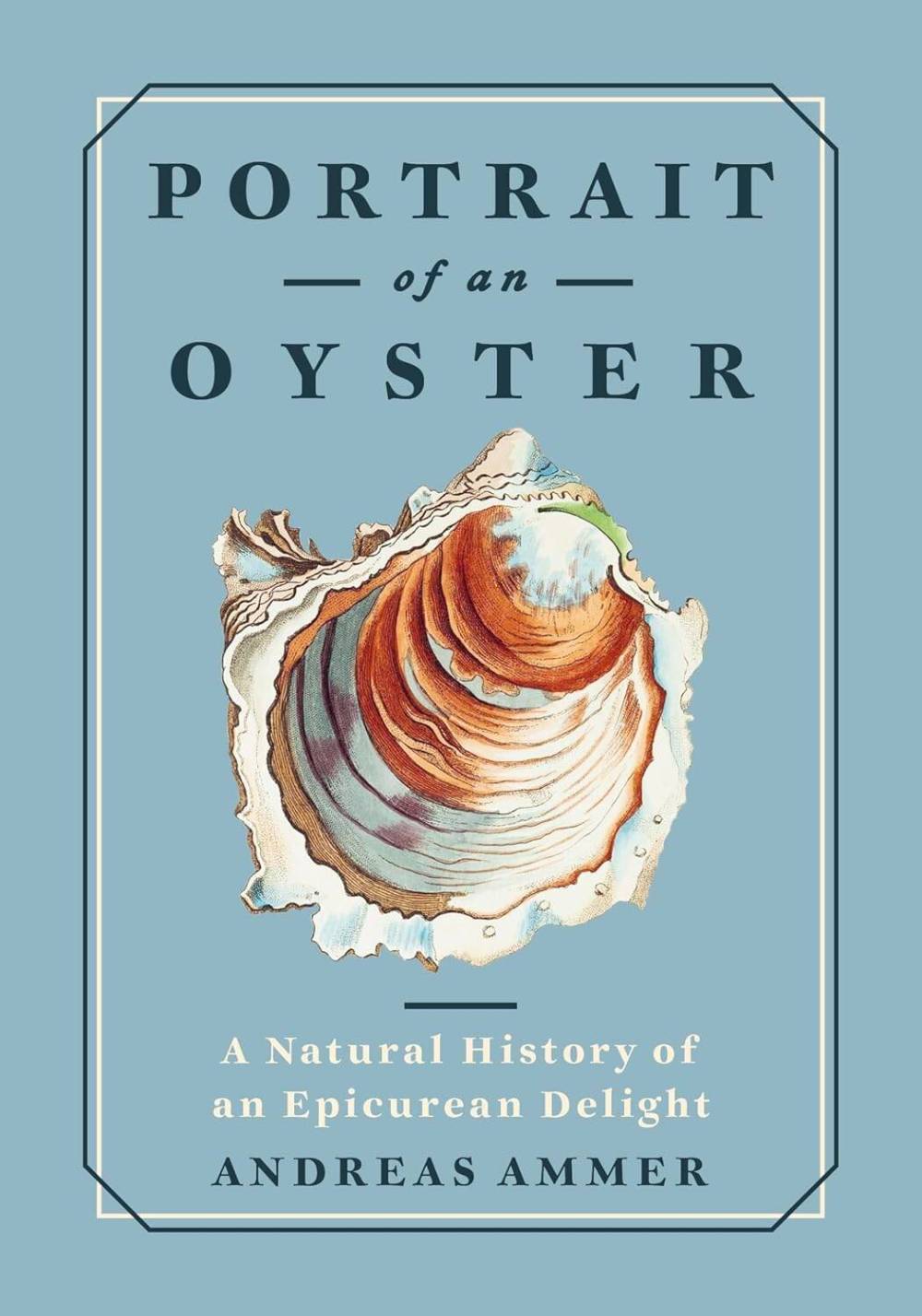
Portrait of an Oyster
Readers may well come away with a newfound fascination for the small and obscure, while long-time oyster lovers are sure to feel validated in their delight for that “magical moment,” that “taste of the sea.”
Jessie Taylor is a poet and editor with an MA in cultural studies from the University of Winnipeg.