Stinging accusations
Damning deep dive paints pharmaceutical behemoth as ethically corrupt
Advertisement
Read this article for free:
or
Already have an account? Log in here »
To continue reading, please subscribe:

Digital Subscription
One year of digital access for only $205*
- Enjoy unlimited reading on winnipegfreepress.com
- Read the E-Edition, our digital replica newspaper
- Access News Break, our award-winning app
- Play interactive puzzles
*First annual payment billed as $205.00 + GST for one year. This annual subscription will automatically renew at $233.00 + GST every 52 weeks (10% off the regular annual price of $259.35). Offer available to new and qualified returning subscribers only. Cancel any time.
To continue reading, please subscribe:
Add Free Press access to your Brandon Sun subscription for only an additional
$1 for the first 4 weeks*
- Enjoy unlimited reading on winnipegfreepress.com
- Read the E-Edition, our digital replica newspaper
- Access News Break, our award-winning app
- Play interactive puzzles
*Your next Brandon Sun subscription payment will increase by $1.00 and you will be charged $17.95 plus GST for four weeks. After four weeks, your payment will increase to $24.95 plus GST every four weeks.
Read unlimited articles for free today:
or
Already have an account? Log in here »
Hey there, time traveller!
This article was published 26/04/2025 (525 days ago), so information in it may no longer be current.
This mighty company that keeps us in stitches is no laughing matter.
Johnson & Johnson is a powerful American conglomerate that, among other things, supplies the world with surgical sutures and drugs that ease suffering and save lives.
But journalist Gardiner Harris, in an astonishingly penetrating and meritorious five-year investigation, concludes in No More Tears that behind an envied reputation, this company was a corporate pariah — a business that served itself first, ignored or scared away government oversight, hid the truth, muzzled media by threatening their jobs or financial ruin and promoted dangerous drugs and devices by unethical marketing and copious public denial.

Jessica Hill / Associated Press files
In this March 2021 photo, a pharmacist draws a syringe of Johnson & Johnson COVID-19 vaccine at Hartford Hospital in Hartford, Conn.
According to Harris, Johnson & Johnson’s “decades-long transformation from ethical to evil mirrors the slow-motion metamorphosis of American healthcare from best to worst, protected by smokescreens of disinformation and mythologizing.”
Says Harris: “J & J has knowingly contributed to the deaths and grievous injuries of millions. And for much of the early twenty-first century, almost every one of J & J’s top selling drugs benefited from criminal marketing schemes. Many of its devices gained wide acceptance because of bribery.”
Johnson & Johnson was founded as a mom-and-pop venture in the 18th century. It is now the largest pharmaceutical enterprise in the world.
In the public eye, Johnson & Johnson’s reputation became priceless when it began marketing baby products that didn’t irritate infant eyes. The catch line “No More Tears” brilliantly promoted this cleansing benefit with a smiling baby and a contented mom. Reassurance from Johnson & Johnson meant everything to mothers and was to them a sign of proper parenting. There was the same acceptance of the company’s other products.
Harris unmistakably exposes Johnson & Johnson as a longtime corporate scoundrel, as harmful to public welfare as was its fellow drug peddlers, the notorious and disgraced Sackler family’s Purdue Pharma, marketer of the addictive painkiller OxyContin.
Harris says a former Johnson & Johnson executive told him: “The Sacklers are pikers compared to Johnson and Johnson.”
Harris is a former award-winning investigative journalist with the New York Times. He lives in San Diego.
His research is mind-boggling; he gathered tens of thousands of documents, read hundreds of thousands of pages of trial transcripts and contacted hundreds of executives and employees.
Among the history chronicled by Harris: a scheme in which Johnson & Johnson, in effect, paid doctors to prescribe the company’s drugs; the failure of Johnson & Johnson’s COVID vaccine, banned in 2024 for causing fatal blood clots; the company threatening to bankrupt media outlets that ached to tell the truth about its famous baby talcum powder (that it contained asbestos and increased the risk of ovarian cancer among users); promoting its blood thickener, knowing it encouraged tumor growth; concealing that its metal hip implants had much higher failure rates than competing plastic, and also poisoned patients with metal ions; and deceptive marketing that accelerated opioid addictions, promoting antipsychotics that cost lives.
“For all intents and purposes Johnson and Johnson was a criminal enterprise,” writes Harris. “Indeed, mafia families get a large share of their income from strictly legal activities. But no mafia outfit ever consistently targeted the kind of vulnerable people that J & J exploited. And if one of the most admired corporations in the world is in reality a criminal enterprise and a killing machine, what else are we missing? How many other killers are out there?”
Harris proposes changes, and in the book explains them in detail. “In this reporter’s opinion, first, doctors should be barred from taking money or gifts from drug or device companies while simultaneously treating patients.”
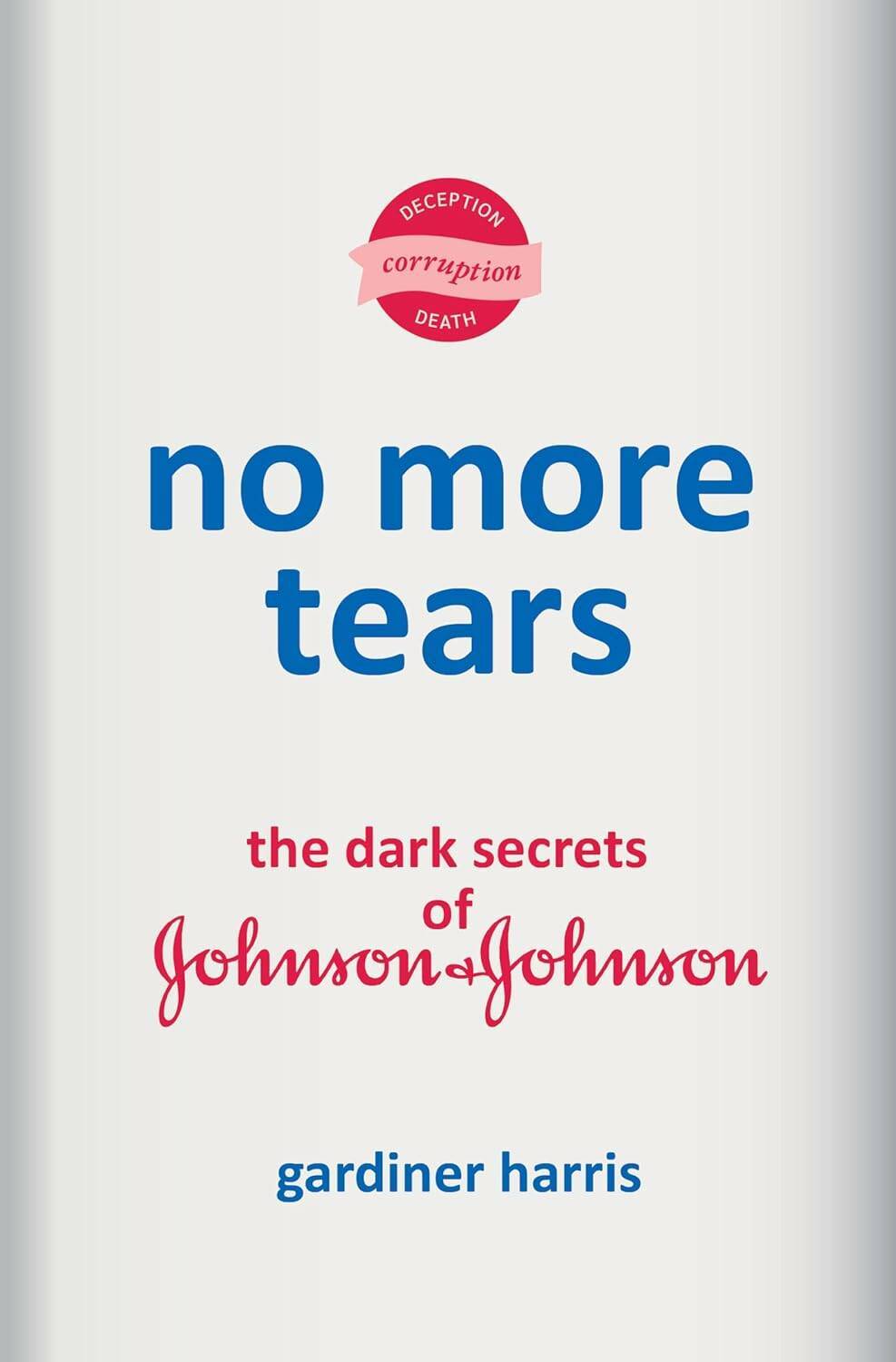
No More Tears
Secondly, says Harris, “states should stop certifying continuing medical education courses that are funded by drug and device companies.”
Third, the Federal Drug Administration (FDA) should be funded by taxpayers, not industry.
Fourthly, “companies and their executives must be punished for lying under oath for lying to the FDA and federal courts.”
Fifth, “states should repeal laws that forbid personal injury suits or punitive damages against makers of FDA approved products.”
Harris passes judgment on his country’s health care system: “No other health care system is as expensive or inefficient.”
A Trojan horse of guile rather than a smiling baby in the bath would have better represented the Johnson & Johnson Harris has uncovered.
Barry Craig is a retired journalist.