

Art, morals and power
Incisive, unsparing novel explores choices of real-life Austrian director under the Nazis

Advertisement
Read this article for free:
or
Already have an account? Log in here »
To continue reading, please subscribe:
Monthly Digital Subscription
$1 per week for 24 weeks*
- Enjoy unlimited reading on winnipegfreepress.com
- Read the E-Edition, our digital replica newspaper
- Access News Break, our award-winning app
- Play interactive puzzles
*Billed as $4.00 plus GST every four weeks. After 24 weeks, price increases to the regular rate of $19.95 plus GST every four weeks. Offer available to new and qualified returning subscribers only. Cancel any time.
Monthly Digital Subscription
$4.99/week*
- Enjoy unlimited reading on winnipegfreepress.com
- Read the E-Edition, our digital replica newspaper
- Access News Break, our award-winning app
- Play interactive puzzles
*Billed as $19.95 plus GST every four weeks. Cancel any time.
To continue reading, please subscribe:
Add Free Press access to your Brandon Sun subscription for only an additional
$1 for the first 4 weeks*
*Your next subscription payment will increase by $1.00 and you will be charged $16.99 plus GST for four weeks. After four weeks, your payment will increase to $23.99 plus GST every four weeks.
Read unlimited articles for free today:
or
Already have an account? Log in here »
Hey there, time traveller!
This article was published 31/05/2025 (300 days ago), so information in it may no longer be current.
In this darkly absorbing and deeply intelligent novel, German writer Daniel Kehlmann charts the choices made by the real-life Austrian-born film director G. W. Pabst, a master of the silent and early sound eras. Known as “Red Pabst” for his empathetic exploration of social issues, he leaves Europe after Hitler’s rise to power, joining a community of cinematic exiles in Hollywood.
Then, in a seemingly inexplicable turnaround, he returns to Austria — annexed by the Nazis and now called Ostmark — and ends up creating films under the patronage of the Reich propaganda minister Joseph Goebbels.
Clearly, Pabst has struck some kind of Faustian bargain, but Kehlmann’s writing is so subtle it’s difficult to mark the exact moment at which the filmmaker falls into complicity. Testing the boundaries between art, power and moral responsibility, The Director evokes creative life under totalitarian rule with exacting precision and scathing effect.
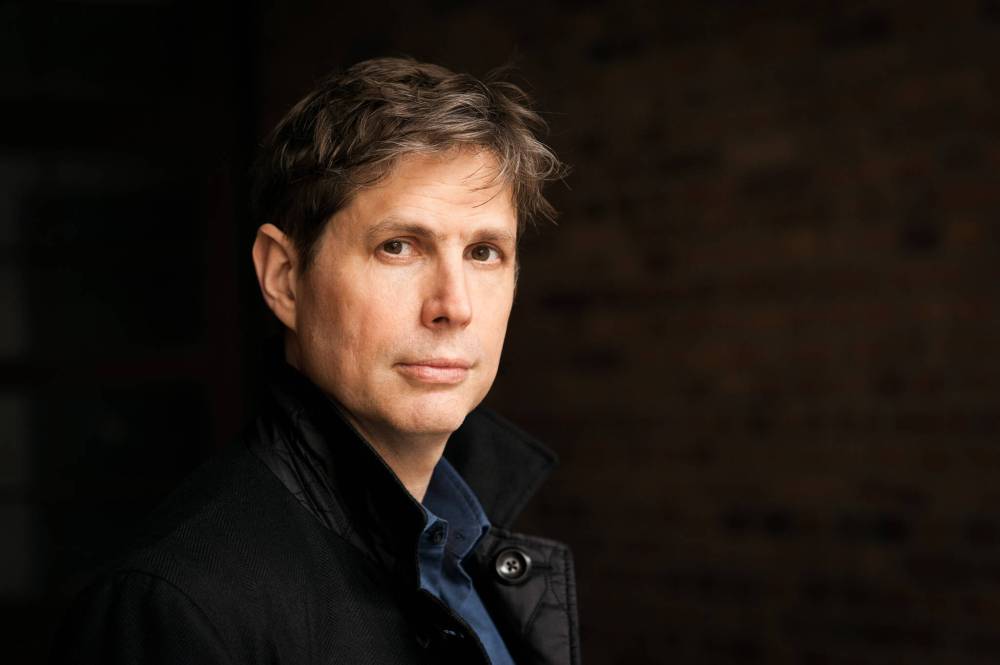
Heike Steinweg photo
Daniel Kehlmann’s latest novel traces the movements of director G.W. Pabst, who fled Austria after Hitler’s rise to power but voluntarily returned while the Nazis were still in power.
Dividing his time between Berlin and New York, Kehlmann has generated buzz in the English-speaking world with such works as Measuring the World and the International Booker-nominated Tyll (translated, as is The Director, by Ross Benjamin).
Kehlmann’s approach to period stories is idiosyncratic and urgent, cutting the realistic horrors of history with sharp, ironical humour. This is not a comprehensive or conventional biographical novel. Kehlmann uses the outline of Pabst’s life but fills it in with passages that are imagined and inventive, sometimes terrifying and sometimes out-and-out surreal.
Working in long, loosely connected chapters, many of which function as standalone vignettes, Kehlmann takes us first to 1933, with Pabst somewhat adrift at a Los Angeles party. He’s awkward and overheated and his English is poor. Kehlmann also has a running joke about how Pabst is constantly being confused with fellow Weimar filmmakers F. W. Murnau and Fritz Lang.
“No good coffee anywhere, but the fruit juices are astonishing!” says a cheerful compatriot, but Pabst seems unable to adapt to this sunny paradise — and to his demotion to the cinematic B-list.
Not longer after, the novel relocates to France, where Pabst and his wife, Trude, are spending a drunken evening with German refugees in a Paris bar. Desperate for documents and safe passage out of Europe, these actors, writers and critics are shocked when Pabst reveals he is voluntarily returning. (The chapter ends with a sombre listing of these historical characters’ fates — who escapes to America, who dies by suicide when a transit visa expires, who is murdered by the Nazis.)
Pabst’s reasons for going back to Austria remain deliberately opaque. He explains that he must visit his aging mother, but Kehlmann slyly suggests this might just be the first of the director’s many rationalizations and self-delusions. Pabst’s actual biography has hazy areas, and Kehlmann demonstrates how this haze can be a byproduct of fascism, as people cover over guilt with blurred memories and disputed histories.
The Director introduces us to various real-life figures, from Greta Garbo (aloof, imperious) to a comic British writer who is clearly P.G. Wodehouse (humorous, hapless) to Goebbels (whose meeting with Pabst showcases Kehlmann’s brilliantly sinister use of doppelgangers and double meanings). Filmmaker Leni Riefenstahl is portrayed as an appalling moral monster who is also inadvertently, grotesquely hilarious.

Kehlmann also has an Orwellian eye for the kind of totalitarian infiltration that goes beyond controlling citizens’ actions to policing their words and even thoughts. Trude attends a book club with the wives of high-ranking Nazis, a supposedly pleasant social occasion where a wayward opinion can have dire consequences. No wonder Trude enters into an “internal exile” of perpetual drunkenness.
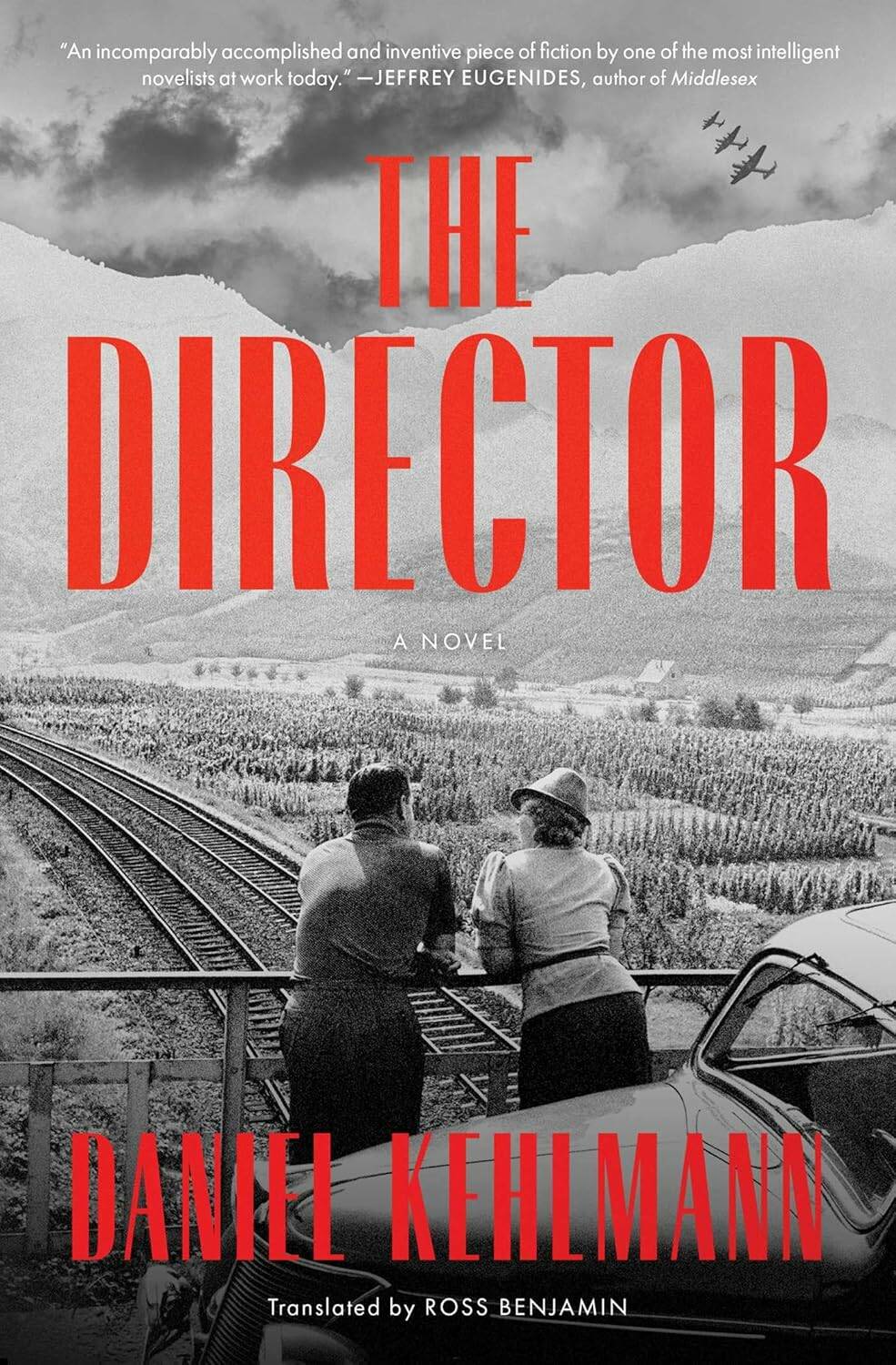
The Director
In another scene, prisoner-of-war Wodehouse — making a compulsory appearance at a film premiere — learns to his bemusement that the Hitler regime has outlawed criticism. Practitioners of this supposedly “Jewish and Bolshevik” discipline are now replaced with “describers.” (They aren’t even allowed to say whether a film is good because that would imply that it could be bad.)
The demand for “genuine Aryan cinema” hangs over Pabst’s film The Molander Case, based on a book by bestselling Nazi hack Alfred Karrasch. The film was in the late stages of production in Prague when the Soviet army reached the city and remains unfinished and unknown, allowing Kehlmann to turn it into an enigmatic question. Is it as cinematically brilliant as Pabst’s (highly unreliable) narrative insists? And even if it is, could it possibly be worth Pabst’s deal with the devil? Art remains when the mess of politics is over, Pabst says to Trude in one scene, but she seems to have a clearer sense of the cost.
Kehlmann’s own responses to Pabst’s moral situation — the director’s small, incremental compromises and then his sudden, terrible capitulation — are incisive and unsparing, full of absurdities and killing ironies. And they are never didactic, this novel of ideas remaining immediate, entertaining and a really good read.
Alison Gillmor writes on film for the Free Press.
Studying at the University of Winnipeg and later Toronto’s York University, Alison Gillmor planned to become an art historian. She ended up catching the journalism bug when she started as visual arts reviewer at the Winnipeg Free Press in 1992.
Our newsroom depends on a growing audience of readers to power our journalism. If you are not a paid reader, please consider becoming a subscriber.
Our newsroom depends on its audience of readers to power our journalism. Thank you for your support.
Studying at the University of Winnipeg and later Toronto’s York University, Alison Gillmor planned to become an art historian. She ended up catching the journalism bug when she started as visual arts reviewer at the Winnipeg Free Press in 1992.
Our newsroom depends on a growing audience of readers to power our journalism. If you are not a paid reader, please consider becoming a subscriber.
Our newsroom depends on its audience of readers to power our journalism. Thank you for your support.
Advertisement Advertise With Us
Advertisement Advertise With Us