Calls to action
Trio of brief books offer vaulable insight on the road to reconciliation in Canada
Advertisement
Read this article for free:
or
Already have an account? Log in here »
To continue reading, please subscribe:
Digital Subscription
One year of digital access for only $1.44 a week*
- Enjoy unlimited reading on winnipegfreepress.com
- Read the E-Edition, our digital replica newspaper
- Access News Break, our award-winning app
- Play interactive puzzles
*Billed as $5.77 plus GST every four weeks. After 52 weeks, price increases to the regular rate of $19.95 plus GST every four weeks. Offer available to new and qualified returning subscribers only. Cancel any time.
To continue reading, please subscribe:
Add Free Press access to your Brandon Sun subscription for only an additional
$1 for the first 4 weeks*
- Enjoy unlimited reading on winnipegfreepress.com
- Read the E-Edition, our digital replica newspaper
- Access News Break, our award-winning app
- Play interactive puzzles
*Your next Brandon Sun subscription payment will increase by $1.00 and you will be charged $17.95 plus GST for four weeks. After four weeks, your payment will increase to $24.95 plus GST every four weeks.
Read unlimited articles for free today:
or
Already have an account? Log in here »
Hey there, time traveller!
This article was published 07/06/2025 (506 days ago), so information in it may no longer be current.
A trio of books on reconciliation were all released within the span of a few weeks ahead of the summer publishing season. Who are they each for? Readers wanting to learn more about their role in the 94 calls to action in the Truth and Reconciliation Commission (TRC), but who are unsure where to start, might find one or more of these titles a valuable resource, depending on their current base of knowledge and what they hope to get out of it.
● ● ●
Kathryne Langsford photo Bruce McIvor
Bruce McIvor (Standoff: Why Reconciliation Fails Indigenous People and How to Fix It) is Red River Métis, an adjunct professor at UBC law school and a founder and senior partner at First Peoples Law. He wrote Indigenous Rights in One Minute which covers, concisely, over 100 different legal concepts, court decisions and pieces of legislation related to Indigenous rights.
The central conceit, from which McIvor does not waver, is that each item — from the Doctrine of Discovery to Section 35 to the Haida Decision — is covered in about one minute of reading or less.
Indigenous Rights in One Minute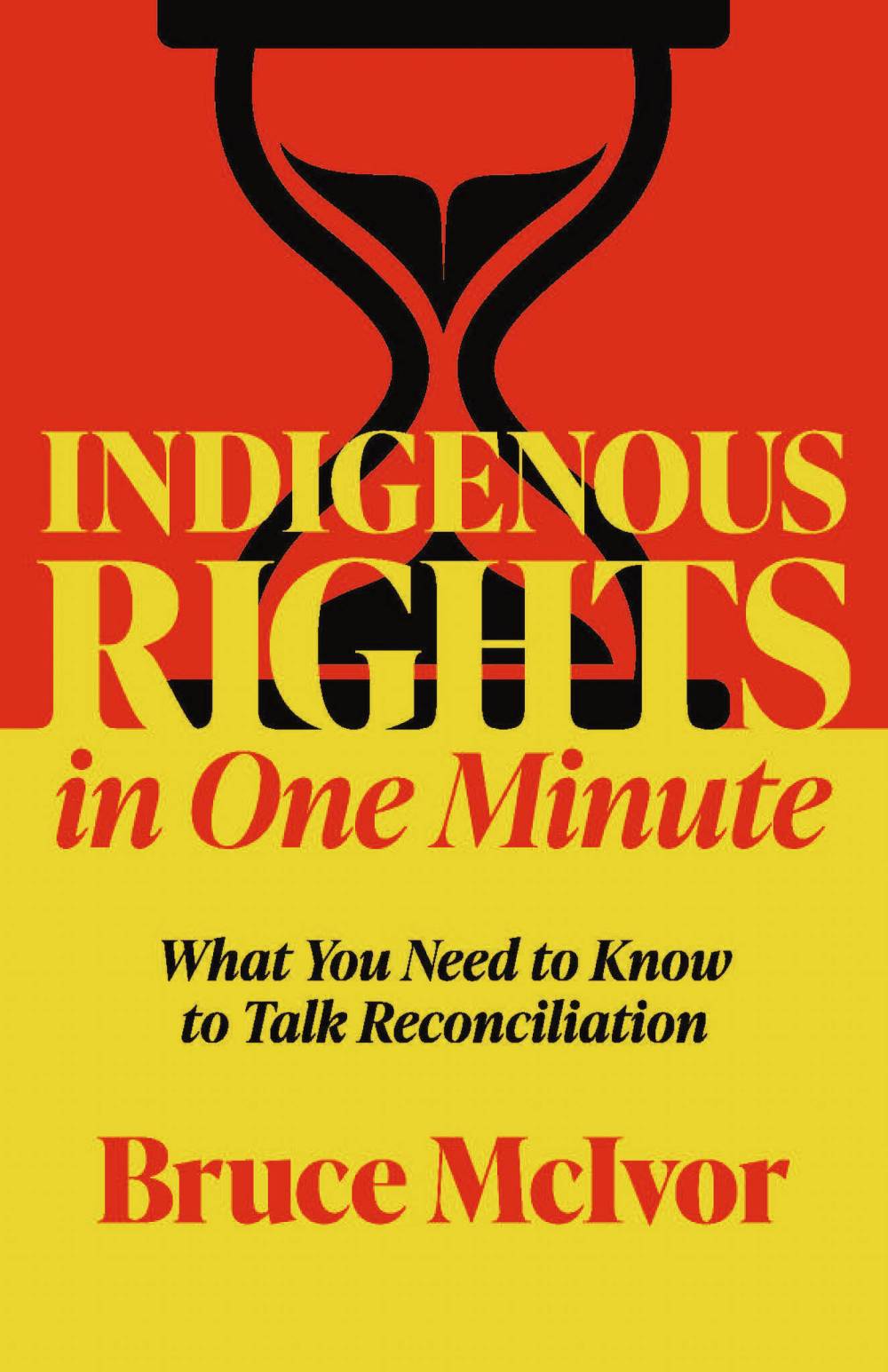
The attorney and author briefly covers the history and current legal relevance of every legal footnote that contributes to the current judicial and legislative understanding of the rights of Indigenous people as well as Indigenous Peoples, each one in a page or two. With a detailed table of contents as well as a glossary, index and list of further reading, the book is certainly set up to act as a handy reference text for non-lawyers who nevertheless may be affected by, or otherwise desiring to be aware of, the relevant case law. It might also be a crucial resource for many working in or with advocacy organizations, or Indigenous and non-Indigenous governments.
While it is very possible to jump around in the text, there is a throughline here. Reading the book from front to back builds in the reader a sense of the general shape of Indigenous rights in Canada, its current state, the historical forces that have shaped those rights and the directions it might move towards in the future.
McIvor warns at the very beginning that he has a point of view and that he will share it. But even his editorial comments are brief and evidence-based. The one-minute constraint doesn’t allow him to add many rhetorical flourishes, and blunt observations, such as that Aboriginal title is intentionally limited “to ensure it doesn’t become an insurmountable obstacle to removing Indigenous people from their lands so those lands can be exploited by non-Indigenous people,” are hard to deny on the facts.
The courtroom battles Indigenous individuals and communities have been taking on against the Canadian government mirror the extensive legal work taken on by American Civil Rights activists since the 1960s. For a non-lawyer to make a proper survey of even a small field of law is not easy, and there’s so much hard-to-find information packed in here, it’s easy to imagine this slim layperson’s reference volume will become a permanent resident of any shelves it lands upon.
● ● ●
Supplied photo Rose LeMay
For first-time author Rose LeMay, the complete opposite approach made the most sense when writing Ally Is a Verb. LeMay is Tlingit, still operates in her First Nation’s homeland in B.C. and has made a career as a speaker and corporate trainer specializing in practical steps allies can take in implementing the TRC’s Calls to Action for reconciliation. Her book often reads like it could be spoken aloud in a meeting space — the writing is dynamic, conversational and passionate.
If McIvor thought it necessary to note that he is not impartial on the topics he writes about, LeMay’s point of view is so immediately clear that any such disclaimer would be unnecessary. In her second chapter, Unpacking the Great Canadian Lie, LeMay muses about whether a bloodier but briefer direct military conflict — such as occurred between Indigenous Peoples and the United States army, especially throughout the 19th century — might actually have been preferable in some ways to what actually occurred in this country. At least then, she reckons, the enemy would have been clearly identifiable. Instead, bearing the pretended benevolence of the Indian Act, LeMay writes that, “Canada walked in smiling and held out its hand to shake, while the other hand was stealing our children and our land.”
Ally is a Verb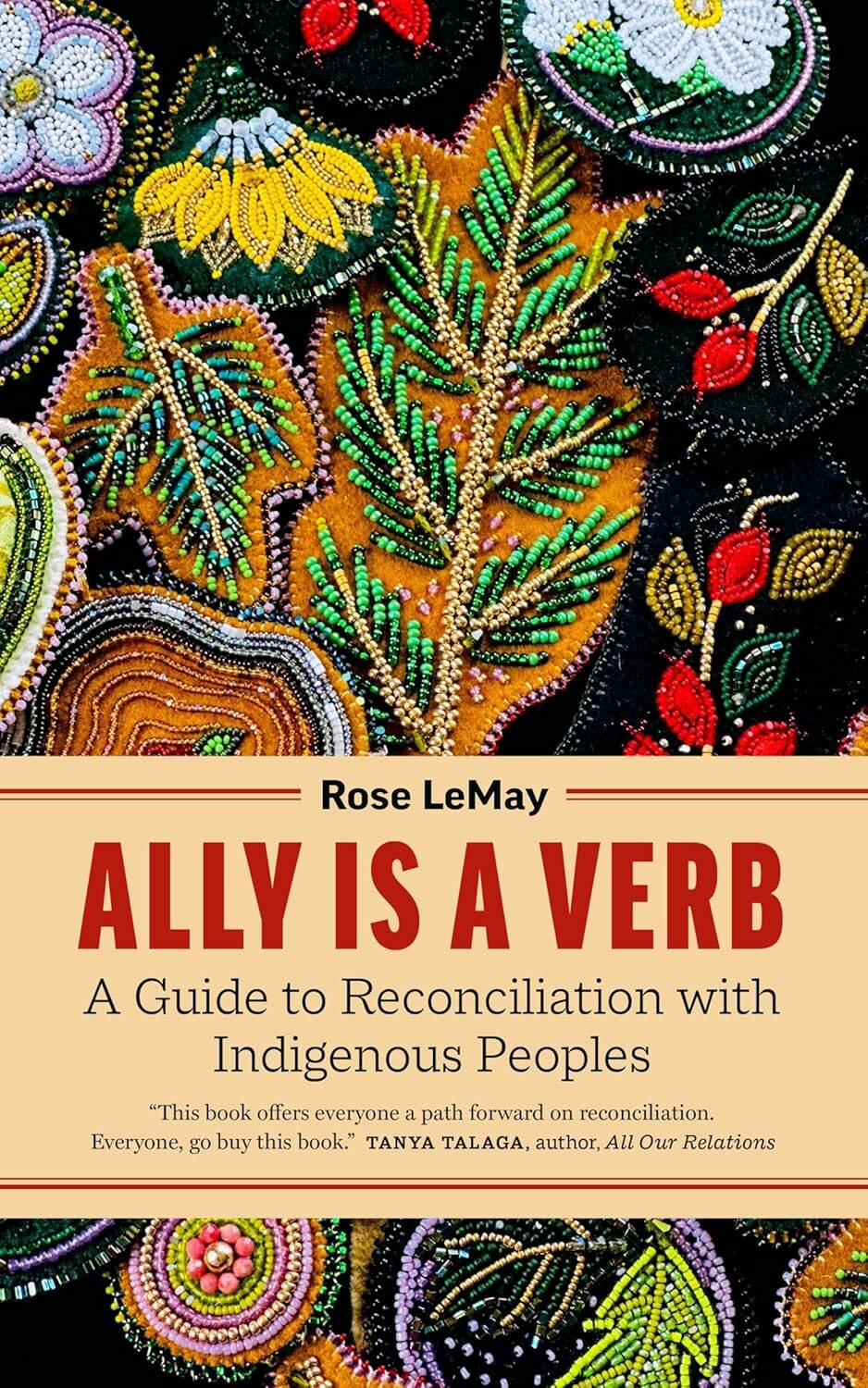
LeMay modelled her book on the change management approach she uses as a trainer: you explain the problem, present a solution and get people on board with being part of that solution. So she spends some of the first few chapters with a primer on the history of Indigenous Peoples’ mistreatment at the hands of the Canadian government, from pre-Confederation to the Indian Act to residential schools, of which many in her own family were survivors.
But before even this, LeMay spends some time in the opening chapter discussing the idea of reconciliation itself and how it can look, comparing Canada to three other countries that went through this process: Germany took a court-based approach post-Holocaust in the Nuremberg Trials, South Africa formed its own Truth and Reconciliation Commission after apartheid and Rwanda, after the 1994 genocide, landed somewhere in between.
LeMay makes some thoughtful observations about the advantages and disadvantages of each approach, noting that our own government-created TRC had the effect of casting Canada itself as an observer and facilitator, neatly sidestepping the role of either perpetrator or defendant. These comparisons comprise some of the strongest insights of the book, and it’s a good initial framing to set up subsequent chapters.
The book also has some weak spots that probably stem from being adapted from oral content polished over the course of many live workshops and keynotes, and not undergoing all the changes appropriate to a written book-length format. Some chapters are veritably packed with a minutiae of stray observations that would make a real-time discussion more dynamic but make a written argument more muddled. At times quotes that aren’t real quotes but rather air-quoted imitations of a hypothetical person or anthropomorphized institution (e.g., the Government of Canada) are written down using actual quotation marks.
LeMay’s book seems geared towards use in organizations for internal training. The chapters each end with a list of next steps and resources for further reading, making them well-suited as a ready-out-of-the-box corporate training program, wherein a facilitator or team leader might assign a chapter and set a meeting each week to discuss. Though one imagines most organizations would do better to hire LeMay to run the training herself, if they have the budget.
● ● ●
Mike Deal / Free Press files David A. Robertson
David. A Robertson (the Misewa Saga; 7 Generations, a Plains Cree Saga) is the most experienced author of the group, having written numerous graphic novels as well as several works of fiction and non-fiction. He is a member of Norway House Cree Nation on his father’s side but was raised mainly in Winnipeg, where he is still based.
The idea of 52 Ways to Reconcile is to take one step towards reconciliation every week, with enough chapters to fill a full year, though that doesn’t mean the book can’t be read faster than that. Indeed, the engaging style makes it hard to stop after one short chapter.
52 Ways to Reconcile
As with McIvor’s book, 52 Ways could potentially be read out of order; after all, there’s no reason that checking out an Indigenous restaurant (Week #33) can’t come before engaging with Indigenous social media (Week #3). But there is a personal narrative threaded throughout 52 Ways, and to pick and choose chapters and not read the whole thing would be a shame.
Robertson provides a mix of ways to advance reconciliation, some easier and others more involved. They may include putting either your time or money where your mouth is by supporting Indigenous communities or groups, learning an important lesson on land acknowledgements or unchecked idioms, or supporting and enjoying Indigenous creators in a variety of contexts, from film to music to podcasts to food to tourism to comics.
Every chapter includes both a heartfelt case for why a given task is worth doing, another little bit of the author’s personal journey in advancing reconciliation and a number of specific examples of where you can get started on any given week’s suggestion. Robertson already consumes a lot of Indigenous media, supports a lot of Indigenous organizations and follows a lot of Indigenous sport teams, so he is not short on examples.
Want a good podcast that will teach you about missing and murdered Indigenous women; a good Indigenous non-fiction, fiction or comic book writer; country band; jazz band; or electronica band? Robertson has at least one suggestion, but usually offers several.
Of the three books covered here, Robertson’s 52 Ways to Reconcile is probably the most universally accessible; indeed it should appeal to almost anyone. Of course that doesn’t mean that any two, or even all three, of these books aren’t worth picking up depending on what the reader wants to get out of each title, and how much reading time they have available.
Joel Boyce is a Winnipeg writer and educator.