

Book Review: Jess Walter’s ‘So Far Gone’ sets a redemption story in fractured, modern America
Advertisement
Read this article for free:
or
Already have an account? Log in here »
To continue reading, please subscribe:
Monthly Digital Subscription
$1 per week for 24 weeks*
- Enjoy unlimited reading on winnipegfreepress.com
- Read the E-Edition, our digital replica newspaper
- Access News Break, our award-winning app
- Play interactive puzzles
*Billed as $4.00 plus GST every four weeks. After 24 weeks, price increases to the regular rate of $19.95 plus GST every four weeks. Offer available to new and qualified returning subscribers only. Cancel any time.
Monthly Digital Subscription
$4.99/week*
- Enjoy unlimited reading on winnipegfreepress.com
- Read the E-Edition, our digital replica newspaper
- Access News Break, our award-winning app
- Play interactive puzzles
*Billed as $19.95 plus GST every four weeks. Cancel any time.
To continue reading, please subscribe:
Add Free Press access to your Brandon Sun subscription for only an additional
$1 for the first 4 weeks*
*Your next subscription payment will increase by $1.00 and you will be charged $16.99 plus GST for four weeks. After four weeks, your payment will increase to $23.99 plus GST every four weeks.
Read unlimited articles for free today:
or
Already have an account? Log in here »
Hey there, time traveller!
This article was published 09/06/2025 (295 days ago), so information in it may no longer be current.
When the history of the United States in 2025 is written, perhaps one of the best things that will be said is: “Well, it made for some great art.”
Consider “So Far Gone,” the new novel by Jess Walter. Set in present day America, it opens with two kids wearing backpacks knocking on a cabin door. “What are you fine young capitalists selling?” asks Rhys Kinnick, before realizing the kids are his grandchildren. They carry with them a note from Kinnick’s daughter, describing dad as a “recluse who cut off contact with our family and now lives in squalor in a cabin north of Spokane.”
It’s a great hook that draws you in and doesn’t really let up for the next 256 pages. We learn why Kinnick pulled a Thoreau and went to the woods seven years ago (Hint: It has a lot to do with the intolerance exhibited by no small percentage of Americans and embodied by a certain occupant of the White House), as well as the whereabouts of Kinnick’s daughter, Bethany, and why her messy marriage to a guy named Shane led to Kinnick’s grandchildren being dropped off at his cabin.
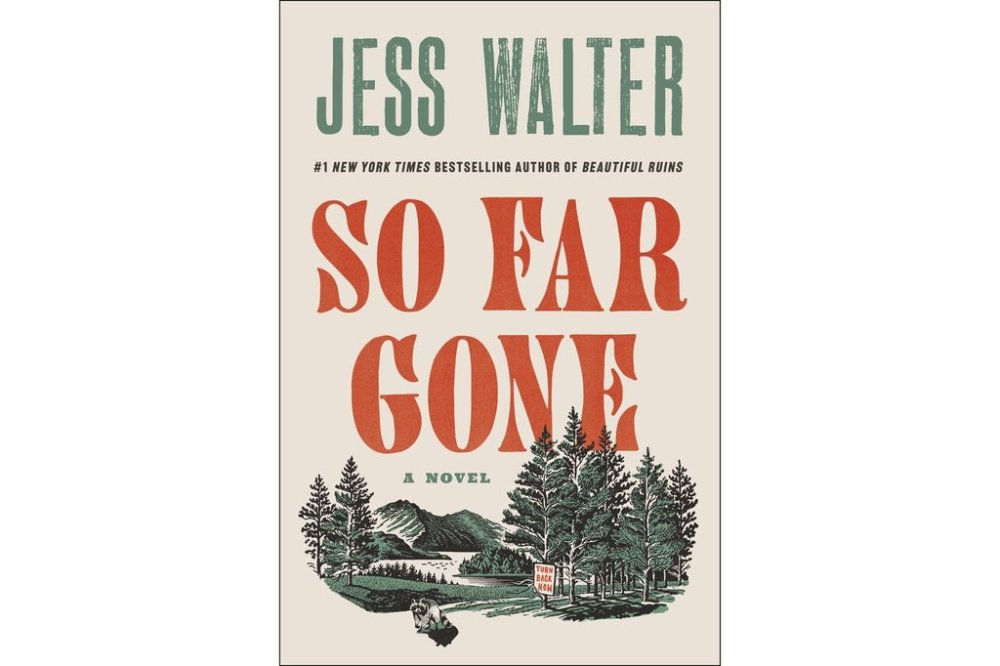
In a neat narrative gimmick, the chapters are entitled “What Happened to ___” and fill in the main strokes of each character’s backstory, as well as what happens to them in the present timeline. Told with an omniscient third-person sense of humor, the book’s themes are nonetheless serious. On the demise of journalism in the chapter “What Happened to Lucy,” one of Kinnick’s old flames and colleagues at the Spokesman-Review: She “hated that reporters were expected to constantly post on social media… before knowing what their stories even meant.” Or Kinnick’s thoughts as he holds a .22 Glock given to him just in case by a retired police officer who is helping him get his grandkids back from the local militia: “The shiver that went through his arm! The power!… The weight of this gun was the exact weight of his anger and his fear and his sense of displacement… That’s where its incredible balance lay.”
As Kinnick links up with various characters and drives across the Northwest in search of his daughter and grandchildren, the plot unfolds quickly. Most readers won’t need more than a day or two to reach the final page, which satisfies the Thoreau quote Walter uses in the story’s preface: “Not till we are lost… ’till we have lost the world, do we begin to find ourselves.”
___
AP book reviews: https://apnews.com/hub/book-reviews