Notion of ‘genius’ a fluid, ever-changing concept
Advertisement
Read this article for free:
or
Already have an account? Log in here »
To continue reading, please subscribe:

Digital Subscription
One year of digital access for only $205*
- Enjoy unlimited reading on winnipegfreepress.com
- Read the E-Edition, our digital replica newspaper
- Access News Break, our award-winning app
- Play interactive puzzles
*First annual payment billed as $205.00 + GST for one year. This annual subscription will automatically renew at $233.00 + GST every 52 weeks (10% off the regular annual price of $259.35). Offer available to new and qualified returning subscribers only. Cancel any time.
To continue reading, please subscribe:
Add Free Press access to your Brandon Sun subscription for only an additional
$1 for the first 4 weeks*
- Enjoy unlimited reading on winnipegfreepress.com
- Read the E-Edition, our digital replica newspaper
- Access News Break, our award-winning app
- Play interactive puzzles
*Your next Brandon Sun subscription payment will increase by $1.00 and you will be charged $17.95 plus GST for four weeks. After four weeks, your payment will increase to $24.95 plus GST every four weeks.
Read unlimited articles for free today:
or
Already have an account? Log in here »
Hey there, time traveller!
This article was published 12/07/2025 (436 days ago), so information in it may no longer be current.
Books about genius and geniuses abound.
We are all fascinated by people who display otherworldly intellectual ability or whose creativity and inventiveness seem to exceed human limitations.
However, this entertaining survey is not so much about individual geniuses themselves as it is about how society defines and regards those mental giants who walk among us.
Andrew Harrer / Bloomberg
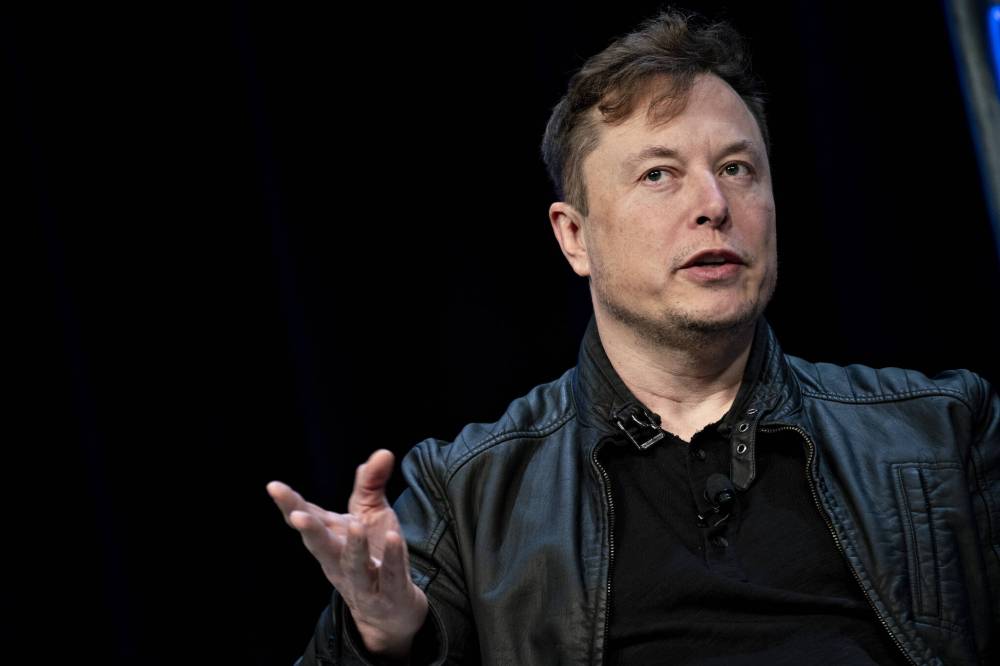
Elon Musk gets plenty of ink in Helen Lewis’ musings on the notion of genius.
A key element in the thesis of British journalist and author Helen Lewis is that our notion of what constitutes genius changes given the time and place and yet there are also patterns that reappear throughout history.
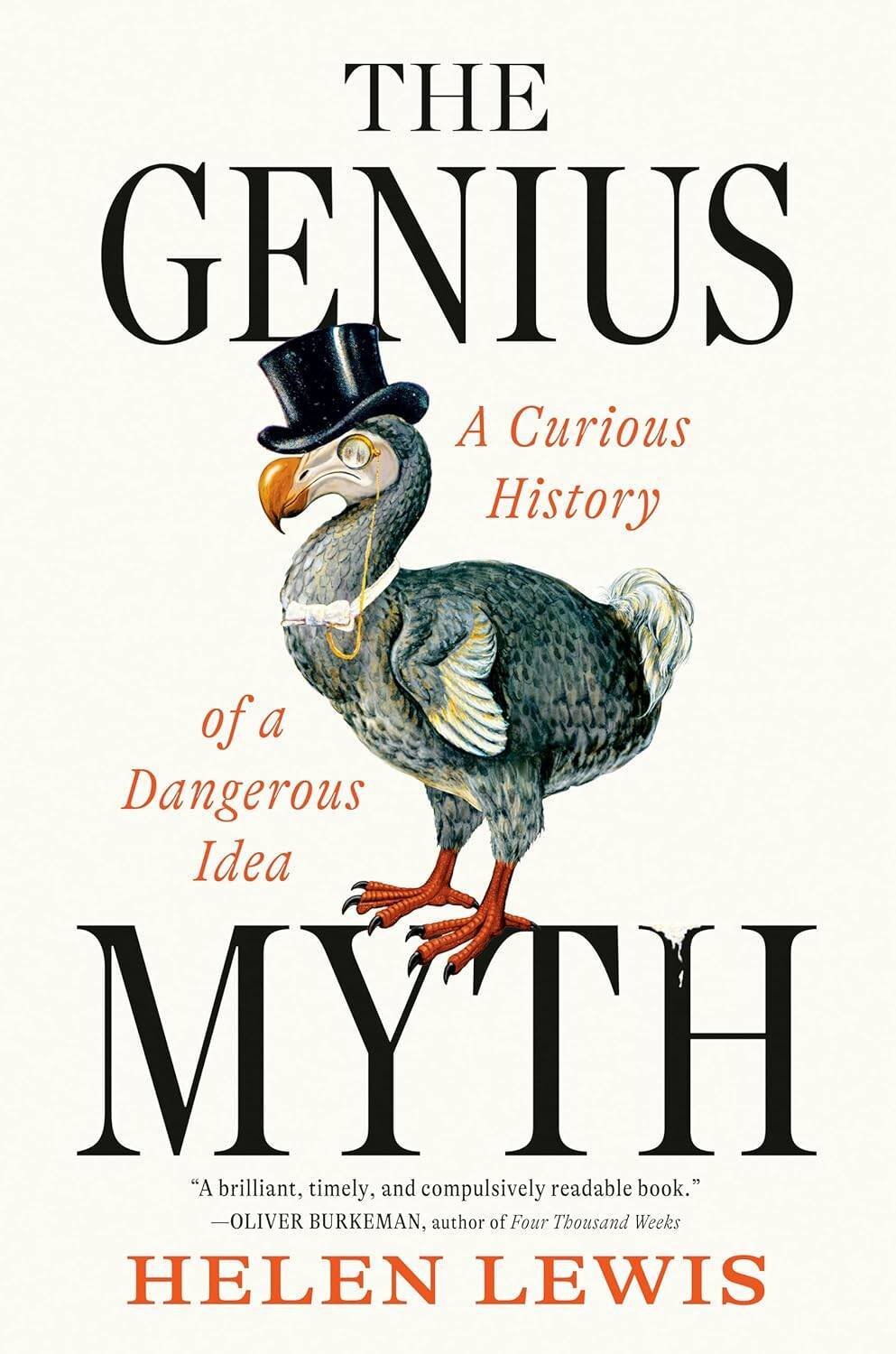
An observant reader will notice that the word “Myth” on the book’s cover is set in larger type than the word “Genius.” This is not an accident. It is her central point.
“The argument over whether Elon Musk is a genius is really an argument about what our society values, and what it is prepared to tolerate,” Lewis writes.
“A suite of behaviours that would otherwise be inexcusable are forgiven when they are the price of greatness.”
The South African-born electric vehicle and rocket ship entrepreneur gets a lot of ink here.
As Lewis notes, this is because his talent for financial risk and organization control, not to mention his personal eccentricities, seem to be what the culture reveres at the moment.
He also represents a “poisonous” type of high achiever. This is a person, almost always male, who succeeds in one domain and begins to think of themselves as “a superior sort of human” and an expert in everything (even government cost-cutting).
With its conversational tone and often witty asides, The Genius Myth seems to take for its conceptual model Malcolm Gladwell’s influential 2008 bestseller Outliers.
She references it at several points, especially its idea that behind every brilliant person lie 10,000 hours of brute practice and hard work.
She travels back to 19th-century England to examine “the great age of classification,” in which its proponents, like the scientist Frances Galton, were obsessed with defining and measuring genius.
Galton is credited today, or more accurately blamed, as being the father of eugenics, the terrible idea that the human species can be improved through selective breeding.
The Genius Myth
Lewis includes a fascinating chapter on the equally misguided work of Louis Terman, the early 20th-century American psychologist who led in the development of IQ testing.
Mostly what Lewis finds is that genius is the eye of the beholder. It can’t really be measured and it can’t be predicted, though we do find similarities in types of geniuses.
She devotes chapters to the so-called “monsters” such as Pablo Picasso and Harvey Weinstein, who felt they had licence to abuse people around them, and “rebels” such as Galileo and Monet, who broke new ground by rejecting previous orthodoxies.
Although she admits she is weak on the subject of musical genius — writers and painters being her stronger artistic suits — she includes two interesting chapters on the Beatles (and the degree to which their accomplishments can be separated from time and place).
Of the hundreds of names dropped in this book, the astute local reader will notice, her fellow chronicler Gladwell aside, a complete absence of Canadians.
Are we as a nation inhospitable to genius or even superior talent? (Admittedly, in a book that limits itself to a discussion of Western accomplishment, the Australians don’t rate either.)
We know this can’t be the case. In this time of raised elbows, there is room for a great Canadian mythologizer of genius.
Morley Walker is a retired Free Press editor and writer.