

Art forgery account proves to be the real deal
Advertisement
Read this article for free:
or
Already have an account? Log in here »
To continue reading, please subscribe:
Monthly Digital Subscription
$0 for the first 4 weeks*
- Enjoy unlimited reading on winnipegfreepress.com
- Read the E-Edition, our digital replica newspaper
- Access News Break, our award-winning app
- Play interactive puzzles
*No charge for 4 weeks then price increases to the regular rate of $19.95 plus GST every four weeks. Offer available to new and qualified returning subscribers only. Cancel any time.
Monthly Digital Subscription
$4.99/week*
- Enjoy unlimited reading on winnipegfreepress.com
- Read the E-Edition, our digital replica newspaper
- Access News Break, our award-winning app
- Play interactive puzzles
*Billed as $19.95 plus GST every four weeks. Cancel any time.
To continue reading, please subscribe:
Add Free Press access to your Brandon Sun subscription for only an additional
$1 for the first 4 weeks*
*Your next subscription payment will increase by $1.00 and you will be charged $16.99 plus GST for four weeks. After four weeks, your payment will increase to $23.99 plus GST every four weeks.
Read unlimited articles for free today:
or
Already have an account? Log in here »
The late Italian author Umberto Eco once said, “From lies to forgeries, the step is not so long.”
Such is the case in The Devil Wears Rothko, a fascinating true crime tale about greed, duplicity and art fraud. The story involves a venerable New York art gallery that purchased fake paintings from a forgery ring and sold them to clients to the tune of US$80 million in 14 years.
Barry Avrich first addressed this subject in his 2020 documentary film Make You Look: A True Story about Fake Art, but since then new evidence has surfaced — hence his interest in revisiting the debacle in book form.
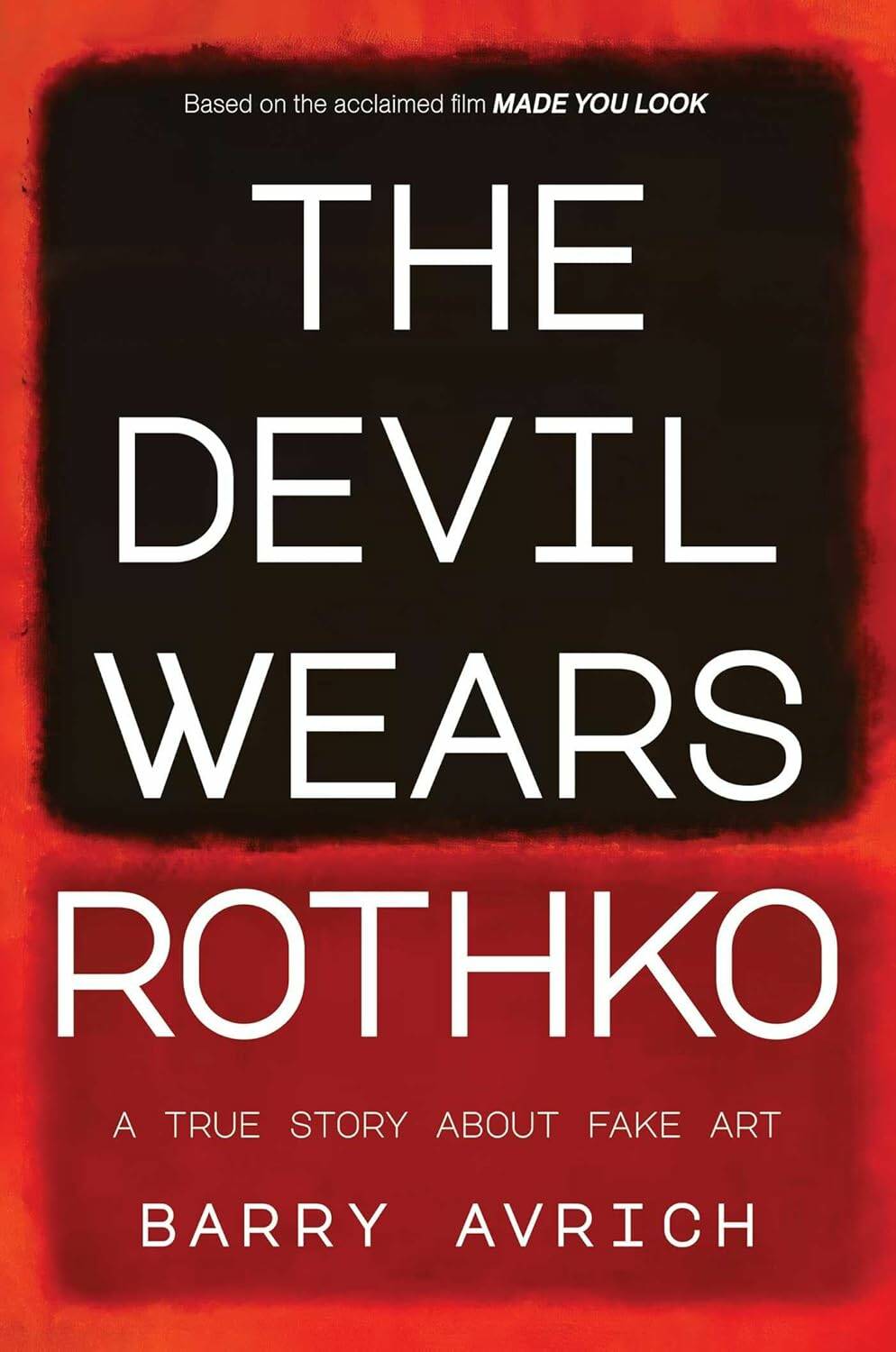
The Devil Wears Rothko
Born in Montreal but currently living in Toronto, Avrich has directed and produced over 50 documentary films and authored five books. He also built the first movie theatre in a hospital.
The story begins in 1995 when Glafira Rosales, a 40-ish woman from Long Island, visits the prestigious Noedler Gallery on East 70st Street in Manhattan. Clad in designer clothes, she is carrying a parcel with her. Inside is a colour field painting by the late abstract expressionist artist Mark Rothko that Rosales want to sell.
The gallery’s longtime director Ann Freedman is delighted — not only is the piece outstanding, but Rothko’s work is seldom available, as private owners rarely part with it. After posing a few questions, she concludes Rosales seems to know a thing or two about art, and Freedman is sure she can sell the piece to a client.
Even so, the painting’s history is sketchy at best. According to Rosales, it came from an anonymous collector who was hiding his homosexual affair with the married benefactor who gave him the Rothko (as well as 32 more abstract expressionist paintings, including work by Jackson Pollock, Robert Motherwell and others).
Freedman invites a well-known Rothko expert to examine the painting and he attests to its authenticity. Thereafter, Freedman buys one or two paintings from Rosales every year to resell to clients. But 14 years later, questions about provenance eventually uncover the forgery ring.

Written for laypeople in chatty, conversational prose, the narrative consists of three parts. The first seven chapters edify readers about the jargon related to art sales. These include the notion of provenance — an artwork’s lengthy history of ownership. Another term is the catalogue raisonné, a list of all of an artist’s known work. We also learn about the four key players: mastermind Jose Carlos Bergantiños, co-conspirator Rosales, the brilliant forger Pei-Shen Qian and Freedman, the dubious conduit.
The middle chapters focus on anecdotes about the scam itself and a few of the duped collectors. Among them, the former chairman of Sotheby’s and CEO of Gucci spent US$8.1 million on a fake Rothko.
The final portion of the book deals with the crime’s legalities.
A cautionary tale for the public, this thought-provoking book does much to shed light on art fraud, the gullibility of art lovers and the sophistication of the criminals who prey on them.
Bev Sandell Greenberg is a Winnipeg writer and editor. She is currently working on short fiction about the art world.