‘Victory 45’ a riveting retelling of Second World War’s end
Advertisement
Read this article for free:
or
Already have an account? Log in here »
To continue reading, please subscribe:

Digital Subscription
One year of digital access for only $205*
- Enjoy unlimited reading on winnipegfreepress.com
- Read the E-Edition, our digital replica newspaper
- Access News Break, our award-winning app
- Play interactive puzzles
*First annual payment billed as $205.00 + GST for one year. This annual subscription will automatically renew at $233.00 + GST every 52 weeks (10% off the regular annual price of $259.35). Offer available to new and qualified returning subscribers only. Cancel any time.
To continue reading, please subscribe:
Add Free Press access to your Brandon Sun subscription for only an additional
$1 for the first 4 weeks*
- Enjoy unlimited reading on winnipegfreepress.com
- Read the E-Edition, our digital replica newspaper
- Access News Break, our award-winning app
- Play interactive puzzles
*Your next Brandon Sun subscription payment will increase by $1.00 and you will be charged $17.95 plus GST for four weeks. After four weeks, your payment will increase to $24.95 plus GST every four weeks.
Read unlimited articles for free today:
or
Already have an account? Log in here »
Hey there, time traveller!
This article was published 09/08/2025 (428 days ago), so information in it may no longer be current.
The year 2025 marks the 80th anniversary of the end of the Second World War. British popular historians James Holland and Al Murray detail the events leading up to the formal surrenders of Nazi Germany in May 1945 and Japan in September 1945.
While there is nothing original or innovative in their account, it’s a timely reminder of what they call “the bitterness of war’s true cost.”
Holland and Murray underscore the delusion that drove the Nazi and Japanese regimes. Even as their fate became inevitable, elements in the political and military leadership of the Axis powers refused to acknowledge reality. They desperately clung to the belief that some new counterattack could stave off defeat. Thus they needlessly prolonged the war.
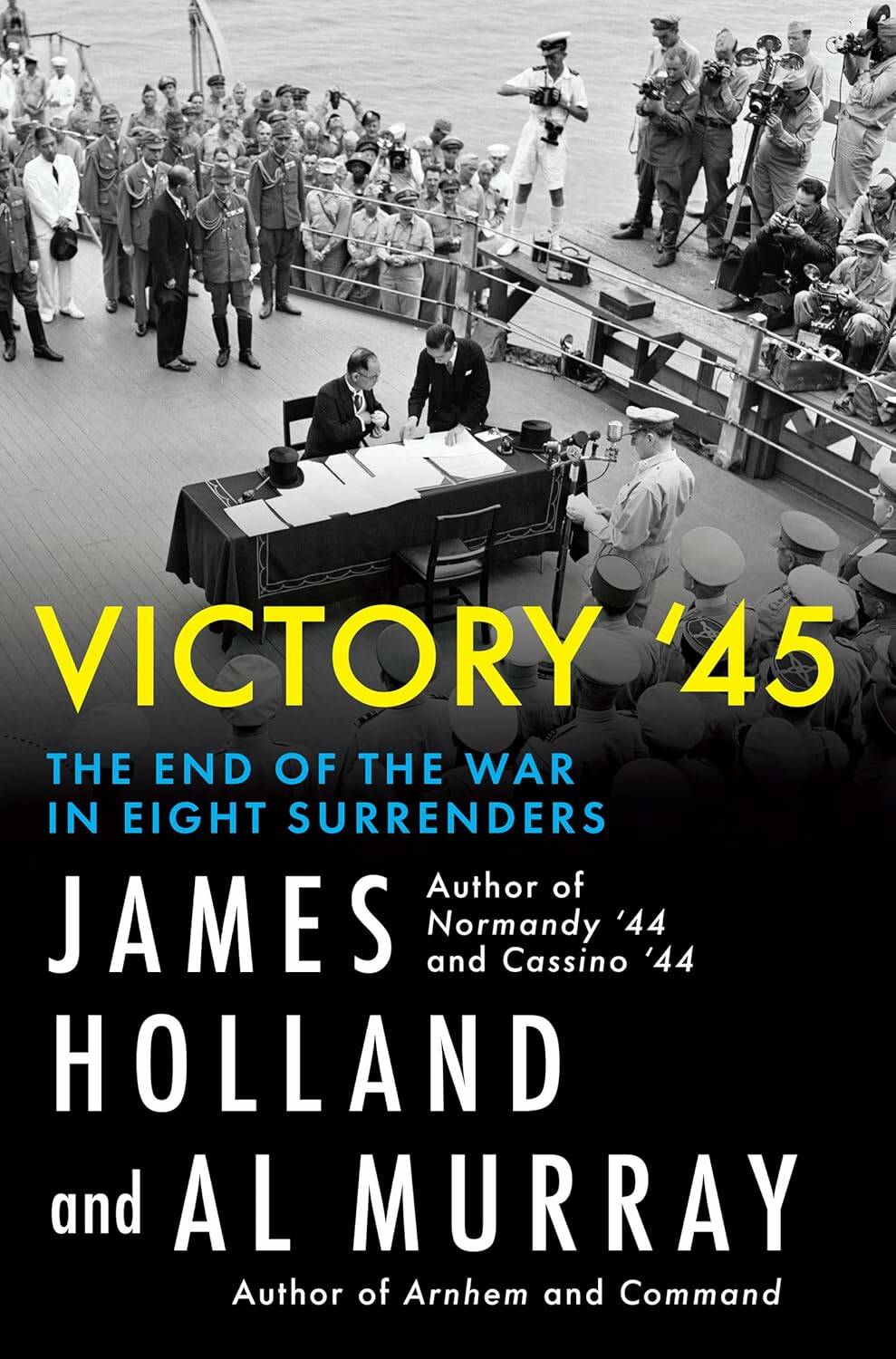
Victory 45
The most enjoyable chapter in this book recounts VE Day — Victory in Europe Day — in London on May 8, 1945.
The authors reconstruct the celebrations by invoking multiple perspectives: the Royal Family, then-Prime Minister Winston Churchill, ordinary young women who travelled to London to join the crowds and the playwright and actor Noel Coward. As Coward observed, “I suppose this is the greatest day in our history.”
The authors provide telling anecdotes that vividly evoke time and place. For example, Yelena Kagan, an interpreter with the Russian army, was walking amidst the death and destruction of Berlin when, incongruously, she heard the call of a nightingale. The birdsong, she thought, was “an extraordinary reminder that life would continue, despite all that had happened.”
Another remarkable story that Holland and Murray relate concerns the wartime experiences of United States General Jonathan Wainwright. He was taken prisoner by the Japanese and treated abominably. His weight dropped to 125 pounds (57 kilograms — his normal weight was about 170 pounds or 77 kilograms) but he survived and, after being liberated, he personally intervened to ensure a Japanese officer was shown the respect due his rank.
Holland and Murray conclude with a lesson from history: military preparedness, they argue, is the best way to prevent war.

They have depicted the closing acts of the Second World War in an engrossing narrative for a popular audience.
Graeme Voyer is a Winnipeg writer.