Follett’s epic Stonehenge origin story stands tall

Advertisement

Advertise with us

Welsh author Ken Follett’s latest work of historical fiction is, shall we say, monumental in scope.

Read this article for free:


or

Already have an account? Log in here »

To continue reading, please subscribe:

Subscribe and receive a limited-edition Free Press branded hat or tote.

Digital Subscription

One year of digital access for only $205*

  • Enjoy unlimited reading on winnipegfreepress.com
  • Read the E-Edition, our digital replica newspaper
  • Access News Break, our award-winning app
  • Play interactive puzzles

*First annual payment billed as $205.00 + GST for one year. This annual subscription will automatically renew at $233.00 + GST every 52 weeks (10% off the regular annual price of $259.35). Offer available to new and qualified returning subscribers only. Cancel any time.

To continue reading, please subscribe:

Add Free Press access to your Brandon Sun subscription for only an additional

$1 for the first 4 weeks*

  • Enjoy unlimited reading on winnipegfreepress.com
  • Read the E-Edition, our digital replica newspaper
  • Access News Break, our award-winning app
  • Play interactive puzzles
Start now

*Your next Brandon Sun subscription payment will increase by $1.00 and you will be charged $17.95 plus GST for four weeks. After four weeks, your payment will increase to $24.95 plus GST every four weeks.

Hey there, time traveller!
This article was published 04/10/2025 (364 days ago), so information in it may no longer be current.

Welsh author Ken Follett’s latest work of historical fiction is, shall we say, monumental in scope.

Follett is best-known for his 1989 epic novel The Pillars of the Earth, historical fiction set in 12th-century England. The book centres around the building of a Gothic-style cathedral in a remote English community.

Similarly, Circle of Days tells the story of prehistoric peoples building the famed Stonehenge monument.
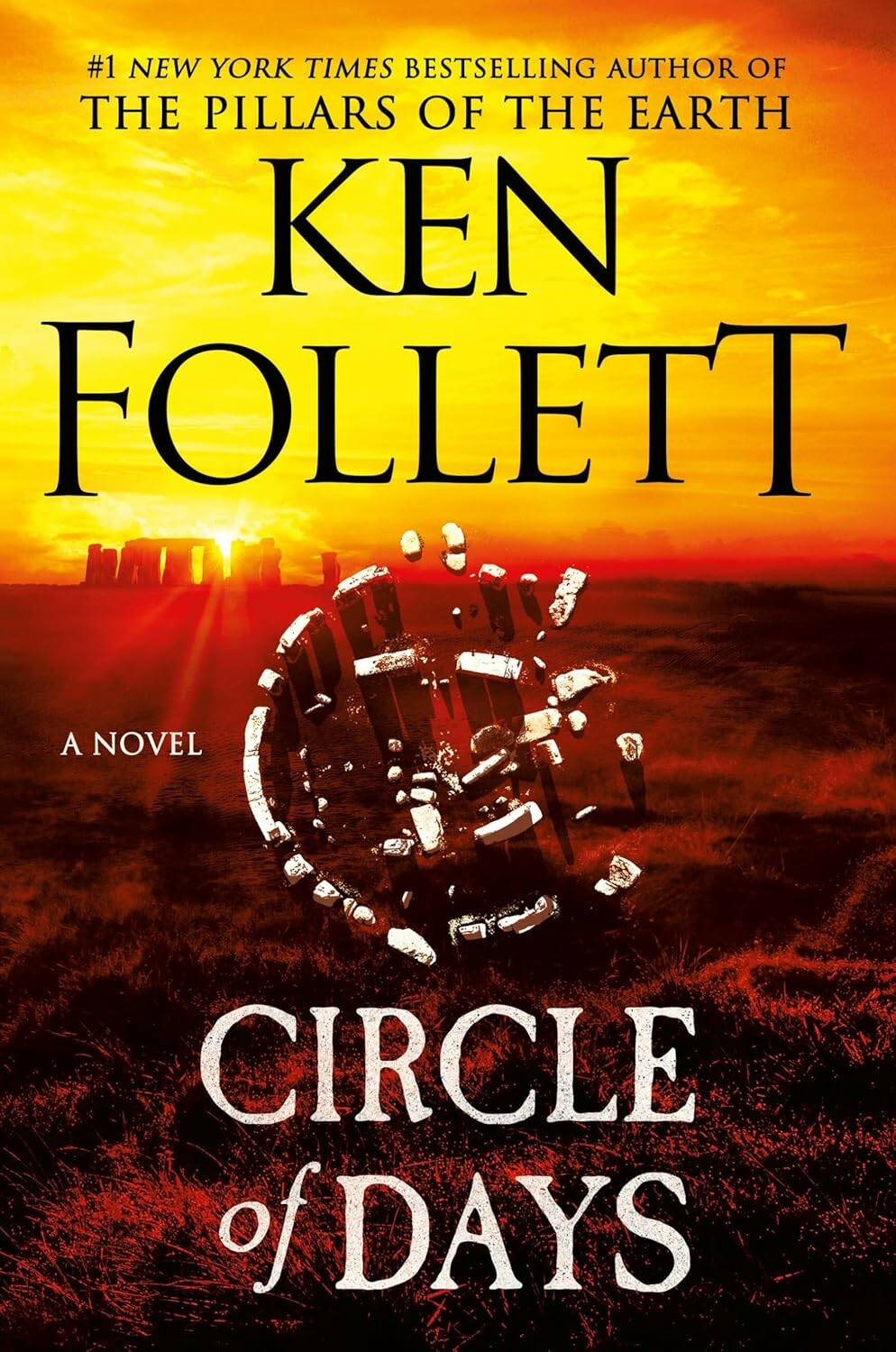
Circle of Days

Circle of Days

Readers may be reminded of Jean M. Auel’s Clan of the Cave Bear series, which also examines themes of community, family, survival and even romance among prehistoric humans.

Follett’s novel opens in 2,500 BCE in what is now England, referred to in the novel as the “Great Plain.”

Seft, a talented flint miner and craftsman, is on his way to the monument of the Great Plain to celebrate the Midsummer Rite and welcome the new year.

He longs to reconnect with Neen, the beautiful girl he met last year. He’s hoping her prosperous family will welcome him and he can escape life with his abusive father and brothers.

During the celebrations, Seft meets Neen’s younger sister Joia, who is uninterested in the life of her cattle-herding family. “She was different from other girls in that way… she was fascinated by the sun, the moon, and the stars, and the different ways they moved in the sky,” readers learn of Joia.

The monument fascinates Joia more than anything, leading her to become one of the priestesses who celebrate daily and seasonal ceremonies.

After the vindictive farmer tribe burns down part of the monument, Joia becomes obsessed with rebuilding it in stone. Her dream also inspires Seft, who makes the rebuild his life’s work.

But trouble brews among the tribes as drought ravages the earth, hunger spreads and mistrust grows, even among former allies. The rebuilt monument can either bring the tribes together or tear them permanently apart.

Follett avoids the trap common to many historical novelists (Alison Weir comes to mind) of cramming historical tidbits into every possible scene instead of mentioning them only when necessary to the story.
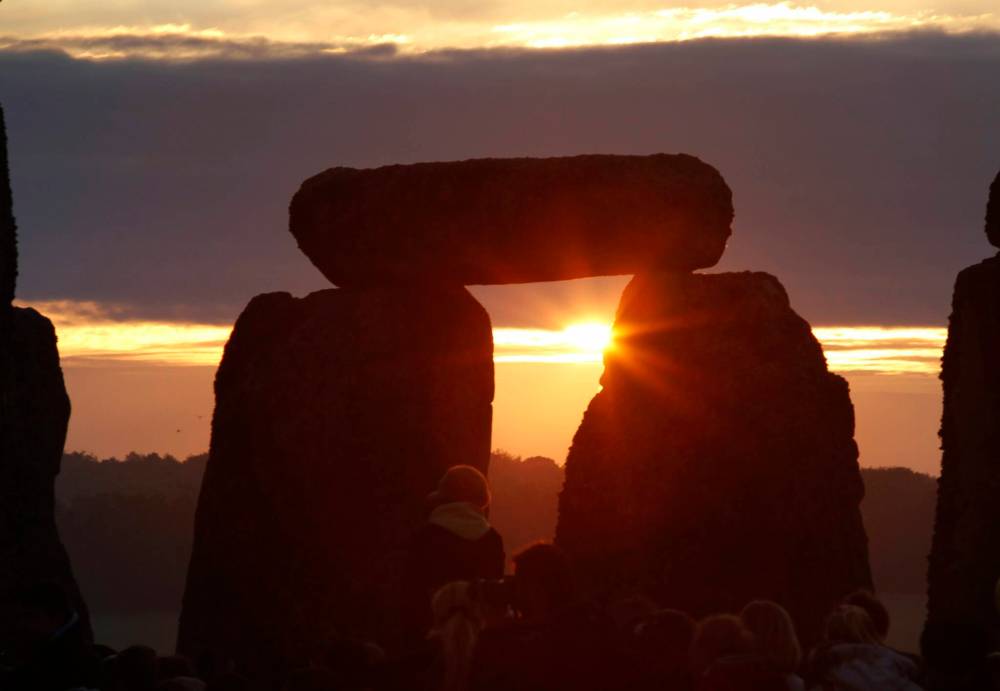
With one exception: at times, he describes the building process of Stonehenge in painstaking detail that will lose readers uninterested in engineering feats.

Follett slyly includes a few subtle references to present events, even including a #MeToo moment where Joia confronts a senior priestess for abusing her position. “We should care for our young people, not use them for our pleasure. When you are High Priestess, you cannot use the power of prestige of the office to seduce and coerce youngsters. It’s just wrong,” Joia tells her.

The novel logs a staggering 704 pages, and readers may wonder if took longer to build Stonehenge or for Follett to write about it.

However, Follett’s newspaper-like prose and seamless plot lines make this an easy and surprisingly quick read without sacrificing entertainment.

Kathryne Cardwell is a Winnipeg writer.

Report Error Submit a Tip

More Stories

International flavour: Canadian investors may want to make like Ottawa, diversify beyond U.S.

Joel Schlesinger 6 minute read Preview

International flavour: Canadian investors may want to make like Ottawa, diversify beyond U.S.

Joel Schlesinger 6 minute read 2:01 AM CDT

Canada is learning the hard way about the dangers of putting too many eggs in its U.S. economic basket.

Much has been made about the need to diversify our economy away from the United States.

Diversification is understandably beneficial. The more varied streams of revenue a nation has, the less affected the economy will be when one of those sources is interrupted.

The same can be said about investment portfolios.

Read
2:01 AM CDT

The idea of Alberta separation viewed through a faith lens shows further fracture lines

Josiah Neufeld 10 minute read Preview

The idea of Alberta separation viewed through a faith lens shows further fracture lines

Josiah Neufeld 10 minute read 2:01 AM CDT

CALGARY — One morning in May, John Pentland, a minister at Hillhurst United Church in Calgary, opened his newspaper and read about a group of Albertans who were trying to divide his country.

Something inside of him felt like it cracked open. He started to weep.

“I couldn’t stop, I couldn’t breathe,” he said. He called a friend and told him: “I think I’m losing my mind.”

Pentland has always believed in Canada — flawed as it might be — as a nation gifted with diversity and welcoming of asylum seekers, refugees and immigrants. But recently that belief has been shaken as he’s witnessed right-wing ideologies charged with anti-immigrant sentiment take root in his province. It makes him angry and embarrassed for the country he loves.

Read
2:01 AM CDT

Letters, Oct. 3

7 minute read 2:01 AM CDT

A morning in the life …

My very first lesson does not start when I walk into that lecture hall, oh no — it starts long before. It begins when I walk to my car, check the estimated arrival time to the University of Manitoba and hope that Winnipeg traffic agrees with it.

A drive that appears completely manageable changes almost immediately when I’m greeted by a tsunami of orange pylons and a line of cars that appears to go on forever. Traffic moves by the inch, lanes magically disappear and the detour I took yesterday now has a detour of its own. These factors make me do a calculation that I have become all too familiar with. How late can I arrive and still find parking, run to my class across campus and get to class with enough time left to make it worth it?

I have grown used to people saying, “Why not just leave earlier?” I do. But when I’m already leaving for my 8:30 a.m. class at 7 a.m., there’s only so much I can do. This drive that some would think is relaxing is one that feels like an assignment that I didn’t know I had to complete and is due at 8:30 a.m.

What’s luck got to do with it?

Tim Kist 5 minute read 2:01 AM CDT

We all seek certainty in our daily lives. We expect if we make a decision, the outcome will be just as we planned: a direct correlation between the decision and result.

You, as a business leader, seek the same certainty from the decisions you make. And sometimes, the result is what was expected. Sometimes, it isn’t.

The big question is: why is it so difficult to achieve the business results you expect when you carefully craft your plans and seemingly make good decisions?

The truth is we cannot predict the future. This means we almost never know precisely how customers will respond to a sales quote, what competitors are planning, and a myriad of other external variables at play.

Jets bench boss Arniel talks rebuilding from last season’s struggles

Mike McIntyre and Ken Wiebe 12 minute read Preview

Jets bench boss Arniel talks rebuilding from last season’s struggles

Mike McIntyre and Ken Wiebe 12 minute read Thursday, Oct. 1, 2026

Scott Arniel has a lot on his plate these days.

But the head coach of the Winnipeg Jets took some time Thursday to sit down with Free Press hockey writers Mike McIntyre and Ken Wiebe to discuss a number of topics on the eve of a new hockey season. This interview has been condensed and edited for clarity.

Wiebe: What was the evaluation of last season like? What did you personally do in an attempt to improve after going from first-overall to 26th-overall?

I just went back and looked at things and made sure my communication was where it needed to be with my players. Was my communication where it needed to be with my boss, with my general manager (Kevin Cheveldayoff)? How our coaching staff worked. How we handled highs and lows. Things I felt I could have done better.

Read
Thursday, Oct. 1, 2026

Manitoba marks end of sending simple workplace problems to doctor’s office

Tory McNally 7 minute read Preview

Manitoba marks end of sending simple workplace problems to doctor’s office

Tory McNally 7 minute read 2:01 AM CDT

There are some changes in the workplace that make you think: “Well, it’s about time.”

This is one of them.

Starting Oct. 1, Manitoba changed the rules around sick notes. I think it is going to be a wonderful change — not just for doctors and patients, but for employers, employees and the way we think about accountability at work.

The change comes from Bill 11, the Employment Standards Code Amendment Act (Sick Notes for Employee Absences), which received royal assent on June 1 and came into force Thursday. Under the new rules, employers generally cannot require a sick note for an illness or injury unless the employee is away for more than one week or has been absent because of illness or injury for more than 10 scheduled workdays in the calendar year.

Read
2:01 AM CDT