Doc’s death sparks a yearning for acceptance
Advertisement
Read this article for free:
or
Already have an account? Log in here »
To continue reading, please subscribe:

Digital Subscription
One year of digital access for only $205*
- Enjoy unlimited reading on winnipegfreepress.com
- Read the E-Edition, our digital replica newspaper
- Access News Break, our award-winning app
- Play interactive puzzles
*First annual payment billed as $205.00 + GST for one year. This annual subscription will automatically renew at $233.00 + GST every 52 weeks (10% off the regular annual price of $259.35). Offer available to new and qualified returning subscribers only. Cancel any time.
To continue reading, please subscribe:
Add Free Press access to your Brandon Sun subscription for only an additional
$1 for the first 4 weeks*
- Enjoy unlimited reading on winnipegfreepress.com
- Read the E-Edition, our digital replica newspaper
- Access News Break, our award-winning app
- Play interactive puzzles
*Your next Brandon Sun subscription payment will increase by $1.00 and you will be charged $17.95 plus GST for four weeks. After four weeks, your payment will increase to $24.95 plus GST every four weeks.
Read unlimited articles for free today:
or
Already have an account? Log in here »
Hey there, time traveller!
This article was published 20/12/2025 (229 days ago), so information in it may no longer be current.
David Adams Richards is not just a Canadian senator. He is, more famously, a screenwriter, a non-fiction writer, a poet and the prolific author of more than 20 short-story collections and novels, including the Giller Prize-winning Mercy Among the Children and the Governor General’s Award winning Nights Below Station Street. Most of that fiction focuses on ordinary, flawed and marginalized people living, or struggling, in New Brunswick, the author’s home province.
His newest novel is no exception.
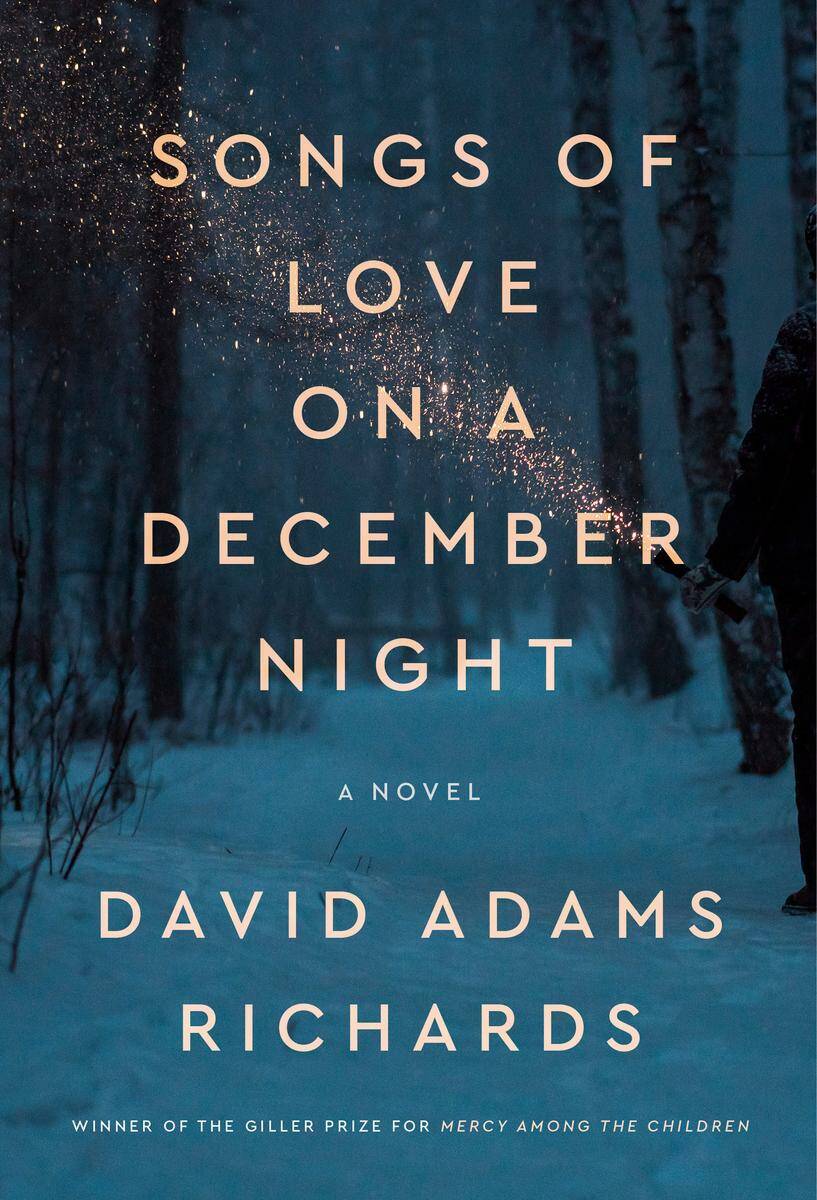
The beautifully titled Songs of Love on a December Night is a story about a murder and the ways in which that murder affects family, friends and neighbours of the victim.
Songs of Love on a December Night
Colonel Musselman is a well-liked and respected physician in the Miramichi region, but his son Jamie is an outcast, a quiet, bright and kind kid who is bullied, as so many victims of bullies are, for no discernible reason. When the doctor is found murdered, fingers immediately point to Jamie as the culprit, even though there is no motive or evidence to support such an accusation.
In the years that follow, that accusation lingers over Jamie and over the region like a fog. It alters Jamie’s life, of course, but also the lives of a variety of other local people, among them a career criminal, a homeless waif and a self-absorbed and discredited student activist and his hapless parents. It also has a tremendous and reverberating impact on Jamie’s eventual fiancée Gertie, her devout wheelchair-bound sister Pruty and her alcoholic father Shamus.
“He loved his daughters very much,” Richards writes about Shamus, “…but he had been too weak and too influenced by bad manners to be able to show it like other fathers supposedly did. He was always in trouble. For years he came home at dinnertime and would lock all the doors and tell them to lie if anyone asked for him.”
As Richards consistently does in much of his fiction, he relies here on sparse and direct prose to develop both his plot and his characters, and to accentuate their many foibles and failures. For the most part, this paucity of words works to great effect. No matter how few words or pages are assigned to them, each one of the many personalities introduced in this novel — almost all of whom are lost, lonely and feeling unloved — emerge as vivid and fully realized people.
As Richards has these individuals drift in and out of the narrative, he reveals that each one of them played a role in the events leading up to, during, or after Colonel Musselman’s murder. While interjecting his storytelling with a few odd digressions and some bits of quirky dialogue and inner monologue, he then pieces those disparate roles all together. In the process he reveals a universal truth: Some people want more than they have in life and will do anything to attain what they think they deserve, while others will do what is right even if they risk losing the little they have.

Musselman’s murder remains at the core of the novel, but Songs of Love on a December Night is not a murder mystery. Rather, it is an examination of how a yearning for acceptance makes people act and react in ways that they cannot always control or can seldom take back. The novel is unconventional in its telling, and may take some getting used to by readers, but ultimately it is a work of fiction with much to say, as David Adams Richards’ writing always does, about the human desire and need for validation, and to have someone or something to call your own.
Sharon Chisvin is a Winnipeg writer, editor and oral historian.