

Overlooked Métis leader proved influential
Advertisement
Read this article for free:
or
Already have an account? Log in here »
To continue reading, please subscribe:
Monthly Digital Subscription
$0 for the first 4 weeks*
- Enjoy unlimited reading on winnipegfreepress.com
- Read the E-Edition, our digital replica newspaper
- Access News Break, our award-winning app
- Play interactive puzzles
*No charge for 4 weeks then price increases to the regular rate of $19.95 plus GST every four weeks. Offer available to new and qualified returning subscribers only. Cancel any time.
Monthly Digital Subscription
$4.99/week*
- Enjoy unlimited reading on winnipegfreepress.com
- Read the E-Edition, our digital replica newspaper
- Access News Break, our award-winning app
- Play interactive puzzles
*Billed as $19.95 plus GST every four weeks. Cancel any time.
To continue reading, please subscribe:
Add Free Press access to your Brandon Sun subscription for only an additional
$1 for the first 4 weeks*
*Your next subscription payment will increase by $1.00 and you will be charged $16.99 plus GST for four weeks. After four weeks, your payment will increase to $23.99 plus GST every four weeks.
Read unlimited articles for free today:
or
Already have an account? Log in here »
Revisionist history is always noteworthy. It took less-biased examinations of past events to posthumously award Louis Riel his deserved recognition as the founder of a province, several decades after a politically motivated and hurried trial declared him guilty of treason and ensured his date with the gallows.
In similar ways, former educator Audrhea Lande’s cleverly titled On The Hunt for William Hallett demonstrates why re-examining Manitoba’s past does indeed matter, if only to fully understand why a street in Winnipeg is named after him (albeit spelled Hallet).
Now retired and residing in Ontario, Lande has a special interest in researching lesser-known Manitobans that has spawned published works such as Annie’s Bright Idea (2010), shortlisted for the Manitoba Book Awards’ McNally Robinson Book for Young People Award, and an award-winning biography of a pioneer teacher in Gimli, With Love to You All, Bogga S: Stories and Letters from the Remarkable Life of Sigurbjorg Stefansson (2011).
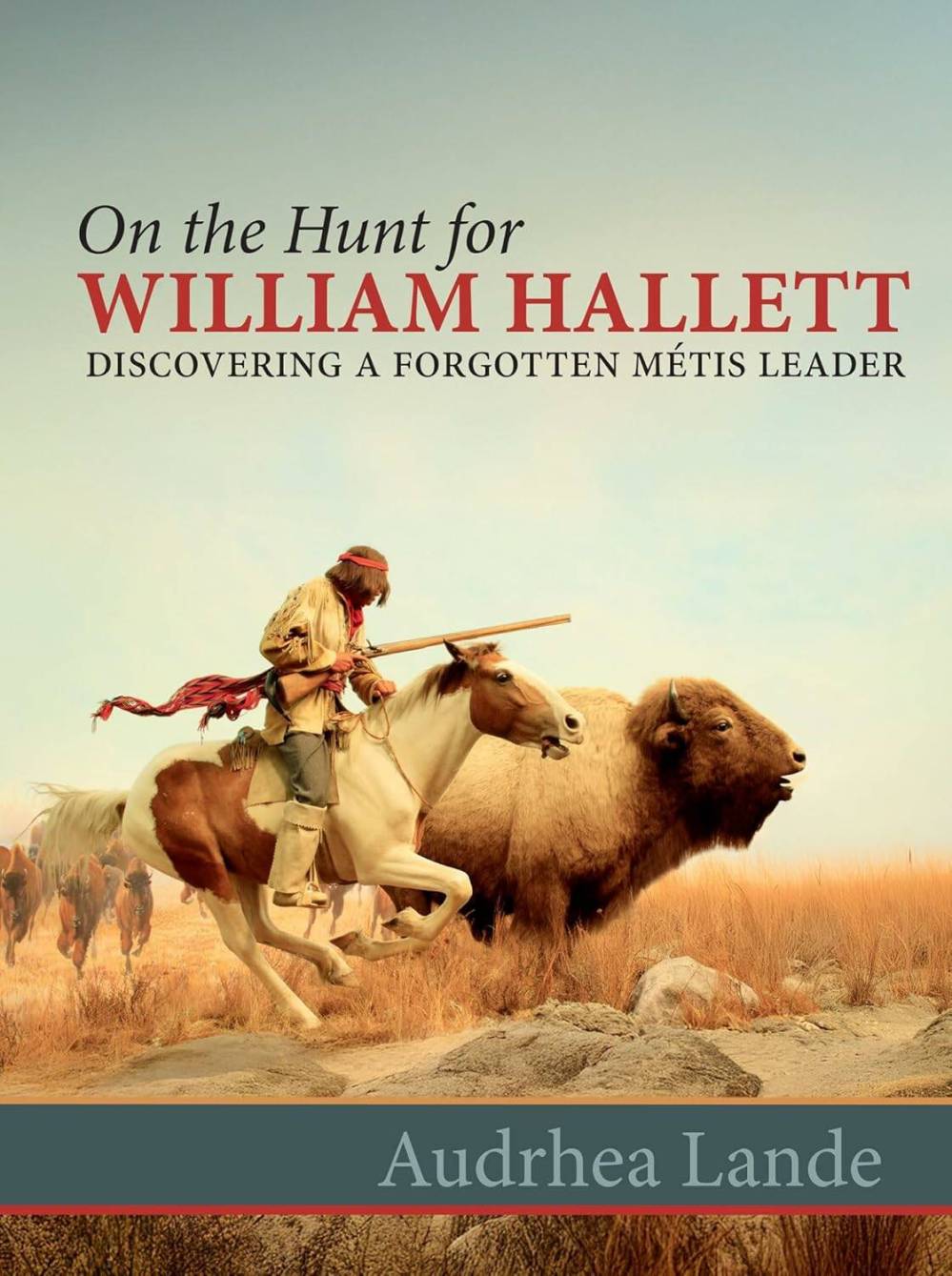
Her chosen person-of-interest in her latest tightly woven, personalized study was Métis, like Louis Riel, but William Hallett’s close association with Riel’s opponents and his tragic death by suicide in 1873 have assured him a less heroic stature than Riel’s.
Local and national historians have tended to depict Hallett as a guide-for-hire with relatively marginal community impact during Manitoba’s growth from colony to eventual province in 1870. But Lande’s intensive research suggests otherwise, portraying him as an overlooked but influential contributor to the province’s development.
Historically aligned with Riel’s strongest detractors because of his close association with a host of eastern English-speaking administrators deployed from Ottawa during the tumultuous 1869 Red River insurrection, Hallett is customarily viewed as a relatively minor, albeit briefly jailed, irritant for Riel during those troublesome times.
Employing scholarly methodology and relying heavily on archival copies of prints and photos from newspapers of the day and an impressive array of published works, Lande offers an alternative view to those held by well-known historians such as J.M. Bumstead and W.L. Morton, presenting credible reasons why Hallett should be remembered for reasons other than just his opposition to Riel.
Little-known or casually overlooked evidence supports her contention that Hallett, like Riel, played an instrumental role in the growth of the Red River Colony and the eventual granting of provincial status.
Writing that Hallett spoke French and English, while “also knowing the languages of the Dakota, Cree and that of his Blackfoot mother,” Lande contends that the support he garnered from all the First Nations leaders around Red River — including Chief Peguis, whose warrior band helped guard Lower Fort Garry during the 1869 insurrection — was a major factor in confining hostilities to Upper Fort Garry and preventing a much wider conflict.
When buffalo were still plentiful, Hallett was regularly chosen to lead the twice-yearly hunt, for reasons succinctly described in quotes gleaned from the local newspaper, Nor’Wester, proclaiming him as being “chieftain of a hundred battles… universally beloved and esteemed… against the Indian tribes around us his very name is a tower of strength.”
Canadian artist Paul Kane, arriving at Red River from Toronto in 1846, chose Hallett to escort him safely to places that inspired his paintings of the buffalo hunt, which became a template for the diorama now gracing the Manitoba Museum (and which adorns the book’s front cover).
As the preferred guide for people coming into Red River, Hallett was even trusted to escort the bride of a future lieutenant-governor into the region.
Hallett’s well-known dislike of the Hudson’s Bay Company and a shared concern over land rights never prompted a harmonious relationship with Riel. “I have come to the conclusion that it was Riel’s connections with the Americans that made it impossible for William Hallett to support Riel,” Lande writes.
American influence was one of the factors that made it difficult for Riel to bring consensus among the Red River inhabitants during the insurrection, but readers are reminded that in 1873, following Manitoba’s entry into Confederation, Hallett was chosen as chief scout for the Boundary Commission tasked with marking the 49th parallel, largely because of the respect he had garnered from French and English Métis who comprised the commission’s advance guard.
Joseph Hnatiuk is a retired teacher.