Truth be told
Herzog ruminates on life’s truths and fictions in enchanting, philosophical prose
Advertisement
Read this article for free:
or
Already have an account? Log in here »
To continue reading, please subscribe:

Digital Subscription
One year of digital access for only $205*
- Enjoy unlimited reading on winnipegfreepress.com
- Read the E-Edition, our digital replica newspaper
- Access News Break, our award-winning app
- Play interactive puzzles
*First annual payment billed as $205.00 + GST for one year. This annual subscription will automatically renew at $233.00 + GST every 52 weeks (10% off the regular annual price of $259.35). Offer available to new and qualified returning subscribers only. Cancel any time.
To continue reading, please subscribe:
Add Free Press access to your Brandon Sun subscription for only an additional
$1 for the first 4 weeks*
- Enjoy unlimited reading on winnipegfreepress.com
- Read the E-Edition, our digital replica newspaper
- Access News Break, our award-winning app
- Play interactive puzzles
*Your next Brandon Sun subscription payment will increase by $1.00 and you will be charged $17.95 plus GST for four weeks. After four weeks, your payment will increase to $24.95 plus GST every four weeks.
Read unlimited articles for free today:
or
Already have an account? Log in here »
Hey there, time traveller!
This article was published 27/12/2025 (284 days ago), so information in it may no longer be current.
The epigraph that starts off director Werner Herzog’s most recent book, The Future of Truth, recounts a Persian legend. “God had a great mirror, and when God looked in the mirror, he saw the truth.” Eventually God dropped the mirror, and the men of the world scrambled to pick up the pieces, with significant consequence: “They all looked into their own shards, saw themselves, and thought they saw the truth.”
Herzog’s work as a filmmaker and writer over the past six and a half decades is defined by a term he uses to describe the ultimate motivation of his creations. “Ecstatic truth” is the idea that one needs “stylization, invention, poetry, and imagination to locate a deeper layer of truth” that illuminates beyond mere facts. Herzog has employed numerous sleights of hand to achieve this ecstasy, and pulled it off a staggering number of times.
Ideas about truth are essential to Herzog’s work. In his 1997 film Little Dieter Needs to Fly, he invented a door-opening tic for his subject, former Vietnam prisoner-of-war Dieter Dengler, to emphasize the weight of small freedoms. For 1993’s Bells from the Deep, Herzog paid drunks to pretend they were pilgrims crawling around on Russia’s iced-over Lake Svetloyar searching for the lost city of Kitezh. He separates himself from run-of-the-mill liars and fakes because of a willingness to own up to his methods.
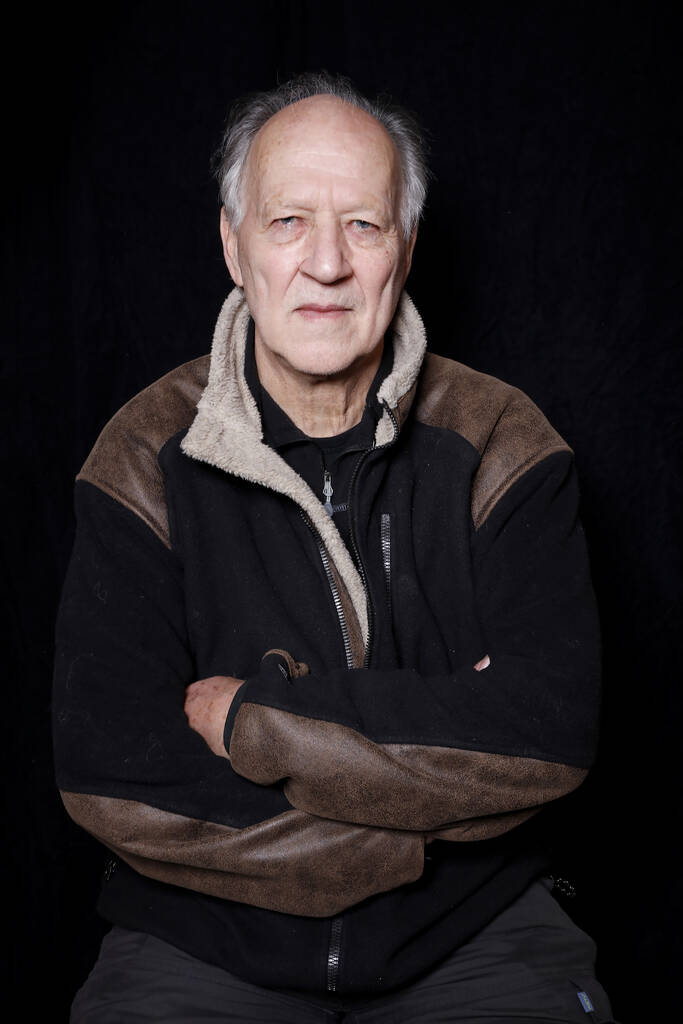
Matt Sayles / Associated Press files
Werner Herzog offers many examples of how ‘fake news’ has existed since the dawn of history.
Early in The Future of Truth, Herzog reveals the rub. “I will not and cannot engage in the philosophical debate about truth,” he writes. Instead, he flexes his encyclopedic mind, providing examples that prove “fake news” and other such embellishments that have altered reality have existed since the dawn of recorded history.
Just a few: Egyptian pharaoh Ramses II lying about his valiant victory during the Battle of Kadesh in 1275 BCE; the multiple Nero impersonators who popped up like so many Elvises after the disgraced Roman emperor’s death in 68 AD; the hastily constructed fake Potemkin villages erected in the late 18th-century to impress Catherine the Great with a thriving Crimean peninsula. Modern examples also abound, including ChatGPT poetry, deepfakes and a Herzog bot arguing ad infinitum with a Slavoj Žižek bot.
Those quite familiar with Herzog’s work will recognize a number of well-worn anecdotes, but here he shows more restraint in these moments than he sometimes does. The well-worn tales and Herzog-isms feel in service to the points he makes. There’s also a quality in the way Herzog put this book together that expresses maybe his greatest gift — it feels like hearing stories about the strangeness of the world from a friend who has an insatiable desire for knowledge of everything under the sun and beyond.
One common piece of Herzogian advice is “read, read, read, read, read.” His body of work epitomizes this ethos in its dizzying expanse; his writing, especially in The Future of Truth, reflects it small-scale, taking readers on a swift ride through a weird history of hand-selected events that uncovers more questions about this idea that profoundly affects us all.

There is some practical learning to be had, too. Because of his vast literary intake, filmmaking experiences and openness to the world, Herzog has a master con artist’s grasp on the conditions necessary for people to perceive something as true.
At some points he directly stresses the self-preservational significance of media literacy, but the examples he chooses to write about illuminate ways in which readers can better develop that skill. And it’s no small thing — as corporations wrestle to mediate our time and experience of the world, Herzog wonders, “How much are we willing to delegate? How much of our autonomy are we prepared to renounce? My questions come down to this: Are we really willing to give up thinking, give up dreaming?”
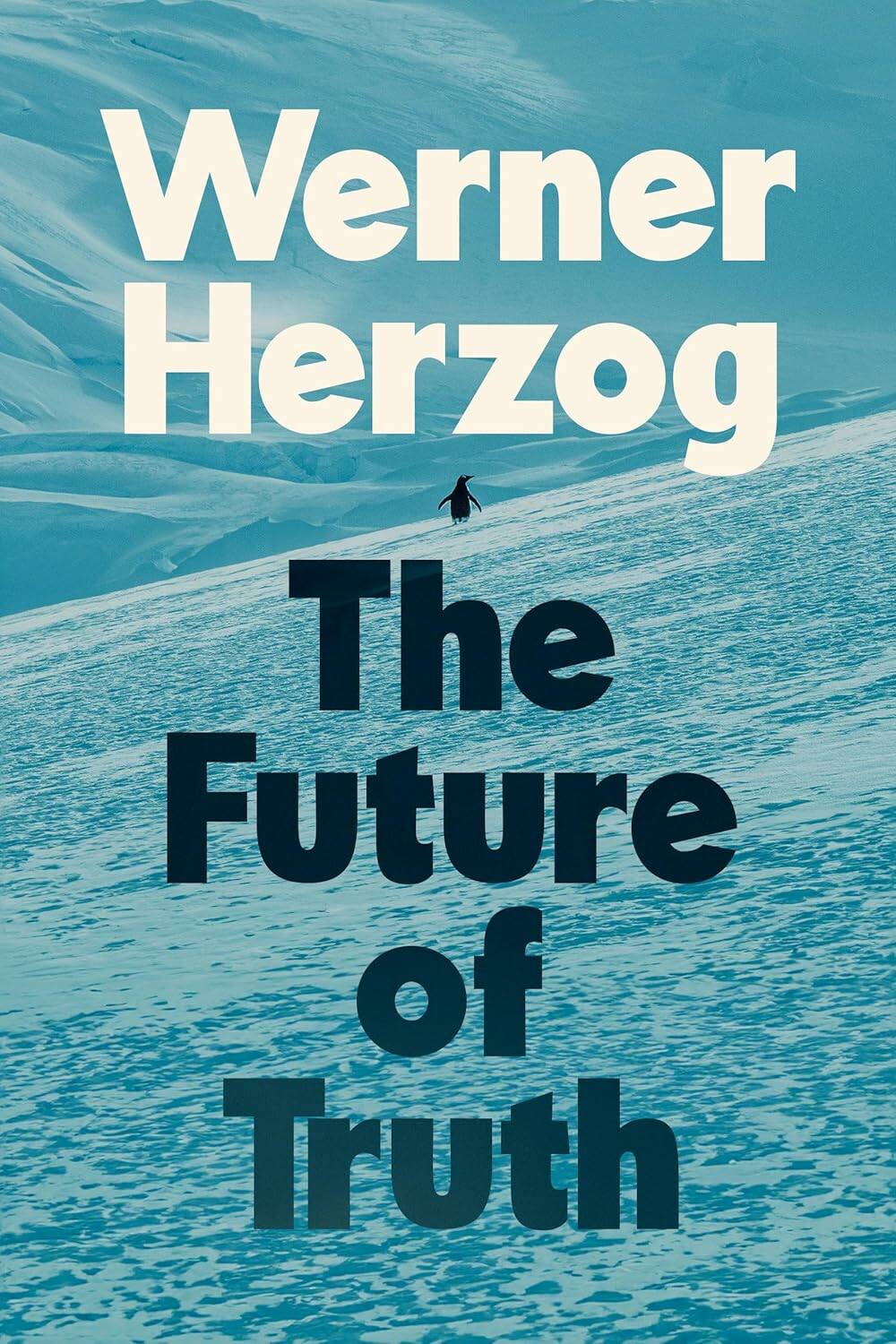
The Future of Truth
Media literacy best practice No. 1 is: Don’t believe everything you see or read. As Herzog and many magicians might tell you, making believers requires creation of a hospitable environment — like a book.
Most of the first-page Google results for the aforementioned Persian mirror legend lead to social media posts attributing it to the Sufi poet Rumi. Will you trust a meme? Is it a real Persian legend? Did Rumi actually write it? Does it matter?
Matt Horseman is a writer and photographer.