A riveting refrain
Robertson’s new batch of musician profiles melds music criticism, biography
Advertisement
Read this article for free:
or
Already have an account? Log in here »
To continue reading, please subscribe:

Digital Subscription
One year of digital access for only $205*
- Enjoy unlimited reading on winnipegfreepress.com
- Read the E-Edition, our digital replica newspaper
- Access News Break, our award-winning app
- Play interactive puzzles
*First annual payment billed as $205.00 + GST for one year. This annual subscription will automatically renew at $233.00 + GST every 52 weeks (10% off the regular annual price of $259.35). Offer available to new and qualified returning subscribers only. Cancel any time.
To continue reading, please subscribe:
Add Free Press access to your Brandon Sun subscription for only an additional
$1 for the first 4 weeks*
- Enjoy unlimited reading on winnipegfreepress.com
- Read the E-Edition, our digital replica newspaper
- Access News Break, our award-winning app
- Play interactive puzzles
*Your next Brandon Sun subscription payment will increase by $1.00 and you will be charged $17.95 plus GST for four weeks. After four weeks, your payment will increase to $24.95 plus GST every four weeks.
Read unlimited articles for free today:
or
Already have an account? Log in here »
Hey there, time traveller!
This article was published 03/01/2026 (240 days ago), so information in it may no longer be current.
The problem with clichés is that their easy familiarity often comes to hide any underlying insight. Preaching to the choir may be easier than converting the unenlightened, but both require specific talents.
Canadian writer Ray Robertson, author of nearly 20 works of fiction, non-fiction and poetry, returns with Dust, a work that explores and celebrates a number of influential, if not always well-known, musicians. This accessible book will appeal to both musical experts and neophytes.
Dust is a compelling blend of music criticism and biographical and historical storytelling, a thematic followup to 2016’s Lives of the Poets (With Guitars). Traversing much of the 20th century and with little concern for conformity to musical genre, Robertson shares his love of music and the often-iconoclastic performers who pushed their art into new territory. His goal along the way is not to simply share interesting anecdotes, but instead to develop a shared experience of music with readers.

Supplied photo
Ray Robertson
Chapters aren’t tied by chronology or style. There is blues, rock, jazz and country — sometimes within the same portrait. One third of the musicians profiled died before age 30; addictions, mental health struggles and poverty abound. Yet for every Nick Drake, dead at 26, there is a Muddy Waters or the Staple Singers, who lived long, if not always unchallenging, lives.
Robertson has a particular talent at finding the most fascinating entranceways into his subjects, as is especially evident in chapters on Alex Chilton and Duane Allman. He ties their lived experience with the music that survived them and, in doing so, both story and song are reciprocally enriched.
Respect for his subject matter is apparent in the way Robertson is able to balance the often mercurial and unprofessional leadership of Don Van Vliet, better known as Captain Beefheart, with his intuitive, obsessive reinterpretation of familiar musical conventions and ideas.
Nico is never reduced to a spiraling drug addict; her substance-use challenges are told even-handedly while emphasizing her relentless efforts to translate an interior experience into the languages of harmony, melody and atmosphere.

Unsurprisingly for an authority with a substantial catalogue, Robertson is in command of a distinct, approachable voice. He welcomes readers into a set of compelling narratives, sharing his perspectives while leaving space for the readers’ own reflections. Opinion never comes at the expense of dogmaticism; critique may be occasionally sharp, but is never mean and often leavened by a well-timed sense of humour.
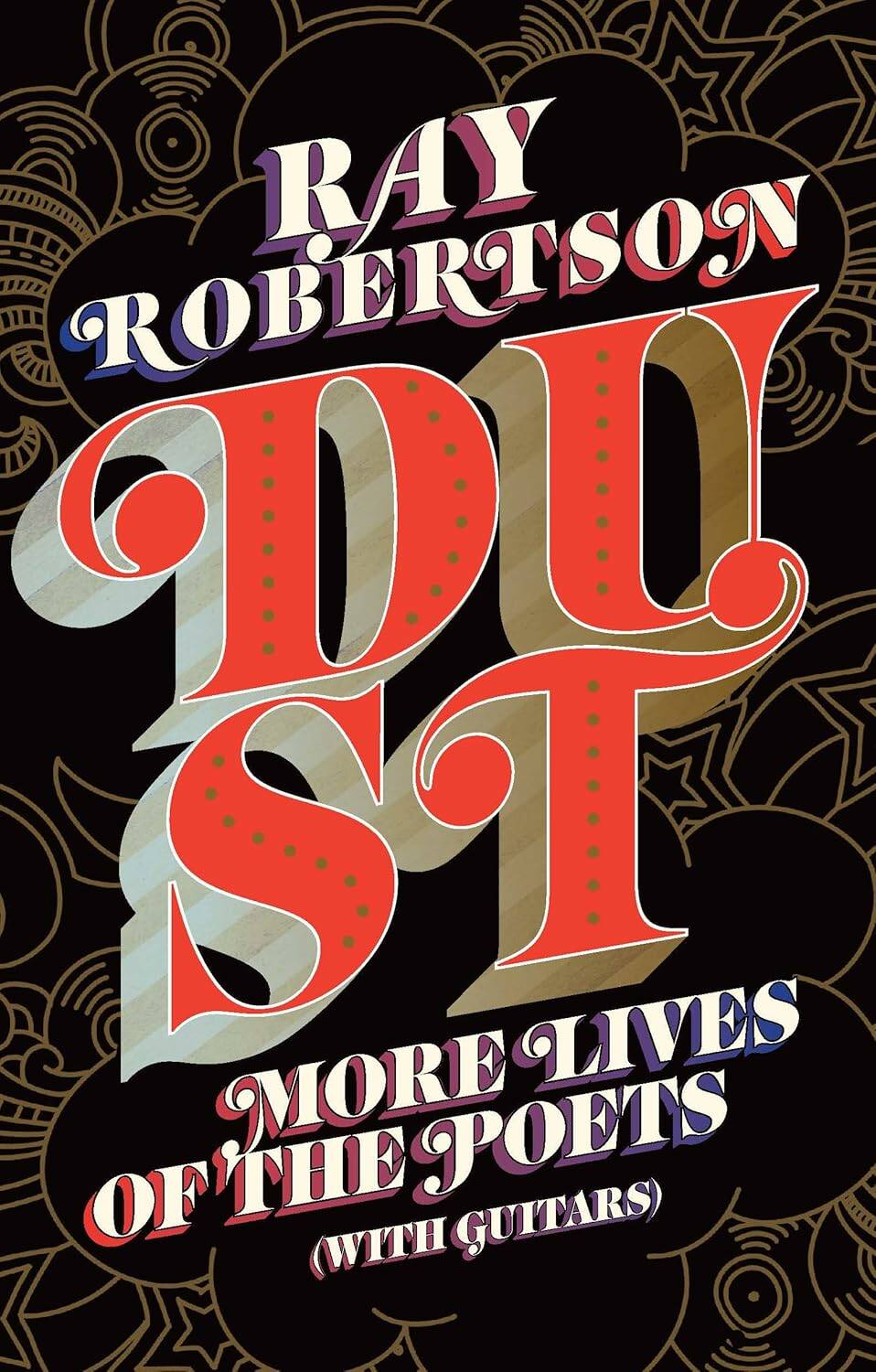
Dust
The primary frustration with Dust is that it is unabashedly consistent about what it does and does not attempt to communicate. It’s not an exhaustive history of any of its subjects, which leaves a number of somewhat frustrating holes. The Staple Singers were a family musical group, but the matriarch of the family quickly disappears from the story. We are told that a Ouija board session was disturbing to blues phenom Duster Bennett, but the story peters out without further detail. Even a later attempt at exorcism feels unconnected and inconclusive.
Ariel Gordon’s Fungal, reviewed in these pages last year, shone in the way it took a familiar activity — walking in urban environments — and made it new and exciting. Dust is particularly outstanding in a similar fashion: it opens familiar music in surprising and enriching ways while encouraging further exploration.
Dust contains enough diversity of time, place and subject to provide something of interest to nearly any reader. Stylistically, it’s a work that can be read in fits and starts, though the temptation to read just one more chapter is difficult to resist. One word of advice: you’ll want to have a way to play some of this music as you read.
Jarett Myskiw dedicates this review to Ken Wonko, who knew good music.

Jack Plunkett / Associated Press files
Ray Robertson ties the lived experience of musicians such as the late Alex Chilton of Big Star, seen here in 2004, with the music that survived them; in doing so, both story and song are reciprocally enriched.

D. Shigley photo
Muddy Waters