Body’s cellular makeup leads to big, existential questions
Advertisement
Read this article for free:
or
Already have an account? Log in here »
To continue reading, please subscribe:

Digital Subscription
One year of digital access for only $205*
- Enjoy unlimited reading on winnipegfreepress.com
- Read the E-Edition, our digital replica newspaper
- Access News Break, our award-winning app
- Play interactive puzzles
*First annual payment billed as $205.00 + GST for one year. This annual subscription will automatically renew at $233.00 + GST every 52 weeks (10% off the regular annual price of $259.35). Offer available to new and qualified returning subscribers only. Cancel any time.
To continue reading, please subscribe:
Add Free Press access to your Brandon Sun subscription for only an additional
$1 for the first 4 weeks*
- Enjoy unlimited reading on winnipegfreepress.com
- Read the E-Edition, our digital replica newspaper
- Access News Break, our award-winning app
- Play interactive puzzles
*Your next Brandon Sun subscription payment will increase by $1.00 and you will be charged $17.95 plus GST for four weeks. After four weeks, your payment will increase to $24.95 plus GST every four weeks.
Read unlimited articles for free today:
or
Already have an account? Log in here »
Hey there, time traveller!
This article was published 03/01/2026 (281 days ago), so information in it may no longer be current.
When we say “myself,” we don’t usually mean our cells and DNA; we tend to treat that universe of our material being as relatively stable.
Even if we know that we’re at high risk of developing certain inheritable diseases and disorders, that we grow old and weaken or that we’re the home planet for billions of bacteria, viruses and parasites, our material being doesn’t usually factor in to our ongoing quest of self-discovery.
Sure, we know it’s complicated — there’s a confusing blend of innateness (genetics) and response to the environment that impacts the expression of that hereditary lineage (epigenetics). But basically, we may subconsciously believe something like, “I have a body and a mind that are unique and mine and that somehow relate to my idiosyncratic genetic blueprint.”
File photo
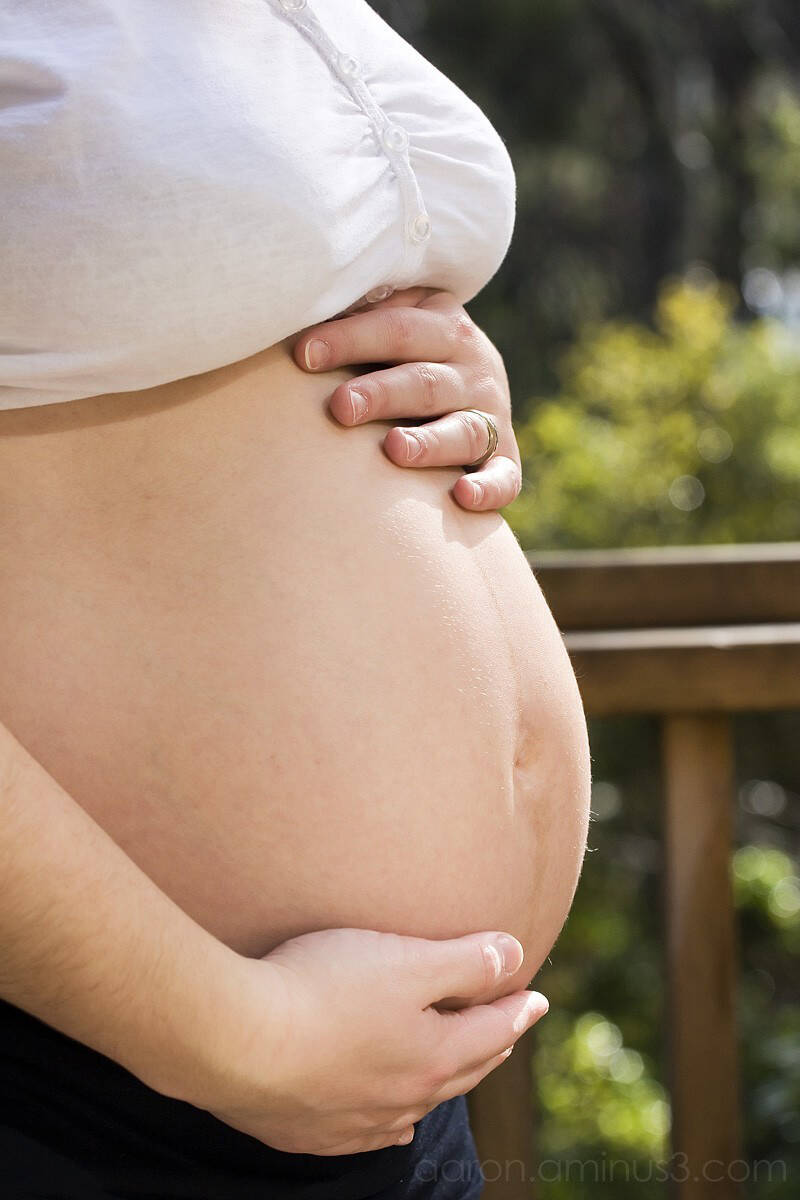
Pregnancy is the most straightforward, obvious way cells are shared between humans.
Well, maybe not so fast.
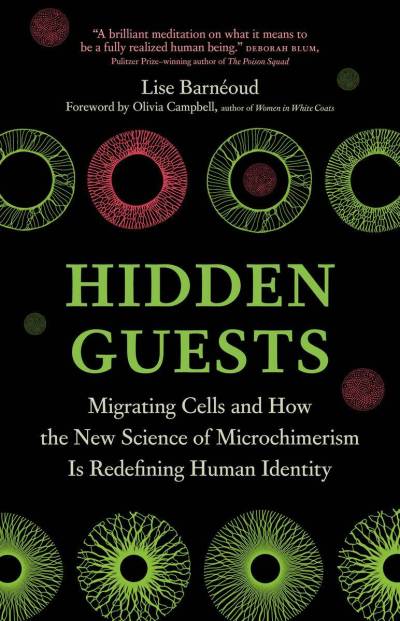
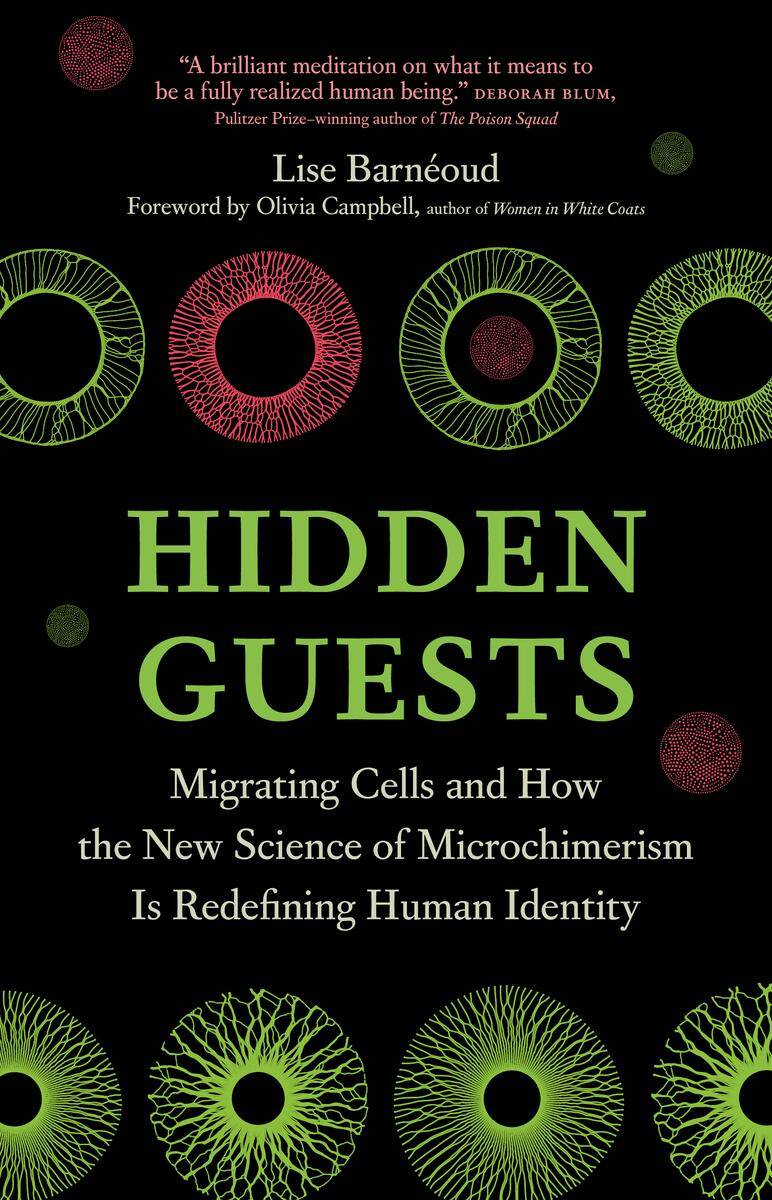
French science journalist and author Lise Barnéoud’s first book Hidden Guests is a fascinating, well-researched, atmospheric book on micro-chimerism — the presence of genetically distinct cells from one person circulating in another person.
Even the name scientists have given this phenomenon, Barnéoud says, conveys a sense of the mythic and mysterious, and reflects the sense of awe and even fear in the face of the monstrous or sublime. “We contain multitudes” is a refrain that runs throughout the book.
Since the early 2000s, we’ve known that half of the cells in our bodies are “microbial” — belonging to bacteria, viruses and the like. But until recently, the other, human half of us was assumed to be a bounded biological cosmos of ourselves.
It turns out the part of us that is cellularly human isn’t only made of our own cells. And in that case, Barnéoud asks, “What if we have never been individuals?”
The most obvious situation in which one person is enclosed in another, Barnéoud says, is pregnancy. One to five per cent of the cells in the bodies of pregnant people originate from the fetus they are carrying; this goes both ways, as maternal cells can enter the bodies of fetuses.
But microchimerism is broader than this. Yes, we contain the cells of our mothers and our mothers contain our cells, but we also contain the cells of our mother’s mother, or possibly our mother’s siblings (if she wasn’t a first-born child), of our mother’s or our own vanished fetal twin. The list goes on.
The behaviour of these “other” cells in our bodies is fascinating, both consoling and fearsome. Exploring the dimensions of that behaviour — and especially the evolving realization that these cellular others can be beneficial rather than “dark” and destructive — is one of the book’s propulsive engines, and Barnéoud does this with energy and clarity.
Hidden Guests
As well as being a well-ordered, entertaining narrative of scientific discovery, Barnéoud offers an analysis of the language scientists use to describe their research, showing how familiar phrases and metaphors can overdetermine the initial analysis of results. Immersing herself in scientific articles on immunology (some of micro- chimerism’s discoverers are immunologists), Barnéoud kept seeing the words “borders,” “migrants,” “invasions,” “foreigners,” “defense,” “replacement” and “identity.” “Our immune system,” she writes, “was supposed to represent the fortress of our self, our stronghold against the non-self.”
Given this “nationalist lexicon,” Barnéoud asks, is it any wonder that microchimerism was initially assumed to have a purely negative impact on our health?
Hidden Guests is a fascinating read, conveying a genuine feeling of wonder. Barnéoud provides reams of strange and exciting information as well as interviews with long-standing experts in the field. It’s pitched well for popular audiences, and includes significant notes for those inclined to conduct more research.
This isn’t only an interesting and informative book (though it is that) — it offers an exhilarating new way to reimagine our basic existential co-ordinates: “The non-self is within us, from our very beginnings and for always.”
Seyward Goodhand is a Winnipeg writer and instructor.