Punk’s poet laureate
Patti’s Smith’s new memoir a wide-ranging look at life on and off the stage
Advertisement
Read this article for free:
or
Already have an account? Log in here »
To continue reading, please subscribe:

Digital Subscription
One year of digital access for only $205*
- Enjoy unlimited reading on winnipegfreepress.com
- Read the E-Edition, our digital replica newspaper
- Access News Break, our award-winning app
- Play interactive puzzles
*First annual payment billed as $205.00 + GST for one year. This annual subscription will automatically renew at $233.00 + GST every 52 weeks (10% off the regular annual price of $259.35). Offer available to new and qualified returning subscribers only. Cancel any time.
To continue reading, please subscribe:
Add Free Press access to your Brandon Sun subscription for only an additional
$1 for the first 4 weeks*
- Enjoy unlimited reading on winnipegfreepress.com
- Read the E-Edition, our digital replica newspaper
- Access News Break, our award-winning app
- Play interactive puzzles
*Your next Brandon Sun subscription payment will increase by $1.00 and you will be charged $17.95 plus GST for four weeks. After four weeks, your payment will increase to $24.95 plus GST every four weeks.
Read unlimited articles for free today:
or
Already have an account? Log in here »
Hey there, time traveller!
This article was published 03/01/2026 (269 days ago), so information in it may no longer be current.
Patti Smith’s career as a punk rocker blazed in the late 1970s. Her debut album, Horses, just reissued as a 50th-anniversary edition, regularly appears on lists of all-time top albums and inspired the likes of, among many others, Michael Stipe and Peter Buck of R.E.M.
Smith, now 79, has released multiple memoirs — 2010’s Just Kids, about her relationship with photographer Robert Mapplethorpe, and 2015’s M Train — as well as numerous books of poetry and other art. Bread of Angels is more a full autobiography, often quite effectively melding her interior thoughts with important events and people.
A short preface introduces a recurring theme: rebel hump. The idea of not quite fitting in may help Smith “disguise the miniature Quasimodo trapped inside an awkward child’s body.”
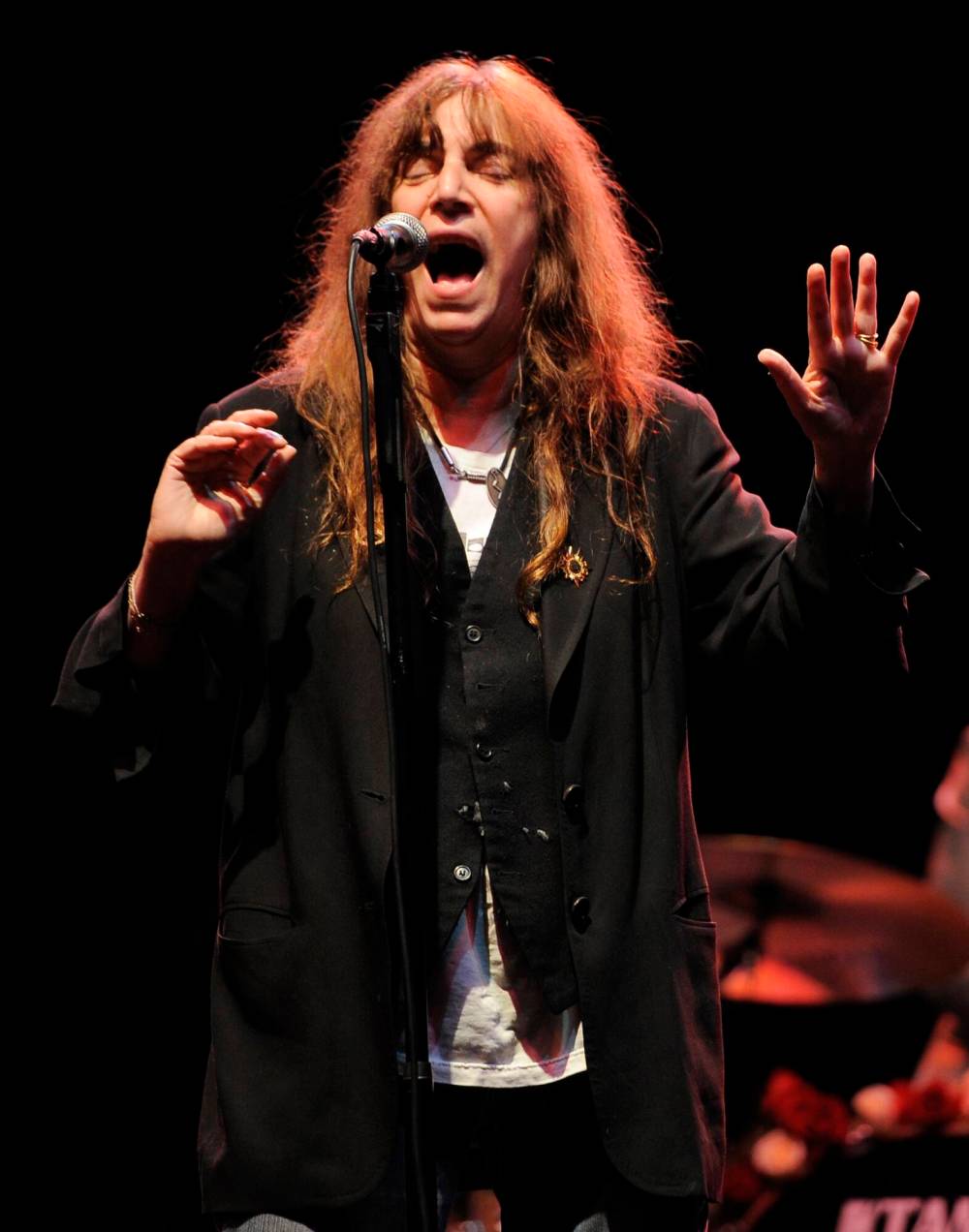
Chris Pizzello / Associated Press files
The prose in Patti Smith’s latest memoir tends to meander, encouraging re-reading and contemplation.
Rambling chapters chronicle her Philadelphia upbringing, a sickly child determined to make her own way. “I did not want to grow up,” she says, and rejects the Bible study in her mother’s Jehovah’s Witness experience.
In short order Smith experiences the art of Pablo Picasso during a family museum visit, becomes enchanted with opera and discovers French poet Arthur Rimbaud. “I had fallen for art,” she writes.
Smith’s prose tends to meander, swirling concrete items and ethereal musings, encouraging re-reading and contemplation.
Finding that religious elders see no place for art in the religion’s “New World,” she considers her own beliefs, “an equation that would include all things. God the infinite realm, Jesus the human bridge, and the artist the material mouthpiece.”
Moving to New York’s art scene in the mid-‘60s, Smith recalls encounters with Bob Dylan, playwright Sam Shepard (with whom she wrote the play Cowboy Mouth in 1971) and Tom Verlaine and Richard Hell of the punk band Television.
Performing poetry accompanied by music, she eventually moves into playing guitar and recording. While she recounts musical influences in her youth, she never tells about learning to play guitar — or that she was considered as replacement vocalist for the band Blue Öyster Cult.
Horses was followed the next year by Patti Smith Group’s Radio Ethiopia, which was received with mixed reviews. The group recorded their third album, 1978’s Easter, with engineer Jimmy Iovine, who offered her Bruce Springsteen’s abandoned song Because the Night.
With Smith’s rewritten lyrics, Because the Night became the band’s biggest hit. Smith says the song could have been even more popular, if the group had done more traditional promotional activities like lip-syncing the song on TV for Dick Clark.
The Patti Smith Group recollections are part of Bread of Angels’ most engaging middle section. After the fourth album, 1979’s Wave, Smith was tired of the music business, refusing, for example, to change the word “heroine” in the song Dancing Barefoot at the record company’s request. The band lost almost all their equipment, and some of Smith’s treasured possessions, when a truck was stolen before a performance.

Bread of Angels
During the Horses tour, Smith had met her soulmate, Fred “Sonic” Smith of the seminal punk band MC5. It was love at first sight, and she was tired of careers separating them. Tender recollections of their life together with their two children before his death in 1994 complete the middle section of Bread of Angels.
Fred’s death was followed too quickly by that of her brother Todd. She also discovers vaguely foreshadowed details about her family history.
The rest of Bread of Angels continues to roam, skimming her life into the 21st century (which finds her still performing). Her “rebel hump” continues to be entranced by various kinds of art, especially writing.
“This is what the writer craves,” she writes early on. “The unsullied memory of unpremeditated gestures of kindness. These are the bread of angels.”
Not a tell-all or an in-depth analysis of music, Bread of Angels poignantly and satisfyingly expresses what has been important to Patti Smith.
Bill Rambo is a retired teacher living in Landmark. His affinity for Springsteen’s music was his gateway to the sublime punk of the Patti Smith Group.