Beloved medieval queen’s path pursued
Advertisement
Read this article for free:
or
Already have an account? Log in here »
To continue reading, please subscribe:

Digital Subscription
One year of digital access for only $205*
- Enjoy unlimited reading on winnipegfreepress.com
- Read the E-Edition, our digital replica newspaper
- Access News Break, our award-winning app
- Play interactive puzzles
*First annual payment billed as $205.00 + GST for one year. This annual subscription will automatically renew at $233.00 + GST every 52 weeks (10% off the regular annual price of $259.35). Offer available to new and qualified returning subscribers only. Cancel any time.
To continue reading, please subscribe:
Add Free Press access to your Brandon Sun subscription for only an additional
$1 for the first 4 weeks*
- Enjoy unlimited reading on winnipegfreepress.com
- Read the E-Edition, our digital replica newspaper
- Access News Break, our award-winning app
- Play interactive puzzles
*Your next Brandon Sun subscription payment will increase by $1.00 and you will be charged $17.95 plus GST for four weeks. After four weeks, your payment will increase to $24.95 plus GST every four weeks.
Read unlimited articles for free today:
or
Already have an account? Log in here »
Hey there, time traveller!
This article was published 31/01/2026 (213 days ago), so information in it may no longer be current.
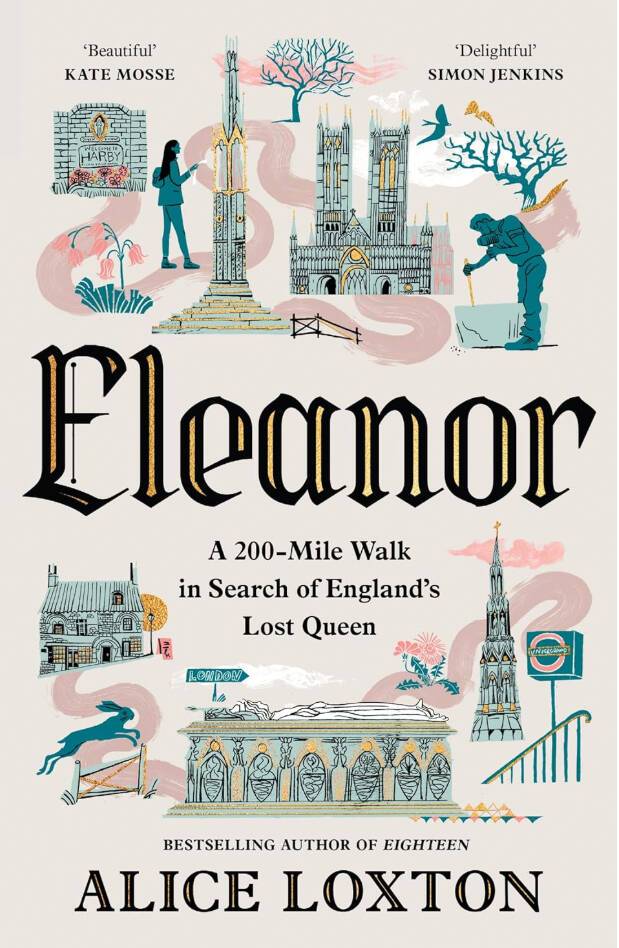
Who’s up for a 320-kilometre hike in memory of a long-dead and largely forgotten English queen?
The answer would be young historian Alice Loxton. Imagine TV’s history presenter Lucy Worsley in hiking boots, and you’ve got the picture.
The queen in question, Eleanor of Castile — not to be confused with other queens named Eleanor — was so beloved by her main squeeze, King Edward I, that upon her untimely death in 1290, he saw to it that 12 impressive and different crosses were erected along the funeral route to bring her remains from where she died in Harby in Lincolnshire down to London to rest (in splendour) in Westminster Abbey. Her heart was buried elsewhere.
It took five years to commission the stonework; once completed, they dominated the landscape.
It takes some chutzpah to write an entire book focused on the crosses when only three of the 12 are still standing, and the term “crosses” may have meant crossroads, just to add to the haziness of what is known.
As the Brits would say, Alice is up for it. Loxton did her homework before she set out, bought suitable gear for trudging through mud, rain and wind (and around the occasional cow), made good use of the famous Ordnance Survey maps (there’s even an app now) and remembered to pack suitable snacks for energy.
The approach here is similar to the one Loxton took in her previous book, Eighteen: A History of Britain in 18 Young Lives, which profiles Brits ranging from Geoffrey Chaucer to Vivienne Westwood. They’re snappy, lively and readable portraits from an author familiar with the Horrible Histories children’s franchise and W.C. Sellar and R.J. Yeatmans’ classic book 1066 and All That.
Loxton delights in revealing and making human those figures who have vanished beneath the myths and exaggerated tales surrounding them, who have been hard done by in the writings of previous historians and, in the case of women, restoring them to their rightful place as active participants.
There’s no cancel culture at work here, as Loxton says of Edward I, “it is imperative to measure him by the expectations and standards of the time, as any of us would expect to be judged by the values of 2025.”
This is particularly true of Eleanor of Castile, who has been pilloried and demonized. Loxton points out that Eleanor was an active participant, along with her husband, on pilgrimages, campaigns, planning and charitable works.
Loxton certainly brings out the romance in the marriage, and some passages call for a hanky or two.
Finally she sums up the purpose and the reward of the marathon walk when she says, “I had been unsure of myself, not knowing whether I was a historian, tourist, visitor or rambler… All these aspects came under the pilgrimage umbrella, where the journey itself was just as important as the destination.
“The important thing was to open yourself up to experience the unexpected, to stay permeable to the world as it unravels before you.”
Ron Robinson was in London when the Queen Mum died and witnessed the pomp and ceremony.