Ukrainian boy nabbed in haunting new novel
Advertisement
Read this article for free:
or
Already have an account? Log in here »
To continue reading, please subscribe:

Digital Subscription
One year of digital access for only $205*
- Enjoy unlimited reading on winnipegfreepress.com
- Read the E-Edition, our digital replica newspaper
- Access News Break, our award-winning app
- Play interactive puzzles
*First annual payment billed as $205.00 + GST for one year. This annual subscription will automatically renew at $233.00 + GST every 52 weeks (10% off the regular annual price of $259.35). Offer available to new and qualified returning subscribers only. Cancel any time.
To continue reading, please subscribe:
Add Free Press access to your Brandon Sun subscription for only an additional
$1 for the first 4 weeks*
- Enjoy unlimited reading on winnipegfreepress.com
- Read the E-Edition, our digital replica newspaper
- Access News Break, our award-winning app
- Play interactive puzzles
*Your next Brandon Sun subscription payment will increase by $1.00 and you will be charged $17.95 plus GST for four weeks. After four weeks, your payment will increase to $24.95 plus GST every four weeks.
Read unlimited articles for free today:
or
Already have an account? Log in here »
Hey there, time traveller!
This article was published 14/02/2026 (238 days ago), so information in it may no longer be current.
Since the Feb. 24, 2022, Russian invasion of Ukraine, the Russian government has abducted around 20,000 Ukrainian children and forcibly “adopted” them into Russian families.
This harrowing novel imagines the experiences of one of these children.
Marc Levy debuted as a novelist with his 1999 novel If Only It Were True, which was adapted into the 2005 Hollywood rom-com Just Like Heaven.
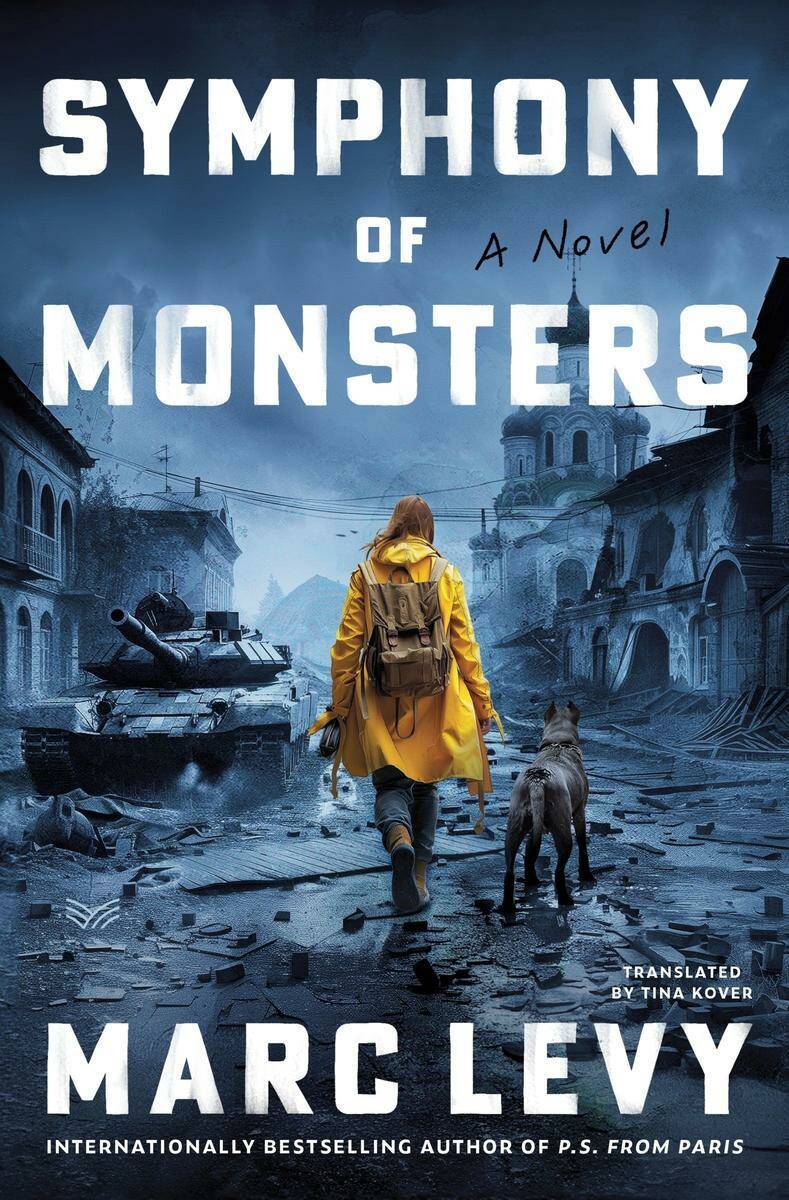
Symphony of Monsters
Symphony of Monsters takes a decidedly different tone, focusing on themes of family, genocide, tyranny and resilience.
Though the story is fiction, the French author features real-life figures and uses newspaper-like prose that makes the story feel more like reporting than fiction.
It’s a style reminiscent of Thomas Keneally in his 1982 novel Schindler’s Ark, later adapted into the timeless film Schindler’s List by Steven Spielberg.
Levy begins in eastern Ukraine in 2023.
Nine-year-old Valentyn, a brilliant, loving and non-speaking boy from a close-knit family, knows something is wrong when he sees Russian army trucks through his classroom windows.
The school staff know it too, holding off the soldiers at the doors while telling students to escape through the emergency exits. Only Valentyn doesn’t make it.
When his mother Veronika and sister Lilya beg the Russian administrator for information, he tells them Valentyn has been sent to “boarding school.”
“You should be grateful and thank us; the Russian government’s mission is to protect minors, whatever their nationality,” the administrator admonishes them.
However, Valentyn recognizes the true purpose of the school: to assimilate them into model Russians by stripping their Ukrainian identities and forbidding them from speaking Ukrainian.
As the school matron explains, “they’d have to forget everything they thought they knew, because what they’d been taught so far was a pack of lies… here they’d be taught real geography, real history, and of course, they’d perfect their only true language, Russian.”
Valentyn launches an escape plan but knows he must be quick before the facility relocates him to live with a Russian family.
Meanwhile, Veronika and Lilya connect with a network of hackers dedicated to undermining and exposing the Russian army and government’s atrocities.
They’re hoping the group can not only rescue Valentyn but expose the cruelty of the Russian regime to the world.
Alongside the harrowing story of Valentyn, Levy folds in details and insights of people living through an invasion.
The Russians ban and remove “seditious” books from local libraries, sexually assault women and children, restrict vital supplies from reaching Ukraine and plant landmines for fun.

Levy does lighten the story with occasional scenes of grim humour and even romance, underlining resilience in times of unbelievable darkness.
He draws parallels between the Russian regime’s abduction of Ukrainian children from their families with the American government’s separation of migrant families: “It was a man named Miller in the United States who came up with the idea of separating migrant children from their parents and holding them in American detention centres, to deter others from crossing the border,” one of the hackers tells Veronika.
Canadian readers will draw further parallels between the abduction and forced assimilation of Ukrainian children with the Canadian residential school system and the ’60s Scoop.
Ultimately, Levy points the finger at people in positions of power and bystanders who refuse to act, noting “Large-scale atrocities require a collective agreement.”
Kathryne Cardwell is a Winnipeg writer.