

Paths to prosperity
Economic growth in African nations offers insight into continent’s potential
Advertisement
Read this article for free:
or
Already have an account? Log in here »
To continue reading, please subscribe:
Monthly Digital Subscription
$1 per week for 24 weeks*
- Enjoy unlimited reading on winnipegfreepress.com
- Read the E-Edition, our digital replica newspaper
- Access News Break, our award-winning app
- Play interactive puzzles
*Billed as $4.00 plus GST every four weeks. After 24 weeks, price increases to the regular rate of $19.95 plus GST every four weeks. Offer available to new and qualified returning subscribers only. Cancel any time.
Monthly Digital Subscription
$4.99/week*
- Enjoy unlimited reading on winnipegfreepress.com
- Read the E-Edition, our digital replica newspaper
- Access News Break, our award-winning app
- Play interactive puzzles
*Billed as $19.95 plus GST every four weeks. Cancel any time.
To continue reading, please subscribe:
Add Free Press access to your Brandon Sun subscription for only an additional
$1 for the first 4 weeks*
*Your next subscription payment will increase by $1.00 and you will be charged $16.99 plus GST for four weeks. After four weeks, your payment will increase to $23.99 plus GST every four weeks.
Read unlimited articles for free today:
or
Already have an account? Log in here »
By the end of this century, the African continent may be home to 40 per cent of the world’s population. The “darkness” with which much of the world sees Africa will no longer be tenable — neither ignorance which dismissed it in the past, nor current Westerners’ general ignoring of the continent.
So claims Cambridge-based emerging economies expert Joe Studwell in this careful analysis of obstacles to development and varying strategies for African progress.
Studwell’s 2014 How Asia Works examined that continent’s 20th-century rise from poverty to international prominence. It also prompted leaders in Ethiopia and Rwanda to seek him out for insight on implementing the Asian model in Africa.
Vadim Ghirda/ Canadian Press files
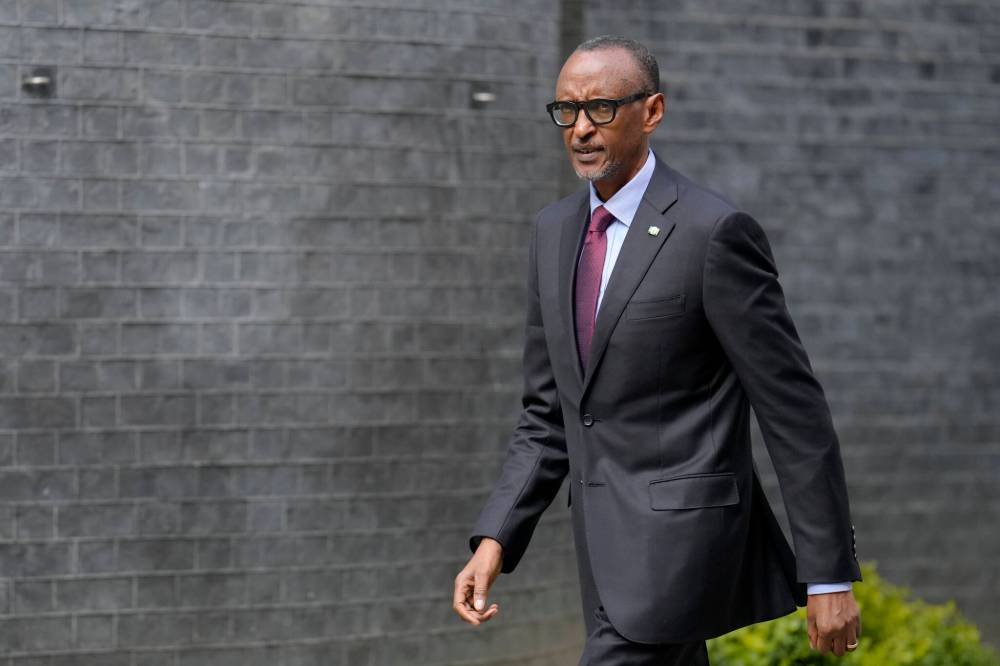
Rwandan President Paul Kagame
At independence in the 1950s and ’60s, Studwell notes, Africa had perhaps 220 million people. By 2050, it will be 2.5 billion. While poverty in Africa has lessened, it remains the poorest continent.
Studwell emphasizes three main problems: Low population density that alienated many ethnic groups; “low budget colonialism” that extracted resources but left sparse populations largely uneducated and unprepared to run governments; and colonialism, which divided up the continent without regard for local populations.
“When exiting Africa,” Studwell says, “most European powers encouraged democratic elections, but without creating the conditions in which democracy could bed down … Post-independence African governments were caught between trying to emulate European political systems for which they lacked resources, and attempting to end traditional, aristocratic governance systems … that proved remarkably durable.”
Studwell details four examples of successful development: Botswana, Mauritius, Ethiopia and Rwanda. In each case, a combination of cooperation and coalition governments moved from mere resource extraction to manufacturing and export, or encouraged and enabled better agriculture (or both), with promising results.
The four countries examined may surprise some Westerners, who might consider the Rwandan genocide of the 1990s and the abject famine in Ethiopia in the ’80s.
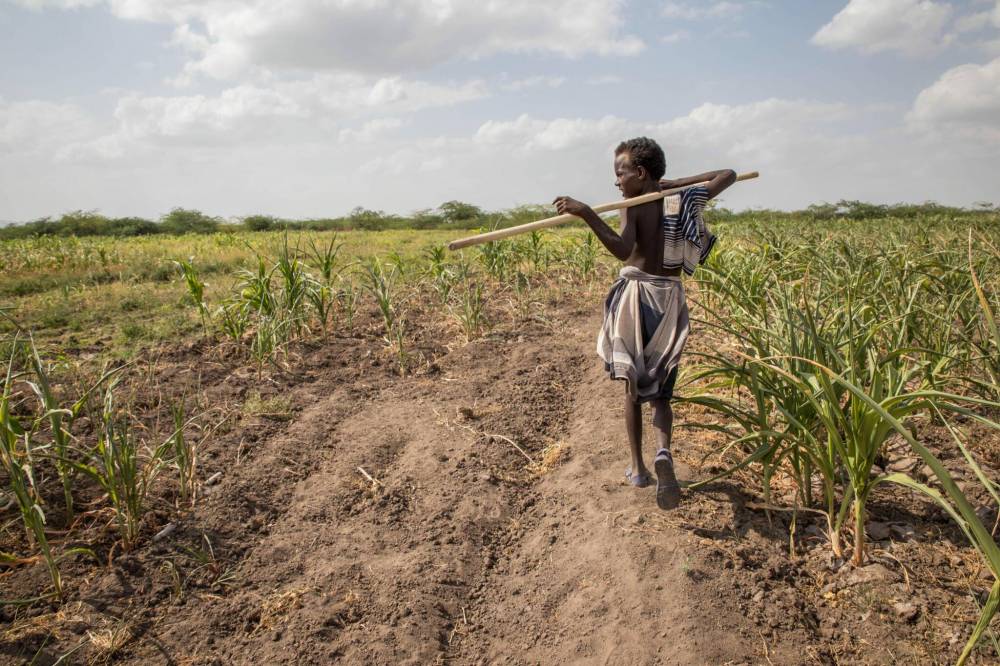
Studwell notes that all four countries managed to involve their own “contending and mistrustful ethnicities” and use outside expertise in order to develop with unexpected effectiveness. A key was implemeting policies encouraging appropriate, “smallholder” farms and agriculture, which spread income around and resulted in agricultural and manufacturing exports.
Botswana benefited from careful husbandry of its minerals, especially diamonds, and from the diamond industry’s control of worldwide prices, avoiding the boom-and-bust cycles that made other African resources such sketchy investments. However, the country’s agricultural policies did not benefit a majority of its citizens, and inequality remains an issue.
A major figure in Botswana’s development was Seretse Khama, educated in Britain, where he married Ruth Williams. Their story has been told in the films A Marriage of Inconvenience (1990) and A United Kingdom (2016). Studwell lauds Khama for his coalition building, but notes that his sometimes-autocratic rule and the corruption of his sons were a stain on Botswana’s history.
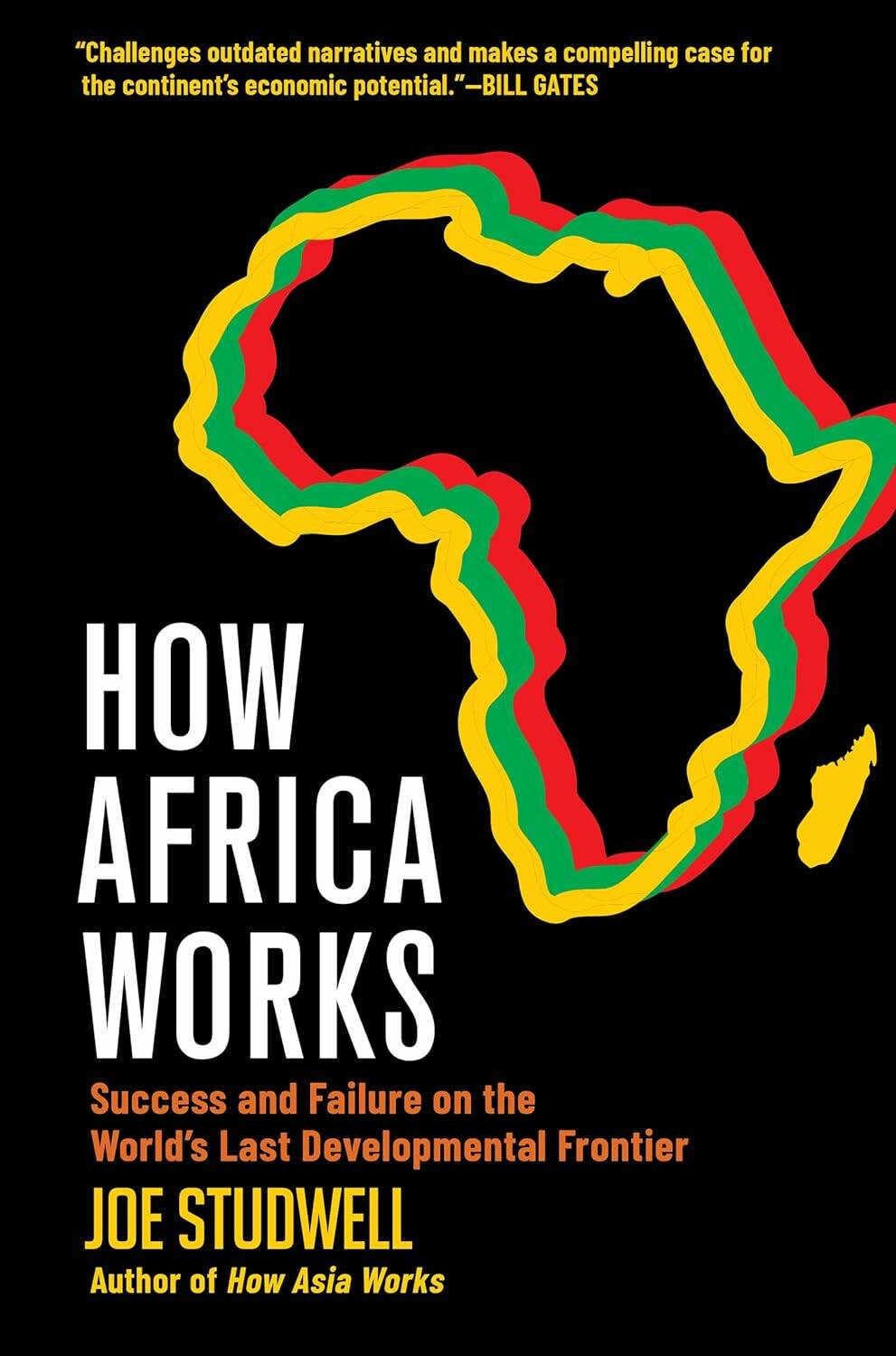
How Africa Works
The island of Mauritius had no indigenous population before European explorers discovered it, and French sugar growers imported slaves from Madagascar. Independence eventually resulted in a true coalition government for the population descended from French, British, Dutch, Indians and “Creoles.”
Policies and incentives aided the development of sugar, then manufacturing, tourism and financial services, resulting in Mauritius being the only African nation ranked at a very high level for human welfare in the United Nations Human Development Index ranks at a very high level for human welfare.
Ethiopia endured tragic famine, publicized in the mid-’80s by Bob Geldof’s Live Aid fundraising concerts. Since the mid 1970s, it had also endured the repressive Stalinist Derg regime of Mengistu Haile Mariam.
When the Ethiopian People’s Revolutionary Democratic Front finally defeated Mengistu’s government in 1991, a militant leader named Meles Zenawi became president, and later prime minister, of the only African country that had never been colonized.
Zenawi emphasized unity, and managed to incorporate the country’s main ethnic groups, the Oromo, Amhara, Somali and Tigray. He was well educated, and chose government leaders who shared his intellectual curiosity and commitment to cooperation.
Ethiopia’s coalition government solved the famine problems of the 1980s. By promoting widespread agricultural development, it became an “economic miracle,” and was considered one of the most equal societies in the world.
Unfortunately, after Zenawi’s death in 2012, the coalition could not hold out against ethnic tensions, and a vicious civil war raged from 2020 through 2022. Studwell holds hope that Ethiopia can climb back into an exemplary position of how to avoid so many of Africa’s problems.
Mulugeta Ayene / Associated Press files
One of the keys to success in African nations such as Ethiopia has been implementing policies encouraging appropriate ‘smallholder’ farms and agriculture, which spread income around.
Rwanda, after the ruthless genocide of the mid-’90s, has tried to emulate Singapore’s financial and manufacturing power, supported by harsh autocracy. President Paul Kagame’s seeming coalition government is partly sustained by violent suppression of opponents, even in other countries.
The book’s well-researched economic analysis can be daunting, but its historical details are readable and concise.
Studwell’s conclusion is that, providing “Africa can get its social stability, infrastructure and utilities in order, it can be a manufacturing centre like Asia.”
Bill Rambo is a retired teacher, who spent much of his youth in the Democratic Republic of the Congo, a country that desperately needs any development that can make it work.