Charity case
Brilliant new novel pillories philanthropy’s pitfalls with a rich cast of characters
Advertisement
Read this article for free:
or
Already have an account? Log in here »
To continue reading, please subscribe:

Digital Subscription
One year of digital access for only $205*
- Enjoy unlimited reading on winnipegfreepress.com
- Read the E-Edition, our digital replica newspaper
- Access News Break, our award-winning app
- Play interactive puzzles
*First annual payment billed as $205.00 + GST for one year. This annual subscription will automatically renew at $233.00 + GST every 52 weeks (10% off the regular annual price of $259.35). Offer available to new and qualified returning subscribers only. Cancel any time.
To continue reading, please subscribe:
Add Free Press access to your Brandon Sun subscription for only an additional
$1 for the first 4 weeks*
- Enjoy unlimited reading on winnipegfreepress.com
- Read the E-Edition, our digital replica newspaper
- Access News Break, our award-winning app
- Play interactive puzzles
*Your next Brandon Sun subscription payment will increase by $1.00 and you will be charged $17.95 plus GST for four weeks. After four weeks, your payment will increase to $24.95 plus GST every four weeks.
Read unlimited articles for free today:
or
Already have an account? Log in here »
Hey there, time traveller!
This article was published 07/03/2026 (205 days ago), so information in it may no longer be current.
Sharon Bala’s much anticipated new novel Good Guys signals irony from the start. It follows the success of her 2018 debut, The Boat People, and is every bit worth the wait.
A CBC Canada Reads finalist, The Boat People was based on the real-life events of the MV Sun Sea ship told from the fictionalized perspectives of a Tamil passenger, his lawyer and the adjudicator of the case. It was translated into four languages and won the Newfoundland and Labrador Book Award and the Harper Lee Prize for Legal Fiction.
In that book, Bala made riveting the frustrations of the bureaucratic process and shone a light on the harsh realities for refugees in Canada. In Good Guys, the author turns a sharp eye to the complexities of philanthropy, interrogating the terrain of non-profits, charity and the politics of celebrity and international aid.
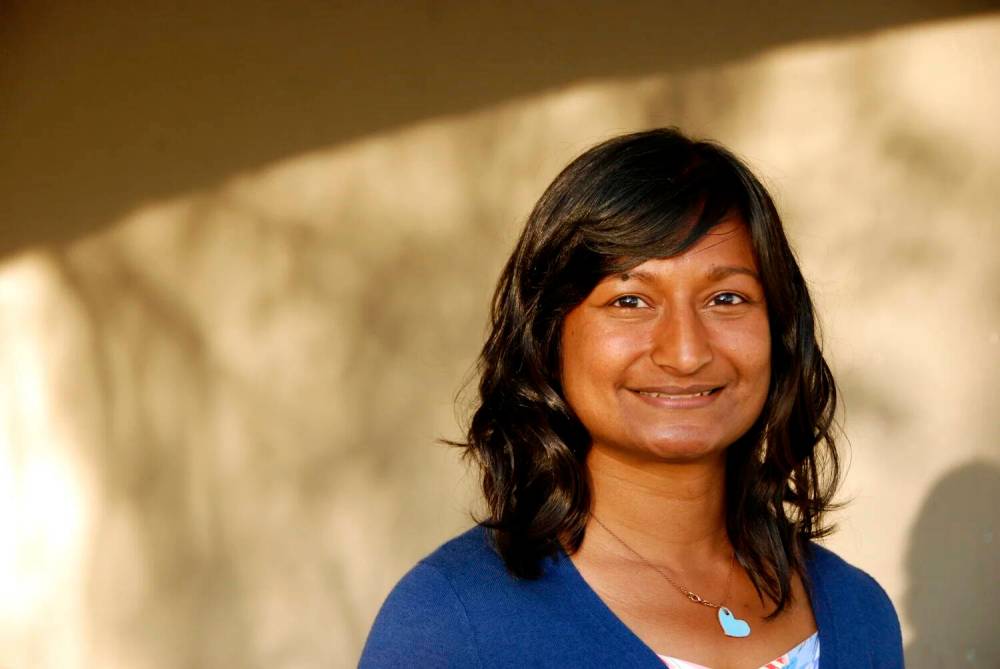
Nadra Ginting photo
Sharon Bala began writing Good Guys in 2012 as a longer short story, with numerous versions hitting the dustbin before the novel-length final product made it to publication.
Born in Dubai, Bala immigrated to Canada with her Sri Lankan parents when she was seven. Raised in Pickering, Ont., she went on to earn university degrees in psychology and history before moving, at age 30, to St. John’s, N.L., where she joined the Port Authority writers’ group and embarked on her authorial career.
Good Guys began in 2012, Bala tells Bookspo podcast host Kerry Clare, as a long short story. Numerous manuscripts hit the dustbin before the final version made it to publication. Nothing came easy with this novel, she says.
The result of these efforts, however, produces a rich tapestry of characters whose backstories are fully realized if only glimpsed at, as in the case of main character Claire’s ex-husband Simon, or “the office joker,” who remains unnamed.
There are three perspectives from which we hear most often. Foremost is that of Claire, who has recently left a lucrative career in corporate reputation management to become a publicist for Children of the World, an international non-profit charity headquartered in Toronto and led by Crispin, a musician-turned-philanthropist, who gained fame and fortune in the ’90s.
When Claire responds to an A-list celebrity’s posting about the charity’s work in the fictional Central American country of Santa Rosa, she sets in motion a Hail Mary-series of events that appear to save at once the lives of children connected to the compound as well as the organization itself from financial ruin.
Multilingual Lucca is the charismatic country director of the charity’s flagship project in Santa Rosa. He has lived in numerous disaster zones, craving adventure and running from the pitfalls of his privileged youth. He has a knack for shirking responsibility with smooth talk and avoiding self-examination when the going gets tough.
And then there’s Emmanuelle, who shares with founder Crispin an evangelical upbringing and whose acute sense of ethics, astute observations and journalistic ambitions fuse together to expose a sinister crime at the core of Children of the World’s recent success.
Sharp with satire, Good Guys is a workplace dramedy that pinpoints in important and uncomfortable ways the self-righteous underpinnings of the non-profit world.
Bala’s novel puts into words the individual and collective discomforts around the notion of good intentions in a flawed system: non-profit lifer Anya uses the term “charitainment,” while Emmanuelle’s shrewd literary agent offers up the summarial gem “philanthrocapitalism.”
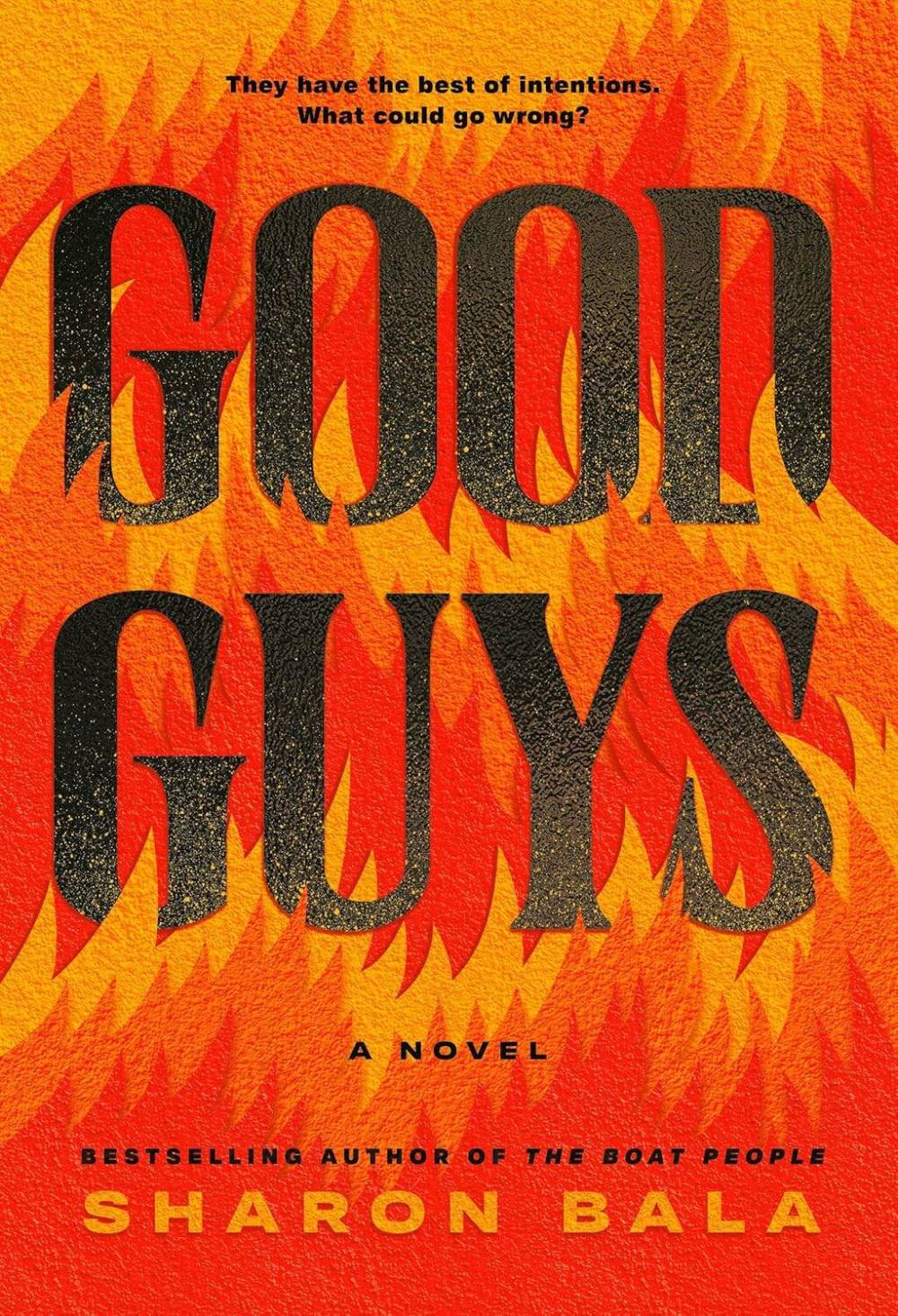
Good Guys

No character is let off the hook. The novel is deeply felt and thoughtful, and one need only scan a recent history of the news to see its relevance today: the WE Charity controversy, celebrity international adoptions and the fundraising efforts of U2’s Bono, to name a few.
Readers might already agree at the outset with the tattoo-sleeved, smartphone-toting skeptics that Claire overhears critiquing Children of the World and its systemic foibles. It is obvious to them that the charity model doesn’t work.
Recent examples in literature concur: the missionary project is misguided and has caused harm in the past, as Joan Thomas’s Five Wives lays bare; or look to Hernán Díaz’s Trust to consider the decayed roots of wealth accumulation and philanthropic lore.
So, are there any good guys in Good Guys, a novel that so vividly depicts our thought processes and lived reality as to show us to ourselves? The answer is unclear, and appropriately so; though most, if not all, would agree with the overheard Santa Rosa locals when they say, on more than one occasion, that nothing in this world is free.
Sara Harms is a Winnipeg editor.