Blood on the bayou
James Lee Burke’s latest (and perhaps final) Robicheaux novel an uneven thriller
Advertisement
Read this article for free:
or
Already have an account? Log in here »
To continue reading, please subscribe:

Digital Subscription
One year of digital access for only $205*
- Enjoy unlimited reading on winnipegfreepress.com
- Read the E-Edition, our digital replica newspaper
- Access News Break, our award-winning app
- Play interactive puzzles
*First annual payment billed as $205.00 + GST for one year. This annual subscription will automatically renew at $233.00 + GST every 52 weeks (10% off the regular annual price of $259.35). Offer available to new and qualified returning subscribers only. Cancel any time.
To continue reading, please subscribe:
Add Free Press access to your Brandon Sun subscription for only an additional
$1 for the first 4 weeks*
- Enjoy unlimited reading on winnipegfreepress.com
- Read the E-Edition, our digital replica newspaper
- Access News Break, our award-winning app
- Play interactive puzzles
*Your next Brandon Sun subscription payment will increase by $1.00 and you will be charged $17.95 plus GST for four weeks. After four weeks, your payment will increase to $24.95 plus GST every four weeks.
Read unlimited articles for free today:
or
Already have an account? Log in here »
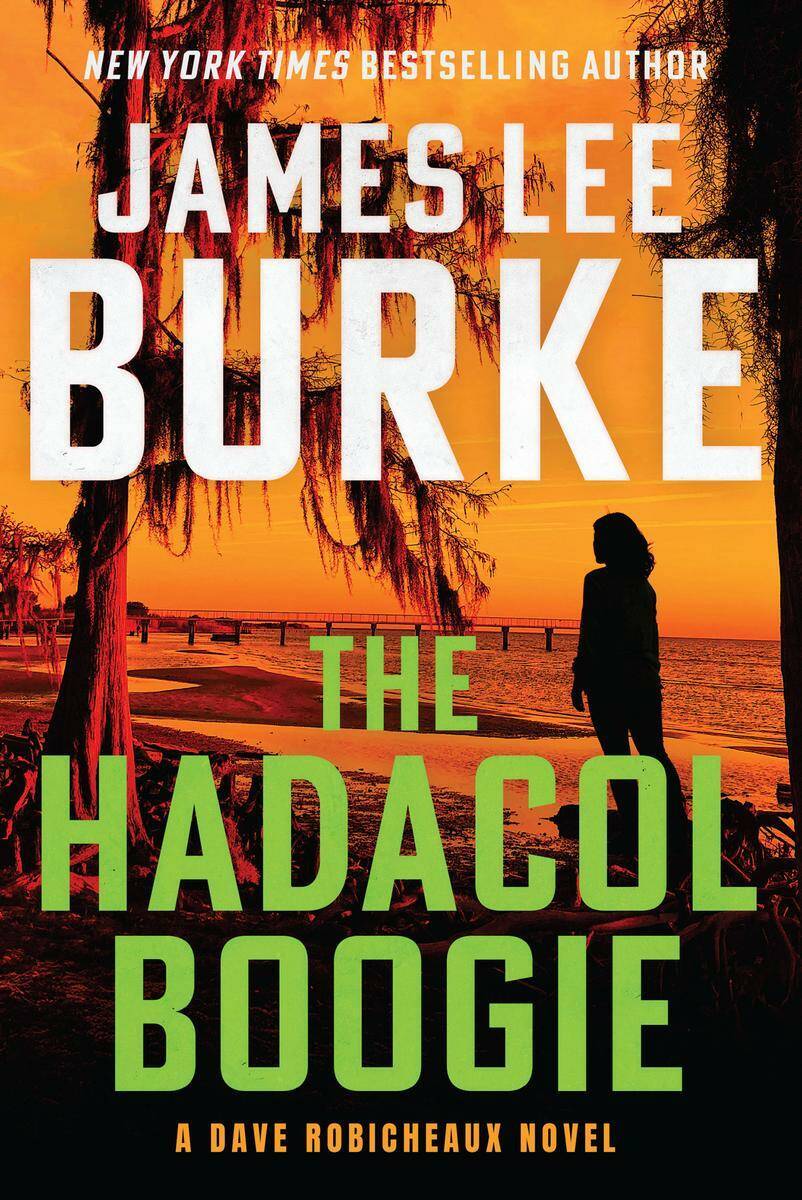
Is The Hadacol Boogie James Lee Burke’s swan song — and, therefore, the end of his iconic police detective Dave Robicheaux?
Although Burke has released nine books in the past eight years, the multiple award-winning author will be 90 years old this December. The Hadacol Boogie, his 25th and perhaps final Dave Robicheaux crime novel, feels like the end.
If it is indeed a finale, it is only occasionally grand.

Supplied photo
James Lee Burke, who turns 90 in December, has published nine books in the past eight years.
One of the main attractions of Burke’s Robicheaux novels is the dimensionality and depth of his main characters, the redolent atmosphere of his Arcadian settings and the savoury local dialogue. For the most part that holds true here.
Dave is the same old (now 60-ish) Dave. He had a troubled childhood, earned medals in the Vietnam War and is an alcoholic battling inner demons. He listens to southern pop musicians such as Jimmy Rogers and Jerry Lee Lewis, philosophizes by quoting Shakespeare and Chaucer and refers to “Robespierre and Matt Arnold,” among others. He is a complicated cop.
The year is 2000 and Alafair, his adopted daughter from El Salvador, returns to their hometown of New Iberia, La. to write a novel. Dave worries desperately about Alafair. And in an anxious, thirsty moment he confesses: “For an alcoholic one is too many and ten thousand not enough.” Burke himself has struggled with alcoholism and has a novelist daughter named Alafair; so, these parts of the story ring true throughout.
The plot begins when a mysterious, cloaked figure deposits a large, black garbage bag in Dave’s backyard. The bag contains the naked body of a young woman with rose tattoos on her breasts. Dave first calls his longtime friend Clete before reporting to his boss Helen — familiar, rich characters from previous Robicheaux novels.
Helen assigns Dave a new young partner — a rash, Black woman who is also a civil rights activist intent on finding Jefferson Davis’s supposed buried Confederate treasures to then finance retribution against white racists. In the course of his investigations, Dave keeps running into the strange and suspicious Boone Hendrix. The affiliations and motives of these two and others are murky, adding to the suspense.
In 55 chapters averaging eight pages each, the plot pulses along. Dave encounters the “dark potential of the human gene pool” (corrupt, racist and anti-feminist cops); an ambitious, drug-dealing pimp who thinks he’s a modern-day Wyatt Earp; thuggish, hired “button-men;” and amoral New Jersey businessmen (i.e., gangsters).
Burke is a master at orchestrating sudden, unexpected incidents that make things more complicated and dangerous for all involved. There is much violence, but it’s presented crisply without the gratuitously creepy porn-violence of much current crime fiction.
When Burke gets to the climactic encounters in The Hadacol Boogie, however, he seems to lose his deft touch.
The Hadacol Boogie

It’s a wide-ranging scene involving many characters, while a helicopter hovers overhead — where Alafair is bound and gagged with bombs taped to her body. The chaos of the scene is not clearly or credibly described, perhaps because it is meant to recall situations Dave experienced in the Vietnam War.
The resolution stretches credibility to the breaking point. Although Clete, Helen, Valerie, and Boone are there, they are mostly stick-figure witnesses. Dave deals with bad guys and dispatches gangsters virtually by himself. The rich, human details of being a believable Louisiana cop are gone. Dave has become a superhero.
It’s as if Burke has been watching too many Marvel movies in his old age. In The Hadacol Boogie, what once seemed intensely real becomes disappointingly artificial.
Sadly, if this is the end for Dave, Burke did not save his best for last.
Gene Walz is a retired University of Manitoba film prof who prefers believable crime novels to hyperbolic superhero movies.