Joining the colony

Canadian biologist chronicles life among Antarctic penguins — and warns about perils of climate change

Advertisement

Advertise with us

They have the loopy waddle of Charlie Chaplin strolling; in Edwardian times, they were called “comical little men in dinner jackets.”

Read this article for free:


or

Already have an account? Log in here »

To continue reading, please subscribe:

Subscribe and receive a limited-edition Free Press branded hat or tote.

Digital Subscription

One year of digital access for only $205*

  • Enjoy unlimited reading on winnipegfreepress.com
  • Read the E-Edition, our digital replica newspaper
  • Access News Break, our award-winning app
  • Play interactive puzzles

*First annual payment billed as $205.00 + GST for one year. This annual subscription will automatically renew at $233.00 + GST every 52 weeks (10% off the regular annual price of $259.35). Offer available to new and qualified returning subscribers only. Cancel any time.

To continue reading, please subscribe:

Add Free Press access to your Brandon Sun subscription for only an additional

$1 for the first 4 weeks*

  • Enjoy unlimited reading on winnipegfreepress.com
  • Read the E-Edition, our digital replica newspaper
  • Access News Break, our award-winning app
  • Play interactive puzzles
Start now

*Your next Brandon Sun subscription payment will increase by $1.00 and you will be charged $17.95 plus GST for four weeks. After four weeks, your payment will increase to $24.95 plus GST every four weeks.

They have the loopy waddle of Charlie Chaplin strolling; in Edwardian times, they were called “comical little men in dinner jackets.”

And Canadian scientist Louise Blight went halfway round the world to study them for over three months in our winter and their summer.

Blight was in Antarctica scanning the thousands of penguins around her when she and one of them locked eyes.

ANDREA SACHS / WASHINGTON POST
                                Adelie penguins chill out on an iceberg in Antarctica. Author Louise Blight spent the summer of 2003 with thousands of the penguins in their habitat.

ANDREA SACHS / WASHINGTON POST

Adelie penguins chill out on an iceberg in Antarctica. Author Louise Blight spent the summer of 2003 with thousands of the penguins in their habitat.

“To be held in the gaze of a wild animal remains a primordial thrill,” says Blight in Where the Earth Meets the Sky, “and the trusting nature of the animals, who have not evolved a fear of humankind, had such a transformative effect that the feeling of it remains in my bones.”

Blight is a conservation biologist with a doctorate in zoology. She is an adjunct professor in environmental studies at the University of Victoria and lives on Salt Spring Island, B.C.

Blight is one of few who haved experienced the quirky luxury of living with wild animals unafraid of humans. In Where the Earth Meets the Sky she recounts the magic in her three months living with penguins far, far away from Canada in 2003 as part of her work.

Antarctica is the coldest, windiest and most inhospitable place on earth (next to Portage and Main), and Blight would very much like it to stay that way. She writes with enthusiasm about one of the most unvisited areas of the world, a virgin landscape now being menaced by climate change. She lived for months among the penguins as a field assistant to David Ainley, one of the world’s most eminent Antarctica scientists.

Blight, like Rachel Carson in Silent Spring, now wants to speak for those living things that cannot speak for themselves.

Carson’s book in the 1960s blew the lid off pesticides. Now Blight is speaking with wonder and awe about a pristine part of the earth she aches to see left free to live as if we were never there. “We are wounded by the loss of our connection with wild beings and wild places without quite knowing what it is that we have lost,” she says.

Where the Earth Meets the Sky

Where the Earth Meets the Sky

Blight knows that Antarctica is being brutalized by climate change more so than most parts of the earth, and that things are quickly changing for the worse.

“I wanted to write this book as a way of bearing witness to the world’s beauty,” Blight proclaims. “And as a way of bearing witness to what we are losing in it. This is the story of falling in love with a wild place.”

Blight spent an Antarctica summer with thousands of Adelie penguins, with sunlight shining around the clock, melting sea ice and bustling wildlife on land and water. She says the absence of civilization’s sounds is so profound that the ears perk up to search for meaning in the emptiness. It feels so empty because there are just the penguins and the wind.

Blight explains how she lived among the penguins and experienced the most spiritual of human reactions when she realized the penguins were treating her as if she belonged there — as if she too was one of them, or at the very least something the penguins had no reason to fear.

What Blight learned from the penguins: “That we as humans are not central to life, but are mere specks carried along with its flow; important, but no more so than anything else. And that nature is indifferent to all human suffering — and yet paradoxically, it holds the key to our healing from it.”

Blight also learned that “(t)here’s nowhere quite like a seabird colony — penguin or any other — for instilling the harshness of the natural world. Mates desert each other, eggs and chicks are taken by skuas (birds) or whatever the local predators may be, offspring are deserted by parents and starve.”
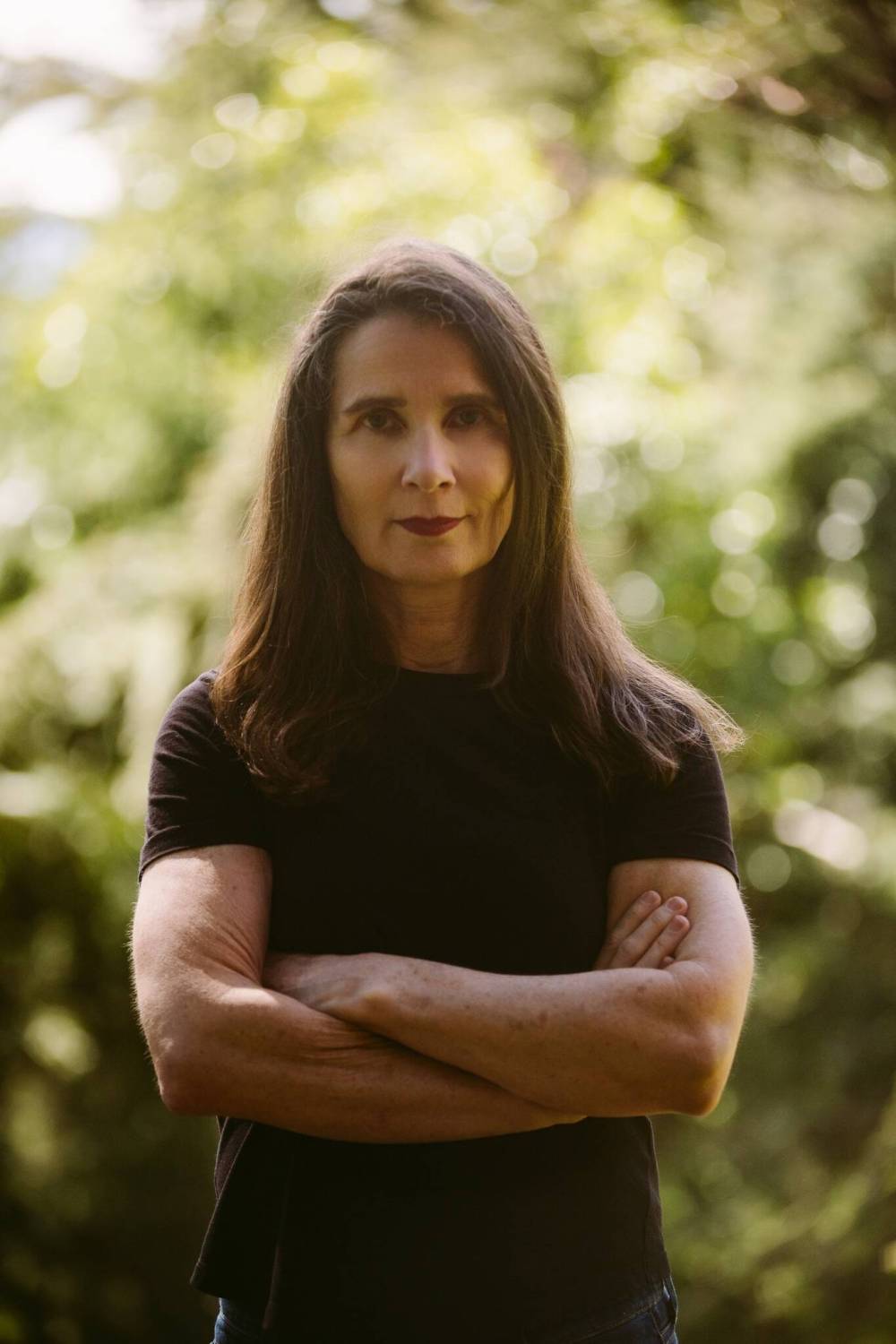
PAMELA GREGORIADIS PHOTO
                                Louise K. Blight

PAMELA GREGORIADIS PHOTO

Louise K. Blight

Protective clothing is a necessity around penguins.

“One of the birds has persisted in turning its head and pinching my flesh with its beak right through three layers of clothing, up high in the sensitive junction of back, side and armpit, as if it knew instinctively that this was the spot to generate maximum pain,” says Blight. She describes penguin assaults “like some Antarctica version of Hitchcock’s The Birds. ”

Barry Craig is a retired journalist.

History

Updated on Monday, May 4, 2026 4:22 PM CDT: Fixes typo

Report Error Submit a Tip

More Stories

Family hopes police alert will bring missing woman home

Morgan Modjeski 3 minute read Preview

Family hopes police alert will bring missing woman home

Morgan Modjeski 3 minute read Yesterday at 6:59 PM CDT

The family of Ashley Arason has made a desperate plea for her to come home.

The 41-year-old last had contact with her family on April 6, 2019, which was her 34th birthday.

“I’ve got a place for her,” said her older sister, Pamela Arason, through tears on Thursday. “She has a place to go, a home to come to.”

On Thursday, Winnipeg Police Service renewed the call for help from the public to solve the missing person case.

Read
Yesterday at 6:59 PM CDT

Walk on Portage Avenue reveals difficult present, some cause for optimism

Dan Lett 5 minute read Preview

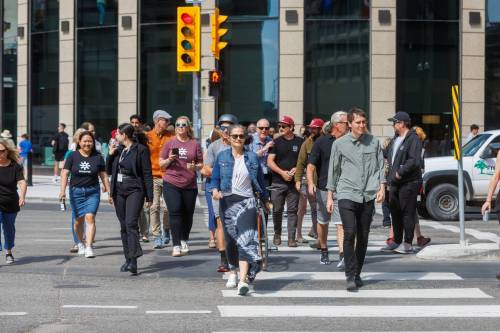
Walk on Portage Avenue reveals difficult present, some cause for optimism

Dan Lett 5 minute read Updated: Yesterday at 3:23 PM CDT

On a recent visit back to Winnipeg, I got to witness the multitudes of Portage Avenue.

From my Airbnb on Hargrave Street, I had the opportunity to do quite a bit of walking on Portage Avenue, from Portage and Memorial all the way down to the recently opened intersection at Portage and Main.

Along the way, I saw it all: huge and dynamic construction projects, persistent urban decay and the occasional oasis of revitalization.

All in the space of 10 blocks.

Read
Updated: Yesterday at 3:23 PM CDT

Winnipeggers hoping for shorter waits in rural ERs delay care for all, Selkirk nurse says

Nicole Buffie 5 minute read Preview

Winnipeggers hoping for shorter waits in rural ERs delay care for all, Selkirk nurse says

Nicole Buffie 5 minute read Updated: Yesterday at 8:38 PM CDT

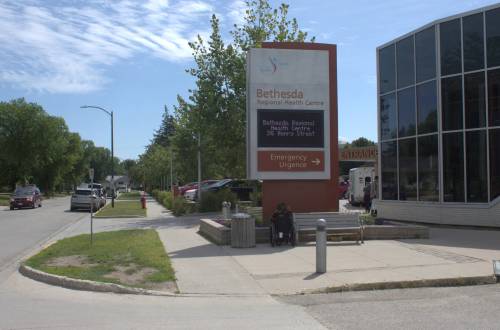
Nurses and union leaders say Winnipeggers — who are frustrated with wait times at city hospitals — head to rural emergency rooms instead, but the facilities don’t have enough staff to meet the extra demand.

As a result, patients in the Selkirk Regional Health Centre emergency department have waited up to 18 hours during peak times, said one nurse who works there.

The nurse, who spoke to the Free Press on the condition of anonymity, said in recent years they have noted more Winnipeg patients who’ve driven the 25 kilometres north to Selkirk’s ER, believing the wait for treatment would be shorter than in the three emergency departments inside the Perimeter.

“They’re all trying to access health care, right? And everybody deserves health care. And I feel bad, because people have to come out here thinking that the wait times are less,” the nurse said. “I can’t blame people for wanting to seek care, and they’re desperate to see someone.”

Read
Updated: Yesterday at 8:38 PM CDT

Leon’s Getting Larger and their tours are getting longer

Tiago Resko 4 minute read Preview

Leon’s Getting Larger and their tours are getting longer

Tiago Resko 4 minute read 3:00 AM CDT

Emo music was never just a phase for Nikola Boticki.

“It was people just saying the things I was feeling,” says the 26-year-old vocalist and guitarist. “Growing up, it’s kind of like, ‘I feel that way but I’m not going to say that out loud,’ so it was nice to hear someone say it.”

Boticki got into the punk subgenre near the end of his angsty high school years and his appreciation only grew while in isolation during the COVID-19 pandemic.

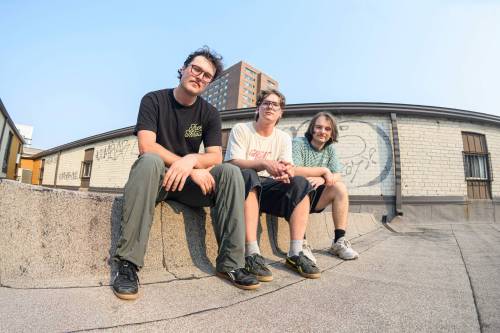
The music inspired him to form his own emo band, Leon’s Getting Larger, with friends Luke Penner (vocals/drums) and Noah St Hilaire (bass).

Read
3:00 AM CDT

New sci-fi/fantasy bookstore a welcome addition

Ben Sigurdson 5 minute read Preview

New sci-fi/fantasy bookstore a welcome addition

Ben Sigurdson 5 minute read Yesterday at 4:46 PM CDT

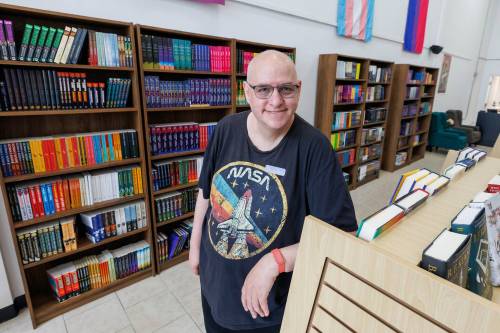
A new chapter has begun in Winnipeg’s literary landscape with the opening of science fiction and fantasy bookstore Other Places Books.

Located at 436 Graham Ave., the queer-owned and operated shop is the latest in a host of genre bookstores to have opened in the city over the last few years. In addition to longtime mainstay Whodunit? Mystery Bookstore (163 Lilac St.), the local scene now also features a horror bookstore (Raven’s End Books, which opened at 1859 Portage Ave. in 2024) and a shop focused on romance (Bound to Please, which opened at 995 McPhillips St. earlier this year).

The 900 titles currently in stock at Other Places, which opened Tuesday, span a range of sci-fi and fantasy sub-genres, with a particular focus on queer writers and storylines. The bookstore is the brainchild of Didi Chanoch, who moved to Winnipeg from Israel in 2025 after the Canadian federal government began offering work permits to those in Israel and Palestine looking to leave the area due to the conflict.

Winnipeg ended up on Chanoch’s radar in large part due to a more reasonable cost of living than other Canadian cities.

Read
Yesterday at 4:46 PM CDT

Mayoral race grows to 11 candidates

Joyanne Pursaga 2 minute read 3:21 PM CDT

Realtor Brad Gross is the 11th candidate to register for the race to become Winnipeg’s next mayor.

Gross, 60, said improving public safety and renewing roads will be key goals in his campaign.

“I just don’t like the direction the city’s going and it doesn’t seem to be getting better…. A lot of seniors, a lot of people are worried about crime. (And) the streets are just horrible again,” he said.

He said the city should not invest in bike lanes until Winnipeg’s roads are in better condition. He also hopes to provide free bus fares for seniors and gradually add security cameras at all bus shacks with known safety concerns, if elected.