

Ex-cop’s memoir excels in detailing homicide investigations
Advertisement
Read this article for free:
or
Already have an account? Log in here »
To continue reading, please subscribe:
Digital Subscription
One year of digital access for only $1.44 a week*
- Enjoy unlimited reading on winnipegfreepress.com
- Read the E-Edition, our digital replica newspaper
- Access News Break, our award-winning app
- Play interactive puzzles
*Billed as $5.77 plus GST every four weeks. After 52 weeks, price increases to the regular rate of $19.95 plus GST every four weeks. Offer available to new and qualified returning subscribers only. Cancel any time.
To continue reading, please subscribe:
Add Free Press access to your Brandon Sun subscription for only an additional
$1 for the first 4 weeks*
- Enjoy unlimited reading on winnipegfreepress.com
- Read the E-Edition, our digital replica newspaper
- Access News Break, our award-winning app
- Play interactive puzzles
*Your next Brandon Sun subscription payment will increase by $1.00 and you will be charged $17.95 plus GST for four weeks. After four weeks, your payment will increase to $24.95 plus GST every four weeks.
Read unlimited articles for free today:
or
Already have an account? Log in here »
Hank Idsinga spent 30 years as a cop with the Toronto Police Service (TPS), his last 14 years working homicide cases. For the last five of those years, he was the force’s top homicide inspector.
In 2021, Toronto Life magazine touted his homicide team as having “a murder clearance rate of over 74 percent — among the best for metropolitan areas in North America.” In other words, 74 per cent of TPS homicide investigations were closed as solved cases.
Idsinga’s was a storied career and, not surprisingly, full of stories. But even memoir, though non-fiction, must flesh out its players and places to add depth and colour in the telling.
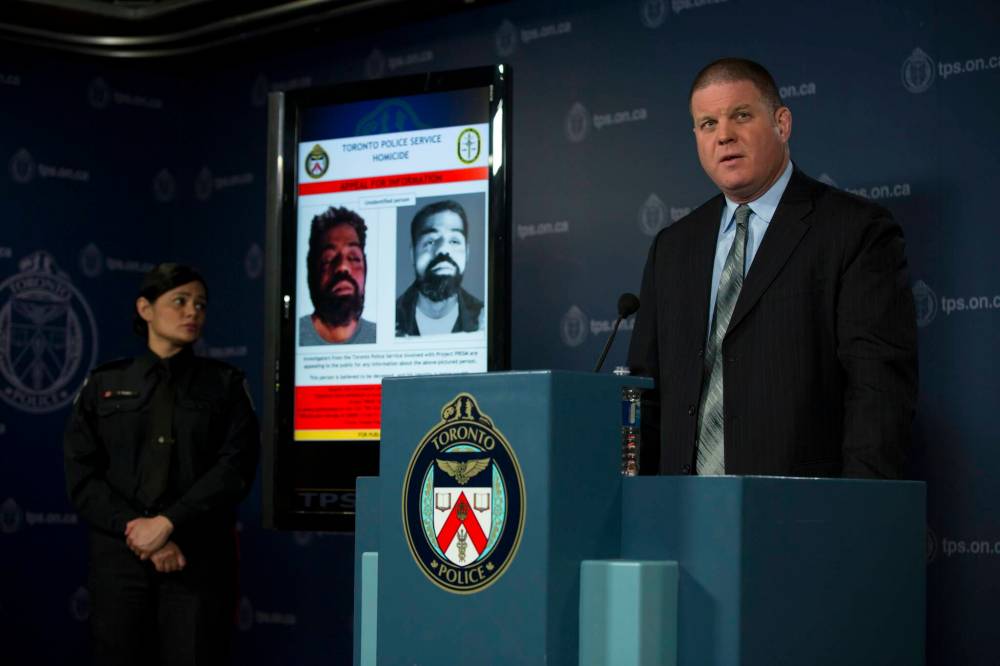
Cole Burston / Canadian Press files
In this 2018 photo, then-detective sergeant Hank Idsinga speaks to the media about an individual possibly connected to the Bruce McArthur case.
The first third of Idsinga’s memoir The High Road, which relates his work in two different Toronto police divisions before jumping to homicide duty in 2005, drags.
Initial chapters recounting his years as a divisional police constable deliver brief anecdote after brief anecdote, piled one on top of the other. While it makes for an easy-to-follow chronological record, they resemble a collection of journal entries more than a cohesive narrative.
Only when he gets to the guts of his work as a homicide investigator does his story start to sing. And then it sings nicely.
The lengthy chapter on the strategy, logistics and forensic evidence gathering that in 2018 saw Bruce McArthur, a serial killer of gay men, finally nabbed is stellar. Faced with the overwhelming evidence gathered by Idsinga’s team, in January 2019 McArthur pleaded guilty to eight counts of first-degree murder and received eight concurrent life sentences.
Likewise, the detailed account of the investigation of local gangster Mark Moore’s casual killing spree (four murders) affords a terrific inside look at the often grinding process and methods that lead to arrest.
The extra layer of depth arising from Idsinga’s getting close to the crime and victims, which is missing in the early chapters, surfaces in these hunts for a killer. He adroitly pulls you into the process of accumulating enough evidence to charge a murderer and, even more importantly, make that charge stick in a court of law.
Idsinga isn’t without an axe to grind, though he mostly withholds judgment until the memoir’s last chapters.
He’s broadly critical of the paramilitary policing model the TPS follows.
He believes the force’s adoption of a hallowed traditional military-style organization impairs proper management and communication. A rigidly hierarchical structure is, in his view, often counterproductive because it discourages robust discussion of issues that could lead to better policing. And it’s a cogent argument.
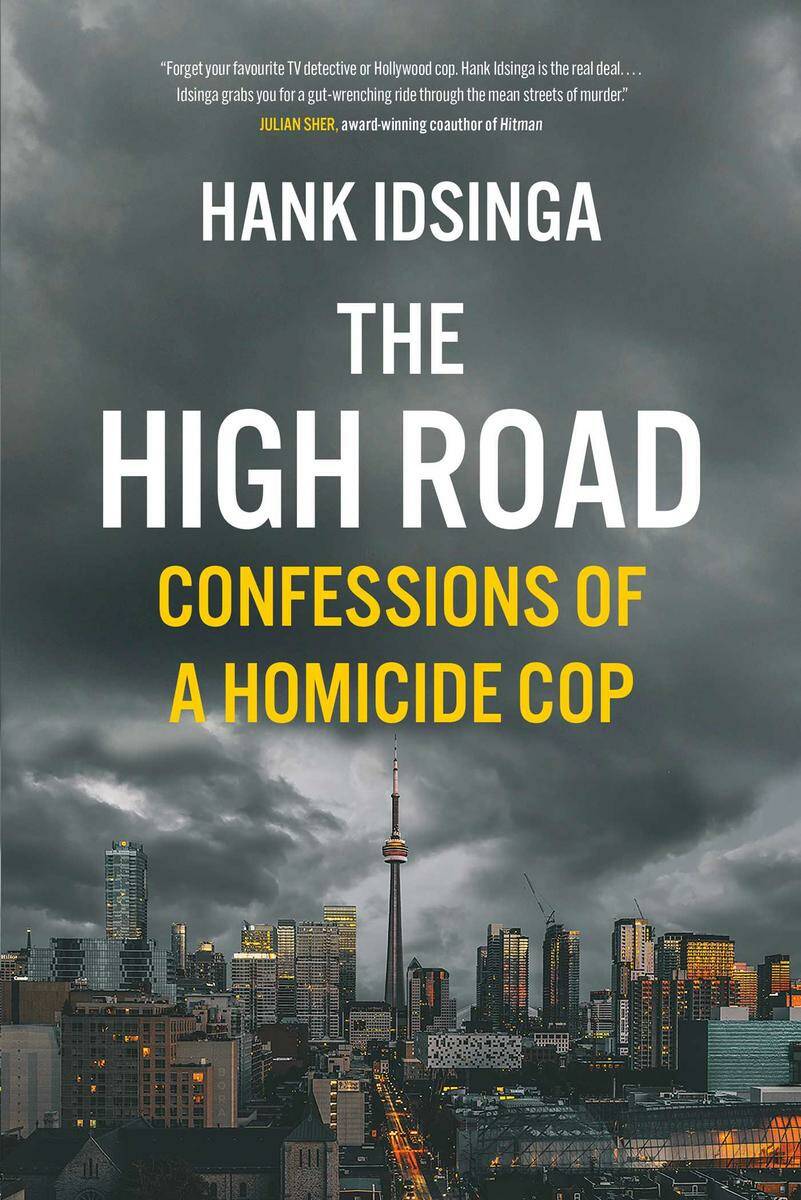
The High Road
Yet paradoxically, he earlier writes approvingly of a senior officer’s archaic weekly “system for ranking officers by their workload” known as officer performance reports (OPRs).
“One point would be awarded for each parking ticket, two for each provincial offences ticket, and three for each arrest and summons,” he explains.
But is this the best metric of good policing?
Idsinga doesn’t address whether the sole measure of a cop’s excellence is properly based on the number of tickets issued and arrests made — not to mention the obvious bias to overzealous or even bogus law enforcement to jack up the number of earned points.
When he finally warms to his subject, Idsinga’s memoir pulls you along. But the early chapters impair his account. A professional life story that begins with recollections delivered with all the verve of a police incident report doesn’t make for gripping reading.
Douglas J. Johnston is a Winnipeg lawyer and writer.