Feathery facts
Pair of bird books offer fascinating insight into the avian world
Advertisement
Read this article for free:
or
Already have an account? Log in here »
To continue reading, please subscribe:

Digital Subscription
One year of digital access for only $205*
- Enjoy unlimited reading on winnipegfreepress.com
- Read the E-Edition, our digital replica newspaper
- Access News Break, our award-winning app
- Play interactive puzzles
*First annual payment billed as $205.00 + GST for one year. This annual subscription will automatically renew at $233.00 + GST every 52 weeks (10% off the regular annual price of $259.35). Offer available to new and qualified returning subscribers only. Cancel any time.
To continue reading, please subscribe:
Add Free Press access to your Brandon Sun subscription for only an additional
$1 for the first 4 weeks*
- Enjoy unlimited reading on winnipegfreepress.com
- Read the E-Edition, our digital replica newspaper
- Access News Break, our award-winning app
- Play interactive puzzles
*Your next Brandon Sun subscription payment will increase by $1.00 and you will be charged $17.95 plus GST for four weeks. After four weeks, your payment will increase to $24.95 plus GST every four weeks.
Read unlimited articles for free today:
or
Already have an account? Log in here »
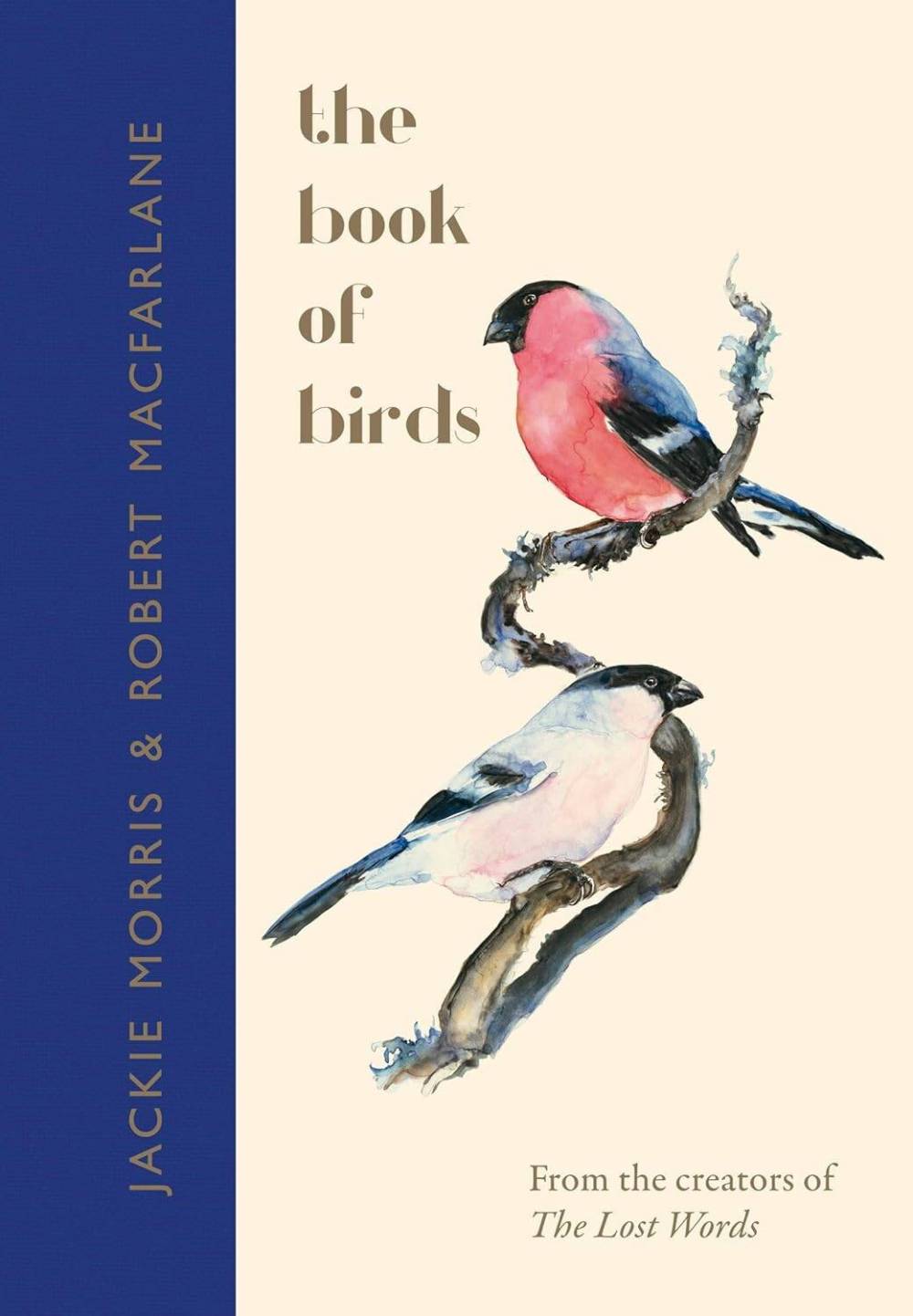
These two newly-released bird books couldn’t be more different. Jackie Morris and Robert Macfarlane’s The Book of Birds is artful and poetic; Louis Lefebvre’s A Bird’s IQ is analytical and academic. Each would make an attractive addition to the libraries of people interested in birds — but not without certain provisos.
The subtitle of The Book of Birds is deceptive — it’s not really a “Field Guide” in the usual sense, too substantial and beautiful to carry along on a bird outing. In hardback with a blue cloth spine and a blue-ribbon page-holder, it’s more like a church song missal than toteable identification helper. It’s best kept inside, protected from wind and weather and damp fingerprints.
The Book of Birds is a follow-up to Morris and Macfarlane’s previous collaboration The Lost Words. When the Oxford Junior Dictionary dropped a bunch of words connected to the natural world (such as acorn, otter, fern, newt and wren), the renowned artist and celebrated author created a “spell book” to conjure back 20 of those words and bring increased awareness of the things the words describe. It proved to be immensely popular.
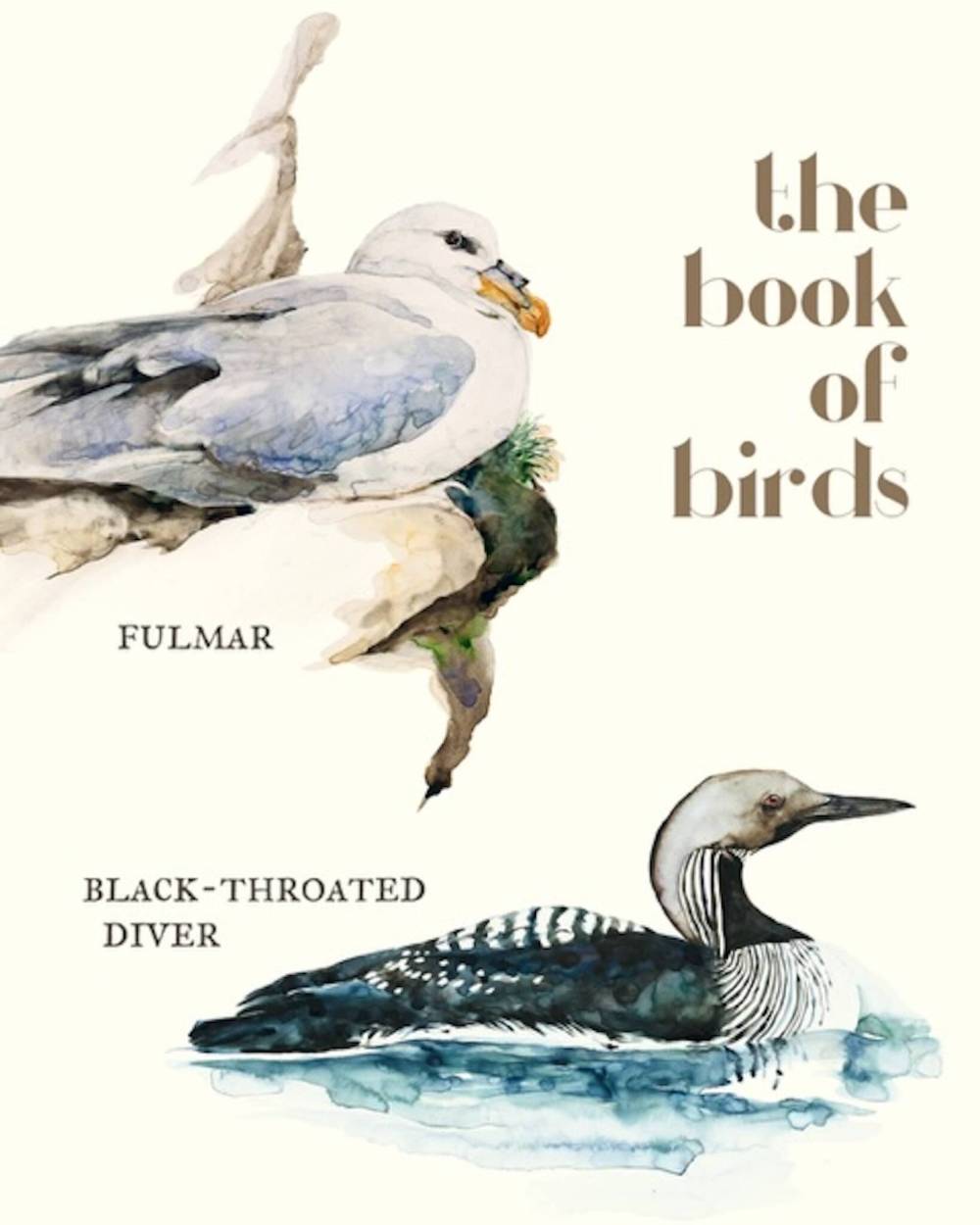
Here they focus on 49 birds, presented alphabetically from avocet to kestrel to sparrow to yellowhammer, that are in danger of disappearing completely from the natural (European) world. Morris provides the spectacular bird illustrations, and Macfarlane waxes poetic on each of them in the hopes readers will not just identify birds, but “identify with them.”
With over 200 spectacular watercolour illustrations, The Book of Birds could easily be stored among a book lover’s collection of art books. Each entry begins with a full-page image of the bird in repose on an empty white background, much like a Roger Torey Peterson or David Sibley field guide. A drawing of its egg is included as well as another casual drawing of the bird. What elevates the book to the sublime is the unusual two-page spread of the birds in flight at the end of each entry.
Macfarlane’s comments on the birds are usually based on personal encounters with them. Expanding on Morris’s drawings, he describes the look (curlew’s feathers “are made of autumn, more foliage than plumage”), the song (avocet’s “high piping cry — an altissimo C on the clarinet”) and behaviour (a glimpse of a kingfisher “is vision-quake; double-take; a strafe-straight rake across the lake”) in captivating, imaginative ways.
Unlike ordinary field guides, Macfarlane plays with names, alternate names and scientific, Latinate names. Sometimes he mentions habitat or brings in folktales. He favours evocative strings of adjectives, rhyme and alliteration, odd comparisons and striking metaphors in his short, lively, sometimes-amusing narratives.
● ● ●
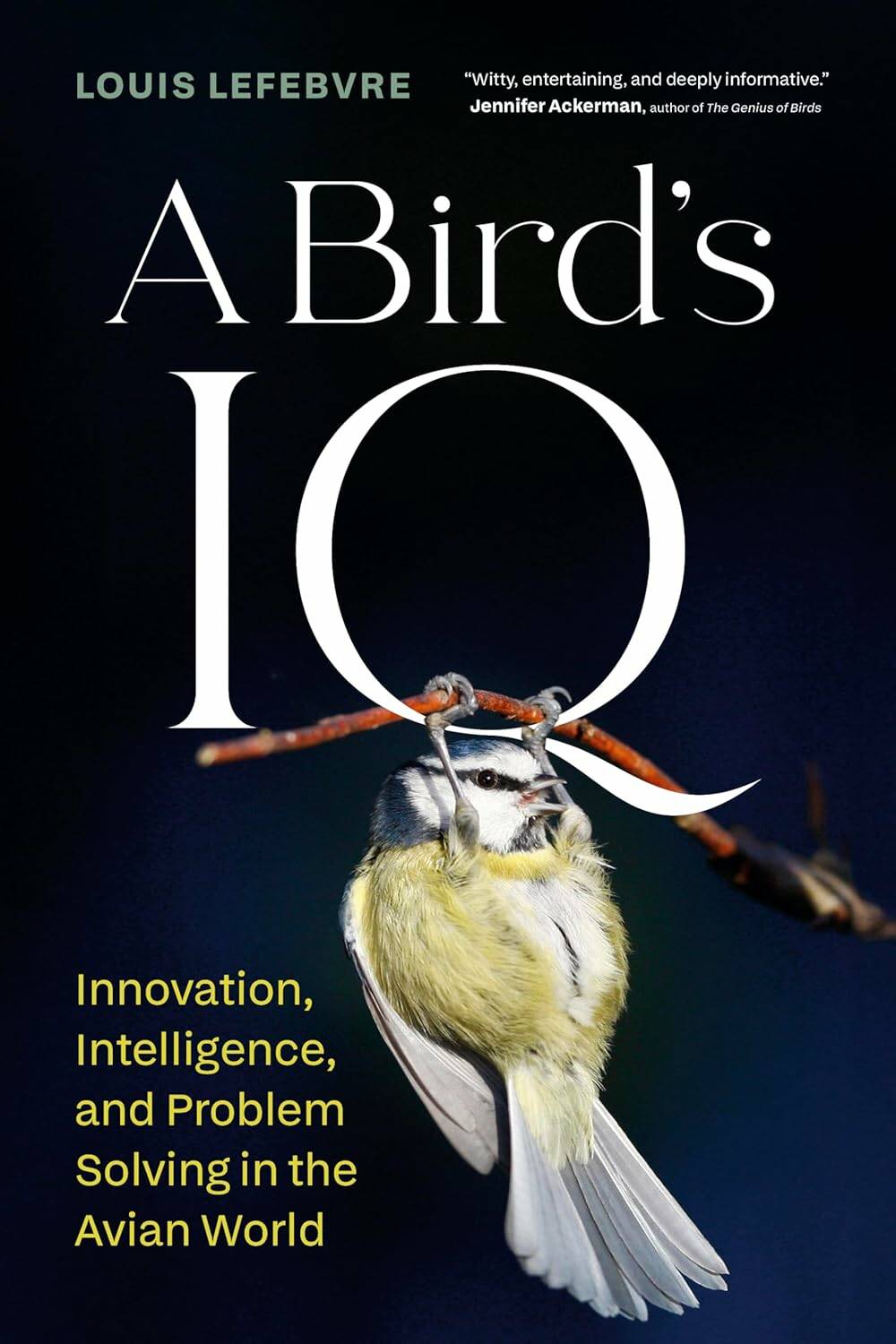
Lefebvre’s A Bird’s IQ is a much more sober account. That’s not to say it’s less informative or engaging.
While he’s not necessarily an innovator (that title goes to Jennifer Ackerman, whose 2016 book The Genius of Birds was an international bestseller), Lefebvre’s book provides more scientific proof and is an apt complement to The Book of Birds, offering readers an insider’s look inside the world of birds rather than two observers’ external views.
The Book of Birds
Lefebvre is a retired McGill University neurobiologist; he’s studied bird brains for years. A Bird’s IQ is a compendium of his findings plus those of his many students, and like-minded colleagues, around the world.
Biologists have been intrigued by bird intelligence since 1949 when British Birds — a “serious journal,” according to Lefebvre — published an account of a group of blue tits (like our chickadees) removing the caps from milk bottles left out on doorsteps so they could drink the cream that, before homogenization, formed at the top of the bottle. What a smart idea — an innovation! How’d those little bird-brains come up with that? And how did the practice spread so widely around England once it was first noticed in 1921? A Bird’s IQ shows how.
Professional research in animal innovation and intelligence rose to prominence in the 1980s, when Jane Goodall defined innovation in chimpanzees as “a solution to a novel problem, or a novel solution to an old one.” Since then it has taken off — with Lefebvre one of the scientists leading the flight.
Aided by “citizen scientists” — birders who’ve reported eccentric behaviours of birds — and graduate students who’d comb through accounts in worldwide journals, the science soon morphed into the study of brain size and its “nidopallium caudolaterale,” the equivalent to the human cortex. Elaborate and sometimes oddly troubling experiments have been devised to determine intelligence in a wide variety of the world’s birds.

Lefebvre takes the reader through the history of these experiments and their methodologies with non-jargon-ridden alacrity. Some discoveries are surprising; others are mere scientific reinforcements of what’s obvious to any knowledgeable birder.
Because they’ve been so successful in extending their populations around the world, house (or English) sparrows are pretty brainy. But they’ve been aided by the fact that they have fewer stress hormones. Raptors, corvids (crows, ravens and magpies) and parrots are the smartest species, some using tools in elaborate ways to get food.
A Bird’s IQ
Ostriches and emus, meanwhile, are dumb — while they’re not very smart, they have managed to survive. Their numbers are diminishing, however, as are the numbers of most birds — even the brainiacs. In North America there are now 3 billion fewer (!) birds than there were a century ago. How many more canaries in coal mines do we need?
That makes any book on birds a melancholy account, The Book of Birds overtly so and A Bird’s IQ by implication. We’re learning more and more about birds and other “subordinate” creatures — but, ironically and potentially tragically, we’re so smart that we’re contributing more and more to their demise.
Gene Walz is the author of Happiness Is a Rare Bird: Living the Birding Life.