Indelible imprint
Prolific architect’s early-20th century works helped shape our city
Advertisement
Read this article for free:
or
Already have an account? Log in here »
To continue reading, please subscribe:

Digital Subscription
One year of digital access for only $205*
- Enjoy unlimited reading on winnipegfreepress.com
- Read the E-Edition, our digital replica newspaper
- Access News Break, our award-winning app
- Play interactive puzzles
*First annual payment billed as $205.00 + GST for one year. This annual subscription will automatically renew at $233.00 + GST every 52 weeks (10% off the regular annual price of $259.35). Offer available to new and qualified returning subscribers only. Cancel any time.
To continue reading, please subscribe:
Add Free Press access to your Brandon Sun subscription for only an additional
$1 for the first 4 weeks*
- Enjoy unlimited reading on winnipegfreepress.com
- Read the E-Edition, our digital replica newspaper
- Access News Break, our award-winning app
- Play interactive puzzles
*Your next Brandon Sun subscription payment will increase by $1.00 and you will be charged $17.95 plus GST for four weeks. After four weeks, your payment will increase to $24.95 plus GST every four weeks.
Read unlimited articles for free today:
or
Already have an account? Log in here »
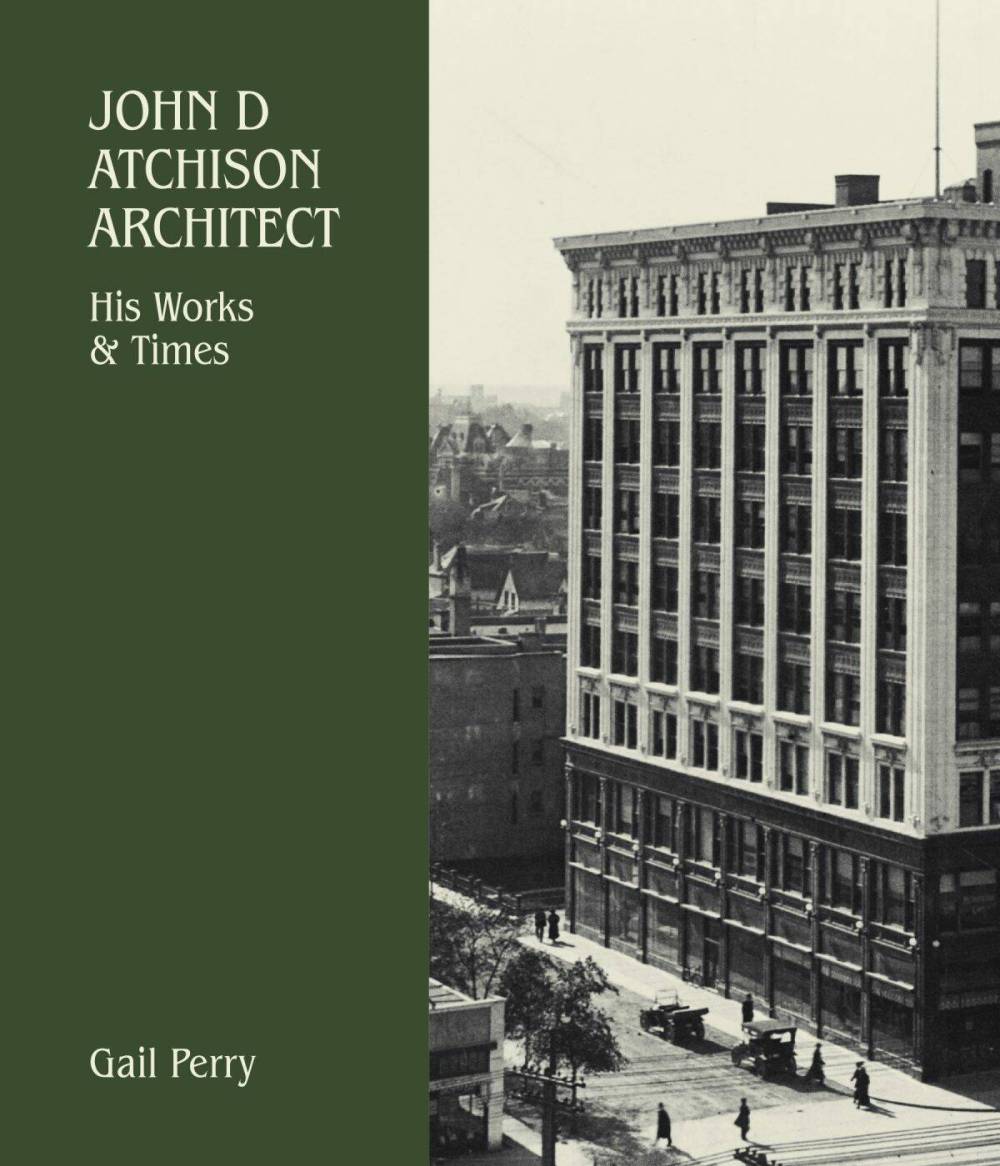
Excerpt from John D Atchison: His Works and Times (Winnipeg Architecture Foundation) by Gail Perry. A book launch will be held June 6 at McNally Robinson’s Grant Park location, beginning at 7 p.m.
John Danley Atchison is early Winnipeg’s most prolific and, arguably, most accomplished architect. In under 20 years — from 1905 to 1923 — the Illinois-born Atchison shaped the backdrop to the city, designing or altering some 140 structures, 55 of them still standing today. Among these are soaring Chicago-style skyscrapers and smaller downtown buildings distinguished by classical detailing like columns, fanciful carvings and stately entrances. Many of them stand at prominent intersections.
No single hallmark identifies an Atchison building. What his works have in common are their pleasing appearance — their disciplined composition (their “just right” look), satisfying proportions and display of refined building materials like marble, Tyndall stone and terra cotta, sparingly embellished with such flourishes as stone carving, decorative brickwork and metal ornamentation. His buildings were state-of-the-art for their time and, even now, occupants and users attest to their interior comfort and efficiency, especially Atchison’s command of outside light.
For decades, only a relatively few architects, historians, architectural historians and heritage enthusiasts were acquainted with Atchison’s body of work. In Manitoba, these people have been instrumental in promoting the provincial or city designation of 18 of his buildings, affording them legal protection from destruction or unauthorized change for as long as that special protection remains in effect and is enforced.
Also, 18 of his buildings in the U.S. and Canada have been formally recognised as having national architectural and historical merit worthy of preservation. While buildings are tangible and powerful connections to our communal and personal history, they are fragile and vulnerable, like memory itself.
Boyd Building (1911-12)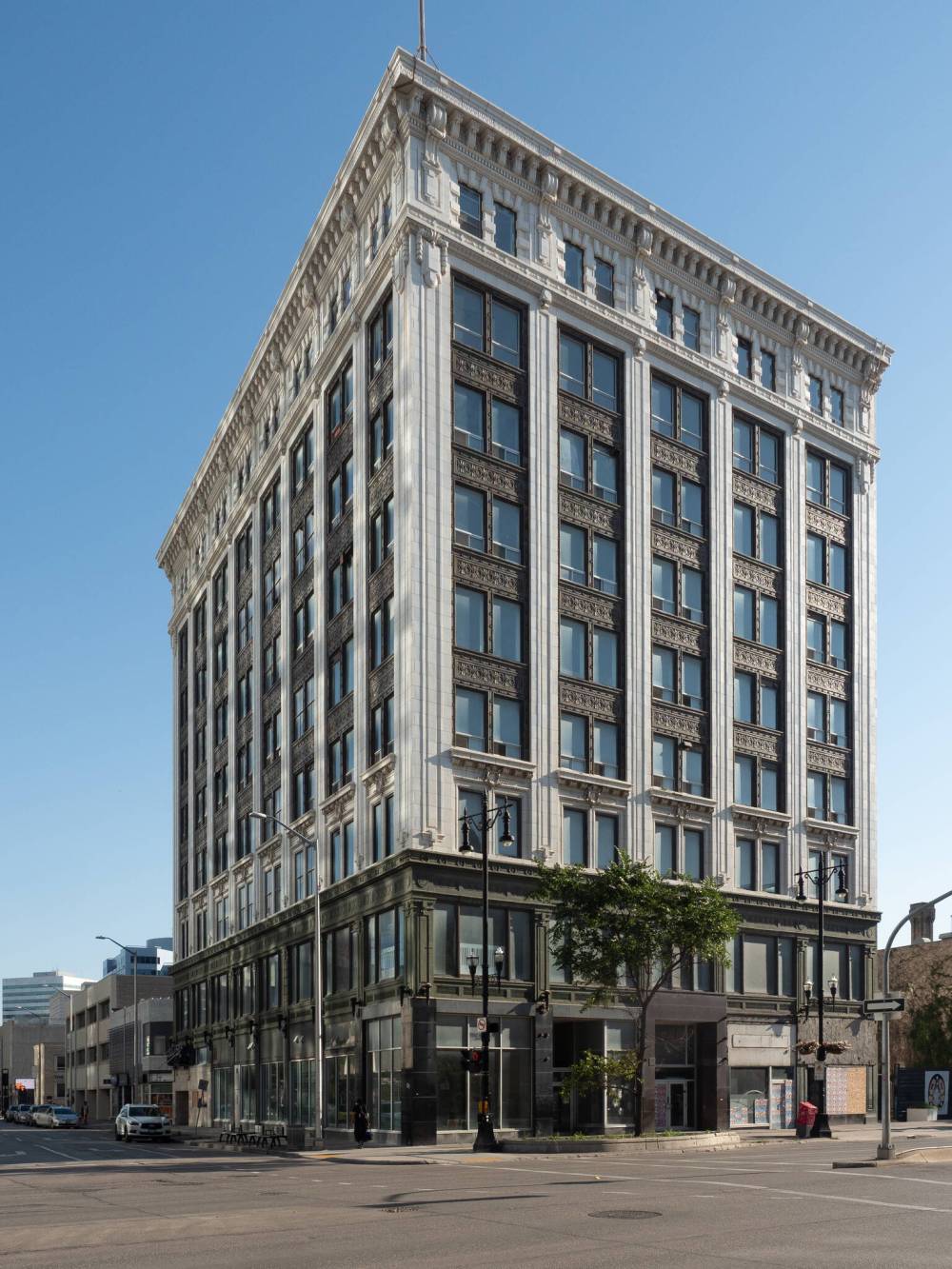
We did not witness Atchison’s buildings rise. We did not read the newspapers of his day or hear the buzz on the streets.
So, in Winnipeg, for example, with the greatest collection of Atchison works, how would it be known that so many landmarks came from the mind of one man? — the towering Portage Avenue Boyd Building; the half-timbered Tudor style commercial-residential block on Stafford Street at Grosvenor; the castle-like former school for deaf students, now part of the Canadian Mennonite University, in Tuxedo. The list goes on. The very contrast in these structures’ purpose and architectural style is enough to make one think that they came from different designers, if we consider this at all.
Without this more accessible familiarity with Atchison, it follows that his more abstract contributions to the city are not widely known, for example, his work on various city planning committees that showed a progressive streak and offer solutions to urban issues even today.
Contemporary Winnipeggers benefit from Atchison’s early-20th century commitment to culture, education and professionalism. He was a founder of the Winnipeg Art Gallery, the first free civic gallery in Canada; the Winnipeg School of Art, now part of the University of Manitoba; the Manitoba Association of Architects and, through that organisation, a leading proponent for a school of architecture at the U of M, the third such school in Canada.
Former Manitoba School for the Deaf, Canadian Mennonite University (1920-22)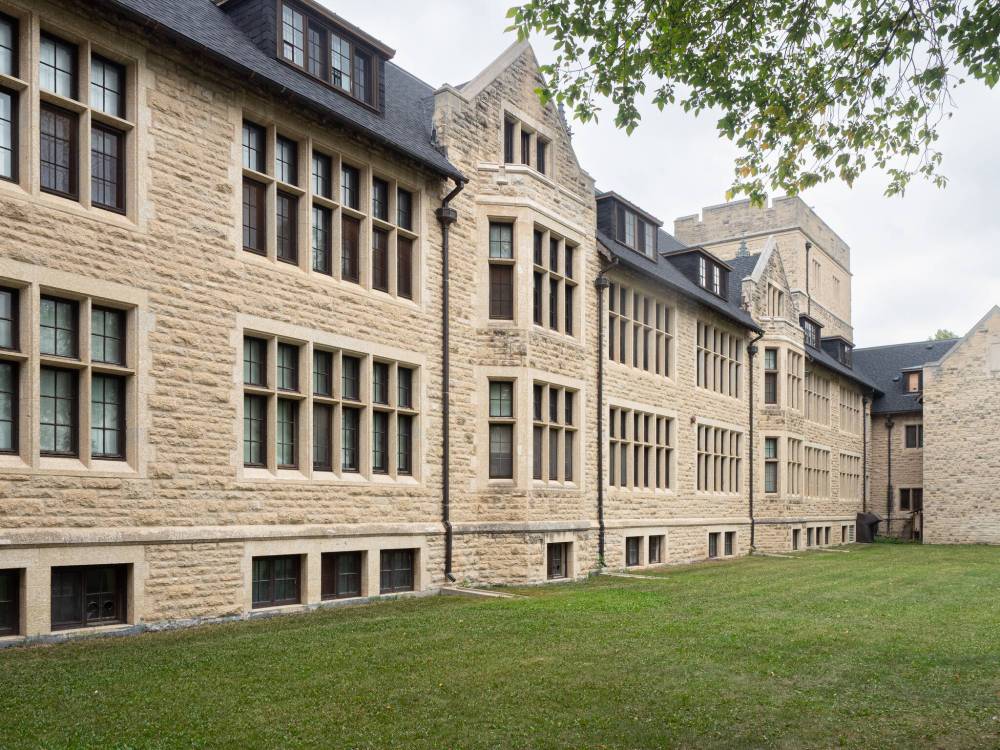
Yet could there be an Atchison renaissance afoot? In the past few years, realtors, activists and the Winnipeg media have been referencing him as Winnipeg’s foremost architect of his time when, for example, one of his buildings comes up for sale (like a condo in the Wardlaw Apartments in 2022), or is the subject of a conservation battle (like the Dennistoun House in Osborne Village, its heritage designation de-listed in 2009, enabling its demolition for a condo in 2017), or is destroyed by fire (most recently, the Kirkwood Block, in 2022). Atchison’s work has been increasingly highlighted in local architectural tours and this may have had some recognition effect.
The primary aim of this first book on John D Atchison is to introduce him to a wider public, hopefully in an interesting and entertaining manner. The book develops more fully what is known of Atchison and, for the first time, attempts to place his works in a historical and social context. It offers new information where his Chicago and California works have not been discussed to date. For the first time, there is a photographic compendium of his existing works, in Canada and the U.S. Finally, there is a list of his known works, from 1894 to 1940.
Wardlow (Wardlaw) Apartments, in the Prairie School style (1905)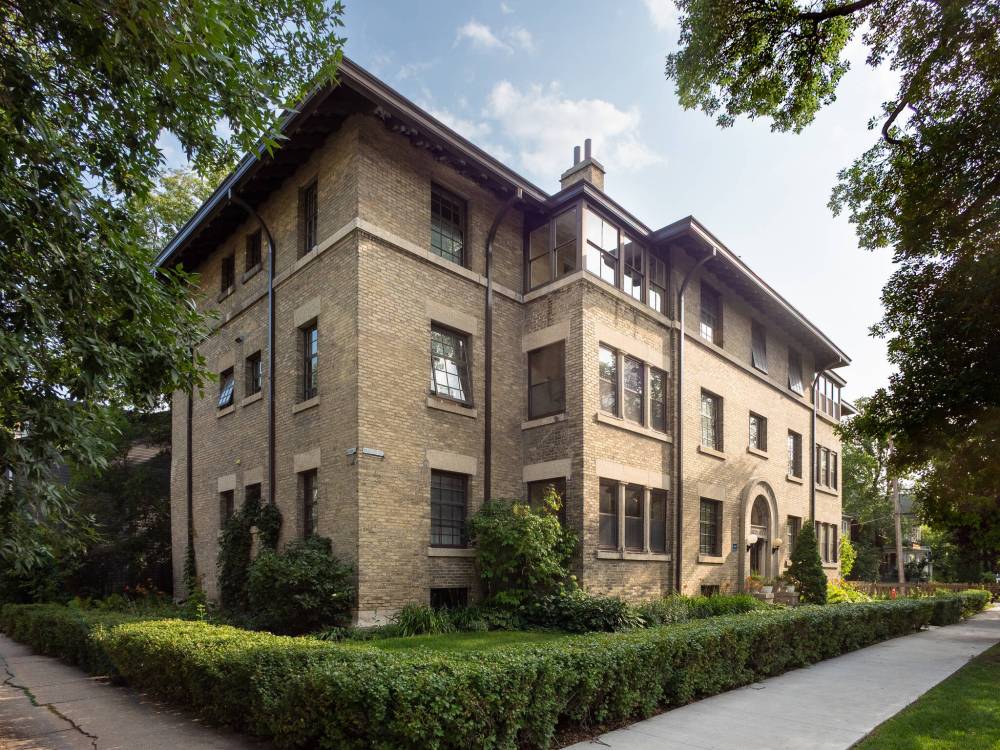
Atchison came to Winnipeg from Chicago with impeccable hands-on training received from architects of world renown. He was experienced in the new technologies of steel frame construction, fireproofing and the use of terra cotta. He brought with him Chicago’s taste for classical revival architecture and that city’s new styles of the Chicago and Prairie Schools, and his own innovation of suburban courtyard apartments.
The White House/Oldfield, Kirby, Gardner Building (1909)
Through Atchison’s diverse and masterfully executed designs in Winnipeg, we can better understand the work, attitude and affluence of the city’s early entrepreneurs and social set. They, and Atchison among them, were the beneficiaries of Winnipeg’s vast colonial fortune between 1905 and 1912, a wealth not broadly shared in a city divided by race, nationality, religion and social class. When Winnipeg’s good times turned in 1913, with recession, followed by war, pandemic and labour strife, even members of the privileged settler class were affected, including Atchison and his family. By 1923, a brighter, warmer future beckoned. The Atchisons moved to California where John started his architecture practice anew and officially became an American once again.